What is the difference between pursuing her and pressuring her?
5 min read
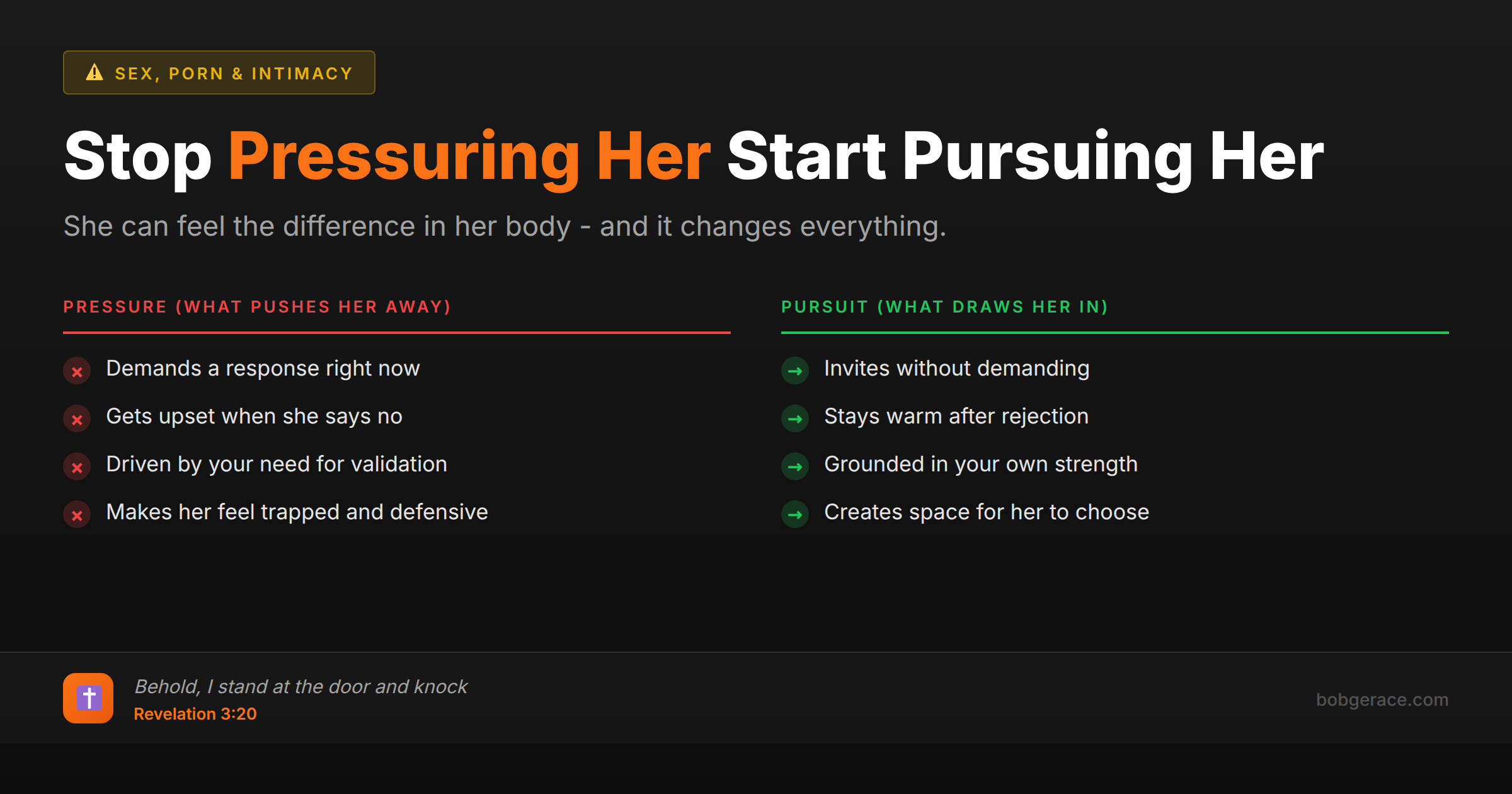
Pursuit invites. Pressure demands. Pursuit is grounded in your own strength and doesn't require her response to validate you. Pressure is driven by your need and escalates when she hesitates. Pursuit creates space for her to move toward you. Pressure closes space and makes her feel trapped. Pursuit says, 'I want you, and I'm not going anywhere.' Pressure says, 'I need you to respond right now or I'll be hurt, angry, or distant.' Your wife can feel the difference in her body. Pursuit feels safe. Pressure feels like a threat. When you pursue her, she has room to breathe, think, and choose. When you pressure her, her nervous system moves into defense mode. She withdraws, shuts down, or complies without desire. Most high-achieving men don't realize they're pressuring. You think you're being persistent or communicating your needs. But if your wife is pulling away from intimacy, it's often because pursuit has turned into pressure.
The Full Picture: How Pursuit Becomes Pressure Without You Noticing
You initiate. She hesitates. You feel rejected. You try again later, maybe with more effort—a compliment, a back rub, a reminder of how long it's been. She still says no. You feel hurt, frustrated, or angry. You pull away emotionally, go quiet, or make a comment about the lack of intimacy. She feels guilty, defensive, or resentful. The cycle repeats. Over time, she stops responding to any affection because she can't trust that it won't turn into an initiation. You feel more rejected. The marriage becomes a cold war over sex.
Here's what most men miss: the problem isn't that you're pursuing. It's that your pursuit has become pressure because it's driven by your unmet need, not by your grounded desire. Pressure shows up in your tone, your timing, your body language, and your reaction to her no. When she says no and you get quiet, that's pressure. When you initiate again the next night after she just said no, that's pressure. When you bring up frequency or make her feel guilty for not wanting sex, that's pressure. When you do something nice and then expect intimacy later, that's pressure.
Pursuit, by contrast, is clean. It's not attached to outcome. You desire her, you express that desire, and you remain steady whether she says yes or no. You don't withdraw. You don't punish. You don't escalate. You stay connected, warm, and present. Pursuit is an invitation, not a negotiation. It's rooted in your own emotional strength, not in her response. Most men have never learned this distinction. They confuse persistence with pressure and wonder why their wife keeps pulling away.
Clinical Insight: Nervous System Response to Pressure
When a woman feels pressured, her nervous system shifts into a defensive state. This is not a conscious choice. It's a physiological response. Her body reads pressure as a threat to her autonomy, safety, or emotional well-being. The more you pressure, the more her body moves into shutdown or withdrawal. Over time, even non-sexual affection becomes a trigger because she's learned that touch often leads to pressure.
This dynamic is especially strong in marriages where the husband has been emotionally distant, angry, or controlling in other areas. If your wife doesn't feel safe with you emotionally, she won't feel safe with you physically. Pressure compounds that lack of safety. It confirms her fear that intimacy is about your needs, not about connection. Her withdrawal is not rejection of you. It's protection of herself.
Pursuit, on the other hand, activates a different nervous system response. When you pursue without pressure—when you express desire but remain emotionally steady regardless of her response—you create safety. She feels wanted, not needed. Desired, not demanded. Her body can relax. She has space to feel her own desire instead of managing yours. This is why some women describe feeling more attracted to their husbands after the husband stops pressuring and starts leading from a grounded, non-reactive place. The shift isn't about technique. It's about nervous system regulation and emotional safety.
Biblical Framework: Christ's Pursuit and Our Response
Christ pursues the church, but He does not pressure her. Revelation 3:20 says, 'Behold, I stand at the door and knock. If anyone hears my voice and opens the door, I will come in.' He invites. He does not force. He remains at the door whether we open it or not. His pursuit is steady, patient, and not contingent on our immediate response. That's the model for how you pursue your wife.
Pressure is rooted in fear and need. Pursuit is rooted in love and strength. First John 4:18 says perfect love casts out fear. When you pressure your wife, you're operating out of fear—fear of rejection, fear of inadequacy, fear of a sexless marriage. When you pursue her without pressure, you're operating out of love—love that desires her but does not demand her, love that invites but does not manipulate.
This doesn't mean you ignore your needs or pretend you don't want intimacy. It means you bring those needs to God first, not to your wife as a demand. You lead from a place of fullness, not emptiness. You pursue her because you want to know her and enjoy her, not because you need her to validate you. That's the difference between Christ's pursuit and the world's pursuit. One creates freedom. The other creates bondage.
Action Steps
-
1
Notice your reaction when she says no. Do you get quiet, distant, or irritable? That's pressure. Practice staying warm and connected after a no.
-
2
Ask yourself: Am I pursuing her because I desire her, or because I need her to respond to feel okay? If it's the latter, work on your own emotional regulation first.
-
3
Stop initiating for two weeks. Use that time to practice non-sexual affection with zero agenda. Let her nervous system learn that touch is safe again.
-
4
When you do pursue, make it an invitation, not a negotiation. Say what you want clearly, then let it go. No follow-up. No guilt. No withdrawal.
-
5
Get feedback from a coach or trusted mentor. Most men can't see their own pressure because it's normalized. You need an outside perspective to identify the pattern.
Related Questions
Also find Bob on
Subscribe for weekly videos on Christian marriage.
Learn to Pursue Without Pressure
If your wife is pulling away and you don't know how to pursue her without making it worse, you need help. I teach men how to lead with strength and invitation, not need and pressure.
Talk to Bob →