What if our sex life only happens when I initiate?
6 min read
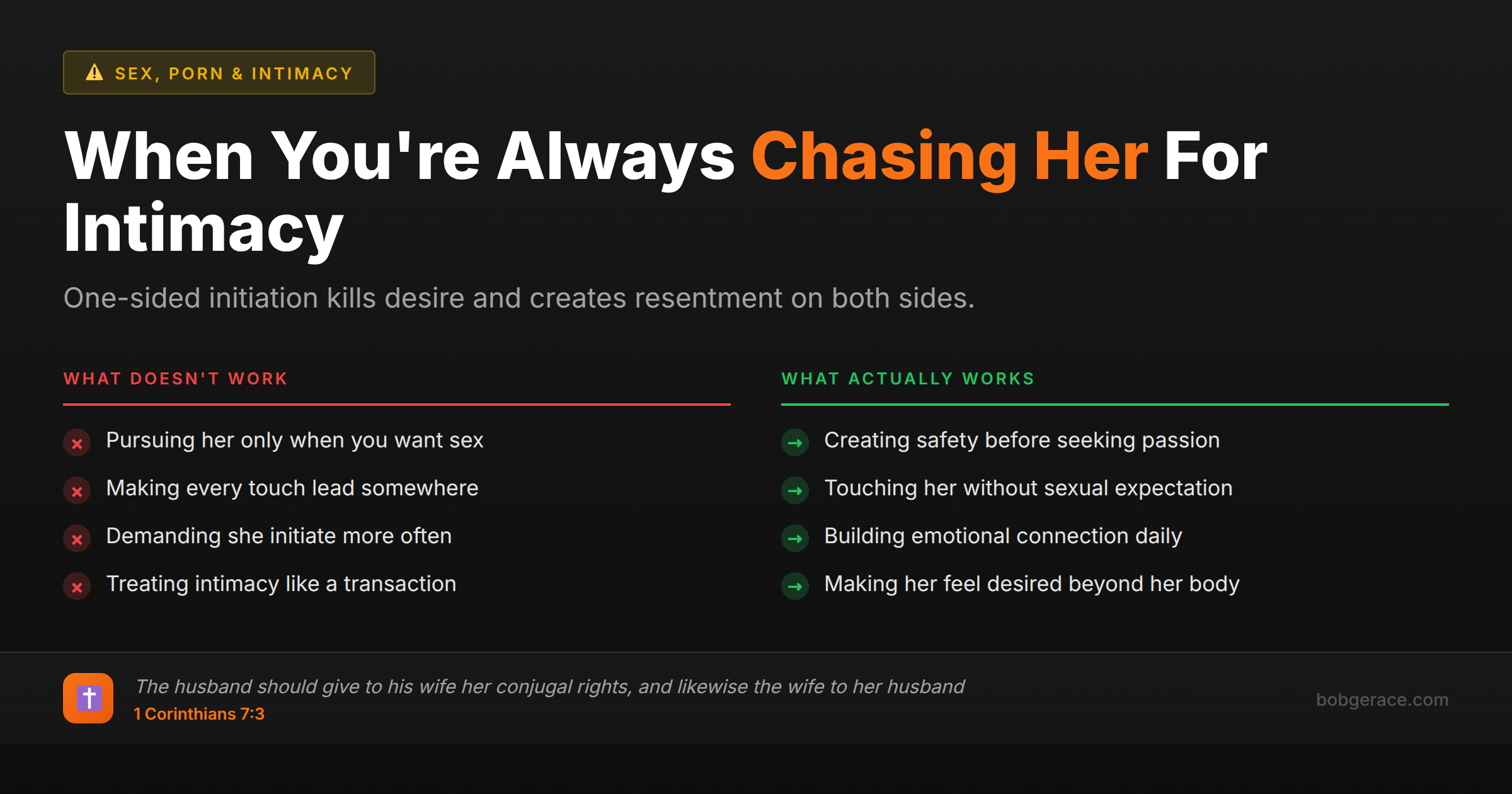
If your wife never initiates, it's not just about libido. It's about safety, desire, and whether she feels emotionally connected to you outside the bedroom. Many wives stop initiating when sex feels like a performance, when they feel pursued only for their body, or when emotional intimacy has been replaced by transactional touch. She may want intimacy—but not the kind you've been offering. The pattern you're describing is common, but it's not sustainable. One-sided initiation creates resentment on both sides: you feel rejected and unwanted, she feels pressured and objectified. The repair doesn't start with her initiating more. It starts with you creating the conditions where she feels safe, seen, and desired for more than sex.
The Full Picture: Initiation Reflects the Emotional Climate
Most men assume their wife's lack of initiation is about low sex drive. But for many women, initiation is tied to emotional safety, relational connection, and whether they feel desired for who they are—not just what they provide. If your wife only has sex when you initiate, she may be saying yes out of duty, fear of conflict, or a desire to keep the peace. But she's not saying yes from desire.
Consider what initiation requires. It requires vulnerability. It requires confidence that you want her, not just sex. It requires trust that you won't pressure her if she's not in the mood. It requires the belief that you're emotionally present with her, not just physically available. If any of those conditions aren't met, initiation feels risky. So she waits for you to initiate, and then she decides whether to say yes.
Many men don't realize how their behavior outside the bedroom affects their wife's desire. If you only touch her when you want sex, she learns that your affection is transactional. If you're emotionally distant, distracted by work, or irritable most of the time, she doesn't feel connected enough to want intimacy. If you've been using porn, she may feel compared or inadequate. If you've been critical or dismissive, she may not feel safe being vulnerable with you.
The one-sided initiation pattern also creates a pursuer-distancer dynamic. The more you pursue, the more she withdraws. The more she withdraws, the more desperate and resentful you become. Over time, sex becomes a source of tension instead of connection. She dreads your touch because she knows where it's leading. You resent her lack of desire because you feel rejected and unwanted. The cycle deepens until both of you are miserable.
Clinical Insight: Desire, Safety, and the Responsive Arousal Model
Research shows that most women experience responsive desire, not spontaneous desire. That means they don't walk around thinking about sex the way many men do. Their desire is triggered by context: emotional connection, feeling desired, safety, and the quality of the relationship. If those conditions aren't present, desire doesn't show up—no matter how much she loves you.
When your wife never initiates, it's often because the relational context isn't conducive to desire. She may feel touched only when you want sex, which makes all touch feel like a setup. She may feel emotionally disconnected because you're always working, distracted, or irritable. She may feel unsafe because past initiation attempts were met with pressure, criticism, or performance anxiety. Or she may simply be exhausted—physically, emotionally, or mentally—and sex feels like one more thing on her to-do list.
The pursuer-distancer dynamic also plays a role. When you're the only one initiating, you become the high-desire partner. Your wife becomes the low-desire partner. But desire isn't fixed—it's relational. The more you pursue, the more pressure she feels. The more pressure she feels, the less desire she experiences. Over time, her nervous system associates your touch with obligation, not pleasure.
Repair requires breaking the cycle. That means stepping back from pursuit without withdrawing emotionally. It means offering affection without expectation. It means rebuilding emotional intimacy outside the bedroom so that sex becomes an expression of connection, not a substitute for it. And it means getting curious about what desire looks like for her—not just what it looks like for you.
Biblical Framework: Mutual Desire and Covenant Love
Scripture affirms mutual desire in marriage. Paul writes, "The husband should give to his wife her conjugal rights, and likewise the wife to her husband" (1 Corinthians 7:3). But this isn't a command to demand sex. It's a call to mutual generosity, presence, and care. Sex in marriage is designed to be a gift, not a duty. When it becomes one-sided, it loses the mutuality God intended.
The Song of Solomon paints a picture of mutual pursuit. The bride initiates. The groom responds. Both delight in each other. Both feel desired. This is the biblical vision for marital intimacy—not one partner always pursuing and the other always gatekeeping, but both partners experiencing desire, safety, and connection.
Jesus calls husbands to love their wives "as Christ loved the church and gave himself up for her" (Ephesians 5:25). That means sacrificial love. It means laying down your agenda to understand hers. It means creating the conditions where she feels safe, cherished, and desired for who she is—not just for what she provides. If your wife doesn't initiate, the question isn't just what's wrong with her. It's whether you've created a relational environment where she feels free to pursue you.
God designed sex to be a picture of covenant love: mutual, generous, life-giving. When it becomes transactional or one-sided, it distorts that picture. The call is to pursue intimacy—not just sex—and to trust that when emotional connection is strong, physical desire often follows.
Action Steps
-
1
Stop all sexual initiation for two weeks. Offer affection—hugs, hand-holding, compliments—without expectation. Let her nervous system recalibrate.
-
2
Ask her directly: 'What makes you feel desired by me outside of sex?' Listen without defending. Her answer will reveal what's missing.
-
3
Rebuild emotional intimacy. Spend 20 minutes a day talking with her—no phones, no agenda. Ask about her day, her feelings, her needs.
-
4
Touch her without it leading to sex. Kiss her in the kitchen. Hold her on the couch. Show her that your affection isn't transactional.
-
5
Get curious about her desire. Ask her what helps her feel connected to you, what kills her desire, and what she needs to feel safe initiating. Then act on what she tells you.
Related Questions
- Why does my wife seem relieved when I stop pursuing sex?
- How do I stop making sex the scoreboard for our marriage?
- Why does she tense up when I try to be affectionate?
- How do I show desire without making her feel hunted?
- Should I confess more after she finds porn?
- Why does she compare herself to what I watched?
Also find Bob on
Subscribe for weekly videos on Christian marriage.
Rebuild Desire, Not Just Frequency
One-sided initiation is a symptom, not the problem. I help men rebuild emotional intimacy, break pursuer-distancer cycles, and create the conditions where their wife feels safe desiring them again.
Talk to Bob →