She's already told her family
6 min read
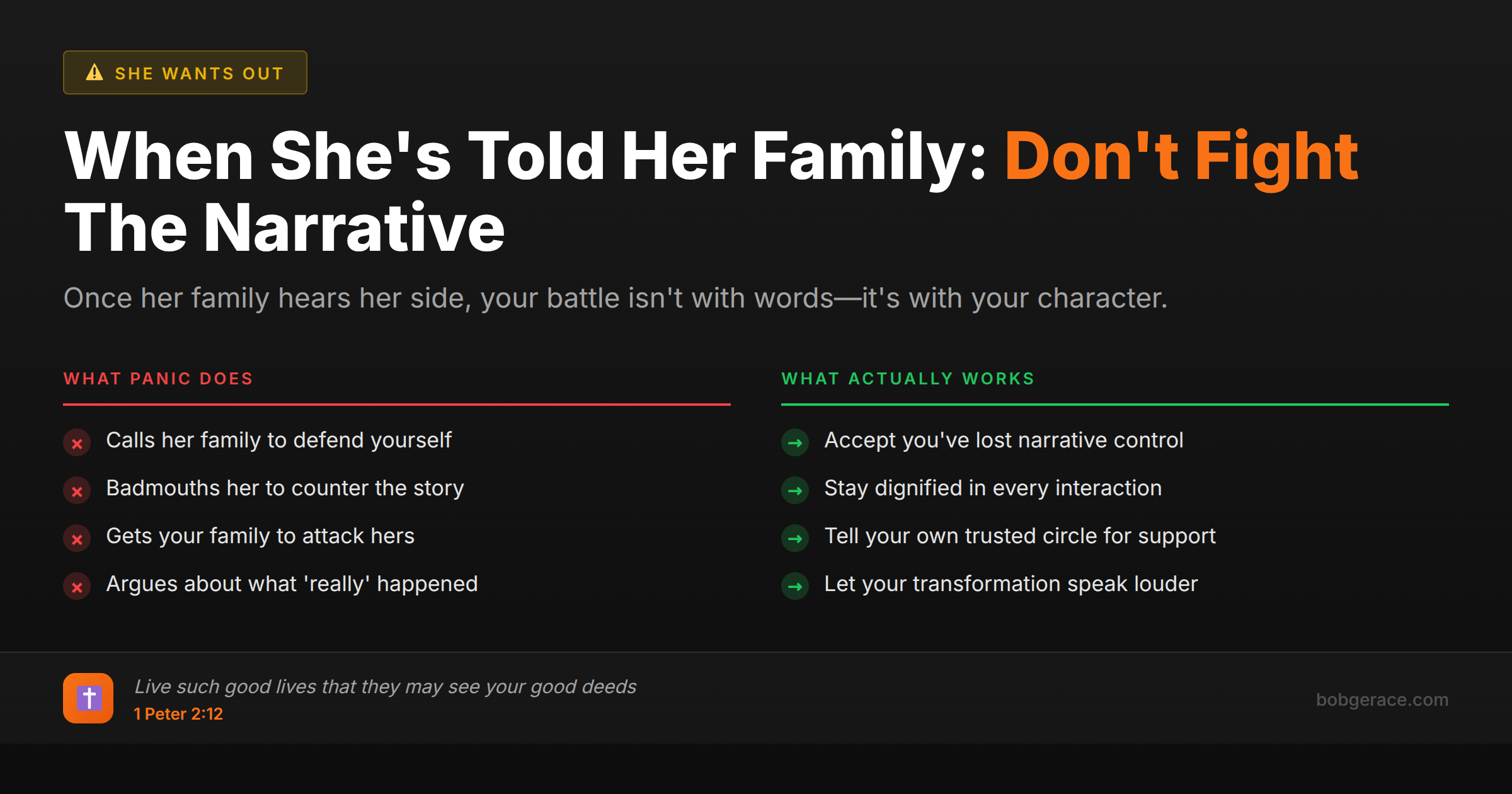
When she's told her family about your marriage problems, you're now dealing with a whole new level of complexity. It feels like betrayal, like she's assembled a jury against you before you even knew you were on trial. The truth is, she didn't do this to hurt you - she did it because she felt alone and needed support. But that doesn't make it sting any less. Here's what you need to understand: her family now has one side of the story, and you're fighting an uphill battle for credibility. Getting angry or defensive will only confirm whatever narrative they've already heard. Your response in the next few days will determine whether this becomes a permanent divide or an opportunity to show real character growth.
The Full Picture
When your wife shares your marriage struggles with her family, she's crossed what you probably considered a sacred boundary. Most men feel blindsided and betrayed - like their private business is now public ammunition. But before you spiral into damage control mode, understand what really happened here.
She didn't betray you - she reached out for help. Women process problems by talking through them with trusted people. When she felt unheard in your marriage, her family became her sounding board. This isn't manipulation; it's survival. She was drowning and grabbed the nearest life preserver.
The family dynamic is now shifted. Her parents, siblings, or close relatives now see you as the problem. They've heard her pain, her frustration, her examples of feeling neglected or hurt. You weren't there to provide context or your perspective. This means:
• They're protective, not objective - they love her and want to shield her from more pain • They have incomplete information - they know her experience but not your intentions or efforts • They're influencing her decisions - their opinions carry weight in her choices moving forward • They're watching your response - how you handle this revelation tells them everything about your character
The biggest mistake most men make is trying to control the narrative after the fact. You can't unsay what she said or unexperience what they heard. Attempting to justify, defend, or counter-argue will only make you look exactly like the person she described to them.
This is actually an opportunity. Her family cares about her happiness and your marriage's success. If you can demonstrate real change and growth, they can become allies instead of adversaries. But it requires humility, consistency, and time.
What's Really Happening
From a clinical perspective, when a wife shares marital problems with her family, we're observing a triangulation pattern - bringing third parties into a two-person relationship dynamic. This typically happens when direct communication between spouses has broken down or feels unsafe.
Research shows that women are more likely to seek social support during relationship distress, while men tend to withdraw or minimize problems. This gender difference in coping strategies often creates a cycle: the more she reaches out to others, the more isolated and defensive he becomes, which validates her need for outside support.
The family system now becomes part of the problem and potentially part of the solution. Family members often mean well but lack the skills to provide neutral, constructive guidance. They may inadvertently escalate conflict by taking sides or offering advice that prioritizes immediate relief over long-term relationship health.
Attachment theory helps us understand this dynamic. If your wife has a secure attachment to her family, their support can actually stabilize her enough to work on the marriage. However, if family members have their own unresolved relationship issues, they may project those onto your situation, making reconciliation more difficult.
The key psychological principle here is that trust is rebuilt through consistent actions over time, not through explanations or defenses. When family members are watching, they're looking for evidence that contradicts or confirms what they've heard. Your wife shared her experience because it felt real and significant to her. The only way to change the narrative is to change the experience.
Repair work must happen on two levels: restoring trust with your wife and earning respect from her family through demonstrated change.
What Scripture Says
Scripture provides clear guidance on how to handle relationship conflicts, especially when they've become public. Matthew 7:3-5 says, *"Why do you look at the speck of sawdust in your brother's eye and pay no attention to the plank in your own eye? First take the plank out of your own eye, and then you will see clearly to remove the speck from your brother's eye."* Before addressing what she did wrong by involving her family, examine what drove her to that point.
Proverbs 19:11 teaches us, *"A person's wisdom yields patience; it is to one's glory to overlook an offense."* This doesn't mean ignoring the boundary violation, but responding with wisdom rather than reaction. Your patience in this moment demonstrates spiritual maturity and can begin healing the broader relational wounds.
Ephesians 4:29 reminds us, *"Do not let any unwholesome talk come out of your mouths, but only what is helpful for building others up according to their needs, that it may benefit those who listen."* When you eventually interact with her family, every word matters. Speak in ways that build up rather than defend or tear down.
The principle of Romans 12:18 applies powerfully here: *"If it is possible, as far as it depends on you, live at peace with everyone."* You cannot control what her family thinks or says, but you can control your response. Peace begins with your actions, not their approval.
1 Peter 3:15-16 provides the model for addressing criticism: *"Always be prepared to give an answer to everyone who asks you to give the reason for the hope that you have. But do this with gentleness and respect, keeping a clear conscience."* When questions come, respond with gentleness and let your changed behavior speak louder than your words.
Remember Matthew 5:23-24: *"If you are offering your gift at the altar and there remember that your brother or sister has something against you, leave your gift there in front of the altar. First go and be reconciled."* Restoration requires taking responsibility for your part in creating the pain that led to this situation.
What To Do Right Now
-
1
Take full responsibility for your role in driving her to seek outside support - don't focus on her boundary violation but on what created her need
-
2
Write a sincere letter to your wife acknowledging the pain that led her to reach out to family, without defending yourself or minimizing her experience
-
3
Avoid any contact with her family members for now - let your changed behavior toward her speak first before attempting direct communication with them
-
4
Begin immediate, visible changes in how you treat and prioritize your wife - her family is now watching and evaluating your every move
-
5
Seek your own counsel from a trusted mentor or coach rather than trying to recruit allies against her family's influence
-
6
Practice patience and consistency - rebuilding trust with both your wife and her family will take months, not days or weeks
Related Questions
- She's already talked to a lawyer — what now?
- She opened a separate bank account
- She's looking at apartments
- She filed for divorce — can I stop it?
- What stage of decision is she in?
- How do I read her actions vs. her words?
- Should I tell anyone right now?
- Should I expose the affair publicly?
- What does wise counsel look like?
- How do I not badmouth her when I'm furious?
Also find Bob on
Subscribe for weekly videos on Christian marriage.
You Need a Coach Who Knows Your Story
Her family has one version. You're navigating multiple relationships now, not just hers. A coach helps you see what's actually happening in your specific situation and what moves make sense this week.
Talk to Bob →