She filed for divorce — can I stop it?
5 min read
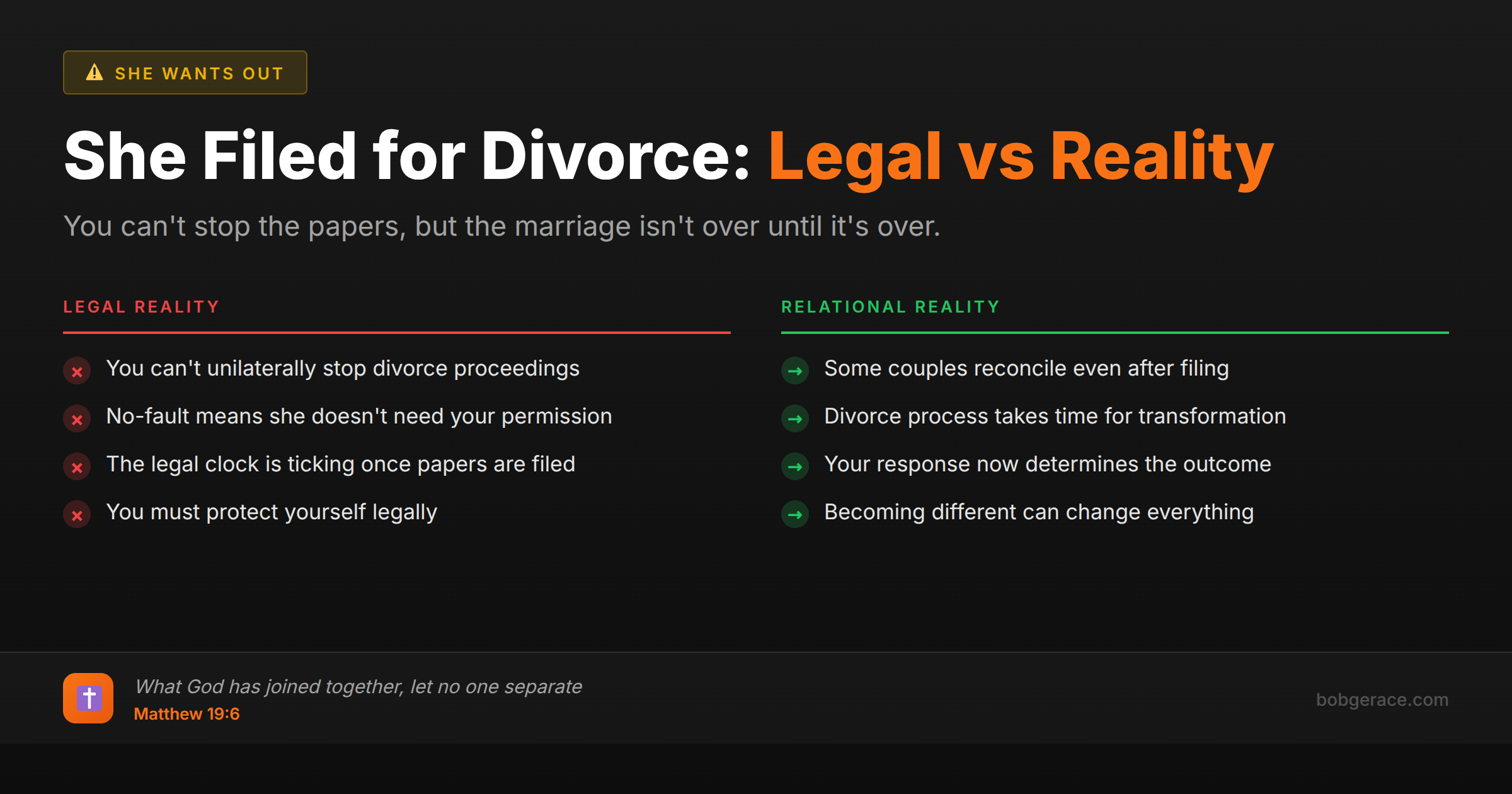
You can't legally stop your wife from filing for divorce, but you absolutely can influence whether she follows through with it. The divorce isn't final until a judge signs the decree, and that process typically takes months. During this window, you have the opportunity to demonstrate real change—not just promise it. Here's what matters: Stop trying to convince her with words and start showing her with actions. She filed because she's lost hope that you'll change. Arguing, pleading, or explaining won't restore that hope. Only consistent, sustained behavioral change will. The question isn't whether you can stop the legal process—it's whether you can become the man she fell in love with and desperately wants you to be.
The Full Picture
When those divorce papers hit your hands, it feels like a death sentence. But here's the reality: filing is often a woman's final attempt to wake you up. She's not necessarily done with the marriage—she's done with the marriage as it currently exists.
Most men make critical mistakes at this point:
• Panic mode: Bombarding her with texts, calls, and grand gestures • Negotiation tactics: Trying to bargain or make deals about change • Defensive posturing: Arguing about why divorce is wrong or unnecessary • Victim mentality: Focusing on how unfair this is to you
These approaches backfire because they're still centered on your needs, not hers. She filed because she's emotionally exhausted from trying to get through to you. More of the same energy that created this crisis won't solve it.
The divorce process typically takes 3-12 months, depending on your state. This isn't just dead time—it's your opportunity to demonstrate sustained change. Not change to manipulate the outcome, but genuine transformation that makes you the husband she needs.
Remember: she didn't wake up one day and decide to blow up her life. This decision came after months or years of feeling unheard, unloved, or unimportant. The filing represents her last-ditch effort to get your attention. The question is: will you finally give it to her in the way she needs?
What's Really Happening
When a woman files for divorce, she's typically been psychologically preparing for this moment for 6-24 months. Research shows that women initiate approximately 70% of divorces, and by the time they file, they've often experienced what we call 'emotional divorce'—the psychological withdrawal from the relationship.
This doesn't mean the decision is irreversible. Studies indicate that 15-20% of divorce filings are withdrawn when significant behavioral change occurs. The key factor isn't the magnitude of gestures, but the consistency of new patterns over time.
Neurologically, her brain has been in a chronic stress state due to relationship conflict. The filing represents an attempt to regain control and reduce that stress. This is why logical arguments or emotional appeals often fail—her nervous system is protecting her from further disappointment.
The 90-day window following filing is crucial. This is when her emotional defenses are highest, but also when she's most attuned to evidence of genuine change. Small, consistent demonstrations of growth carry more weight than dramatic proclamations.
From a therapeutic standpoint, this crisis can catalyze the deepest level of personal transformation. Men who use this time for genuine self-reflection and behavioral change—whether the marriage survives or not—often experience breakthrough growth that reshapes every relationship in their life.
What Scripture Says
Scripture calls us to fight for marriage while respecting free will. Malachi 2:16 reminds us that God hates divorce, but this doesn't mean we can force someone to stay through manipulation or control.
Ephesians 5:25 commands husbands to "love your wives as Christ loved the church and gave himself up for her." Christ's love was sacrificial, patient, and focused on the beloved's good—not His own comfort. This season calls you to love her well regardless of the outcome.
1 Peter 3:7 instructs husbands to live with their wives "in an understanding way, showing honor to the woman as the weaker vessel, since they are heirs with you of the grace of life." The Greek word for "understanding" implies careful study—knowing her heart, needs, and love language.
Matthew 7:3-5 warns about trying to remove the speck from someone else's eye while ignoring the log in your own. Before trying to change her mind, examine your own heart and actions. What log needs to be removed?
1 Corinthians 13:4-7 defines love as patient, kind, not self-seeking, and keeping no record of wrongs. This is your blueprint for response—not to manipulate an outcome, but to love as God commands.
Romans 12:18 reminds us: "If possible, so far as it depends on you, live peaceably with all." Focus on what depends on you—your character, actions, and responses. Release what doesn't—her timeline, decisions, and heart.
What To Do Right Now
-
1
Resist the urge to fight the filing legally or emotionally—accept this as her current reality
-
2
Hire a competent attorney to understand your rights and timeline, but avoid aggressive tactics
-
3
Stop all attempts to convince her through words, texts, or explanations about why she shouldn't divorce
-
4
Focus 100% of your energy on examining and changing the behaviors that led to this crisis
-
5
Engage a professional counselor or coach to guide your personal transformation work
-
6
Demonstrate consistent change through actions over at least 90 days before expecting any response from her
Related Questions
- How do I respond to divorce papers?
- Should I get my own lawyer?
- She's already talked to a lawyer — what now?
- Should I contest or cooperate?
- How do I slow the process without obstructing?
- When is it actually over?
- What boundaries should I set?
- Does the Bible require me to stay after an affair?
- What does Scripture say about divorce?
- How do I not lose my mind right now?
Also find Bob on
Subscribe for weekly videos on Christian marriage.
Your Marriage Has 90 Days
Divorce papers don't mean it's over, but generic advice won't save your specific situation. Bob coaches men through active crisis—he'll see what you can't see and tell you what to do next.
Talk to Bob →