What does humility in process look like?
6 min read
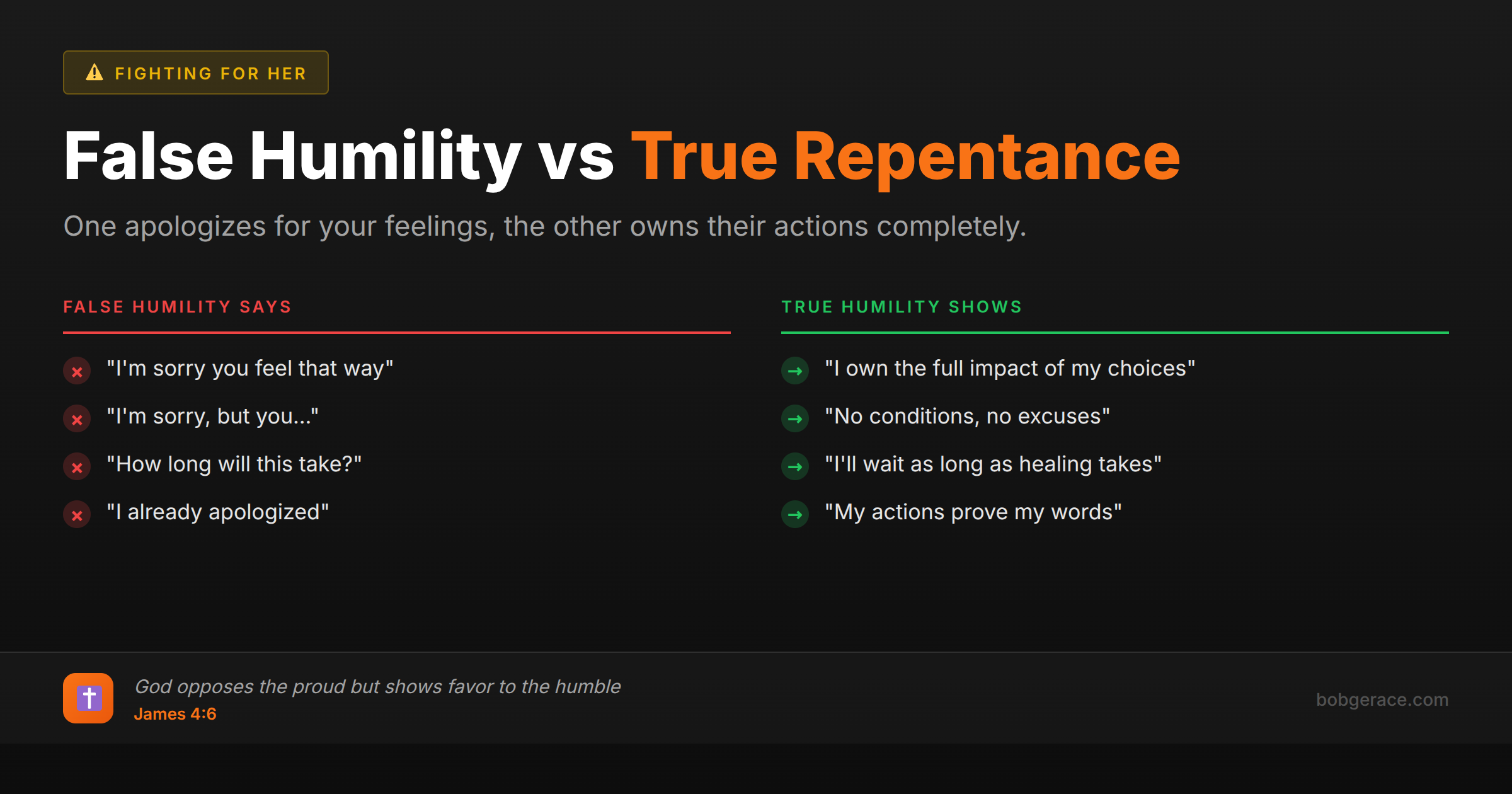
Humility in process isn't just saying 'I'm sorry' – it's a fundamental shift in how someone approaches their marriage and their failures. You'll see it in their willingness to listen without defending, their patience with your healing timeline, and their consistent actions over time. True humility shows up as genuine curiosity about their impact on you, rather than justification or minimizing. A humble person in process takes ownership without conditions. They don't say 'I'm sorry, but...' or rush you to forgive and move on. Instead, they demonstrate sustained effort to understand the depth of hurt they've caused and remain committed to change even when it's difficult or inconvenient.
The Full Picture
Real humility in the restoration process looks dramatically different from performative apologies or temporary behavior changes. When someone is genuinely humble about their failures, you'll notice several consistent patterns that emerge over time.
First, they stop defending and start learning. Instead of explaining why they did what they did, they become genuinely curious about how their actions affected you. They ask questions not to build their defense case, but to truly understand your experience. This isn't a one-time conversation – it becomes an ongoing posture of learning.
Second, they take ownership of the process, not just the outcome. A humble person doesn't just apologize for the affair, the lies, or the emotional distance. They take responsibility for the patterns, the character issues, and the long-term choices that led to those failures. They recognize that their actions didn't happen in a vacuum – they were the result of deeper heart issues that need addressing.
Third, they respect your timeline, not their comfort level. Humble people in process don't rush you through forgiveness or pressure you to 'get over it.' They understand that rebuilding trust takes time, and they're willing to stay in the uncomfortable space of consequences while demonstrating consistent change. They measure progress by your healing, not by their desire to feel better about themselves.
Finally, their actions align with their words over extended periods. Anyone can be humble for a week or even a month. Genuine humility shows up in the day-to-day choices, the way they handle conflict, their willingness to be held accountable, and their commitment to transparency even when it's inconvenient.
What's Really Happening
From a clinical perspective, genuine humility represents a fundamental shift in someone's attachment patterns and emotional regulation. When I work with couples in crisis, I'm looking for what we call 'earned security' – the ability to acknowledge one's impact on others without becoming defensive or dysregulated.
True humility in process involves several key psychological components. First, there's emotional regulation under stress. A person demonstrating genuine humility can hear difficult feedback about their behavior without immediately shifting into fight-or-flight responses. They've developed the capacity to sit with uncomfortable emotions like shame and guilt without either collapsing into self-pity or deflecting through anger.
Second, we see perspective-taking ability. This goes beyond intellectual understanding to genuine empathy – the capacity to feel what their partner experienced as a result of their choices. This isn't performative empathy designed to gain forgiveness, but authentic emotional attunement that drives behavioral change.
Third, there's what researchers call 'response flexibility' – the ability to choose different responses even under stress. Someone truly committed to change doesn't just apologize; they develop new neural pathways through consistent practice of different behaviors. This shows up as increased tolerance for their partner's emotions, willingness to engage in difficult conversations, and sustained effort even when progress feels slow.
The neuroplasticity research shows us that genuine change requires consistent practice over time. When someone is truly humble in process, you'll see evidence of this neurological rewiring in their increased capacity for discomfort, improved emotional regulation, and sustained behavioral changes that persist even during stressful periods.
What Scripture Says
Scripture gives us a clear picture of what genuine humility looks like, and it's far more than just feeling bad about our failures. James 4:6-10 tells us that 'God opposes the proud but shows favor to the humble. Submit yourselves, then, to God. Resist the devil, and he will flee from you. Come near to God and he will come near to you. Wash your hands, you sinners, and purify your hearts, you double-minded.' True humility involves active submission and heart change, not just regret.
Philippians 2:3-4 shows us humility in action: 'Do nothing out of selfish ambition or vain conceit. Rather, in humility value others above yourselves, not looking to your own interests but each of you to the interests of the others.' A humble person in process genuinely prioritizes their spouse's healing over their own comfort or reputation.
2 Corinthians 7:10-11 distinguishes between worldly sorrow and godly sorrow: 'Godly sorrow brings repentance that leads to salvation and leaves no regret, but worldly sorrow brings death. See what this godly sorrow has produced in you: what earnestness, what eagerness to clear yourselves, what indignation, what alarm, what longing, what concern, what readiness to see justice done.' True humility produces tangible life changes, not just emotional responses.
1 Peter 5:5-6 reminds us that humility is both a choice and a posture: 'Clothe yourselves with humility toward one another, because God opposes the proud but shows favor to the humble. Humble yourselves, therefore, under God's mighty hand, that he may lift you up in due time.' Real humility means choosing to stay under God's correction and your spouse's feedback without rushing the restoration process.
Proverbs 27:6 tells us that 'wounds from a friend can be trusted, but an enemy multiplies kisses.' A humble person welcomes difficult feedback because they recognize it as an opportunity for growth rather than an attack to defend against.
What To Do Right Now
-
1
Document specific behaviors you observe over time, noting patterns rather than isolated incidents of apparent humility
-
2
Pay attention to how they respond when you express ongoing hurt or need more time to heal
-
3
Watch for defensive language like 'but,' 'however,' or explanations that minimize their responsibility
-
4
Notice whether their efforts to change continue even when you're not actively discussing the issues
-
5
Observe how they handle accountability measures and whether they embrace or resist transparency
-
6
Look for evidence that they're addressing root issues through counseling, spiritual growth, or personal development work
Related Questions
- What does proactive repair look like?
- What should his relationship with accountability look like?
- What should change in his emotional regulation?
- What daily practices indicate commitment?
- What should change in his responsiveness to you?
- How do I evaluate his program quality?
- What does 'taking responsibility' actually look like?
- What's the antidote to defensiveness?
- How do I receive feedback without counter-attacking?
- What does 'teachable spirit' look like?
Also find Bob on
Subscribe for weekly videos on Christian marriage.
Not Sure If It's Real or Performance?
A coach who knows your marriage can help you see what you can't see from inside it—whether the humility is landing, where the gaps are, what actually matters in your specific situation.
Talk to Bob →