How do I forgive when she hasn't fully repented?
6 min read
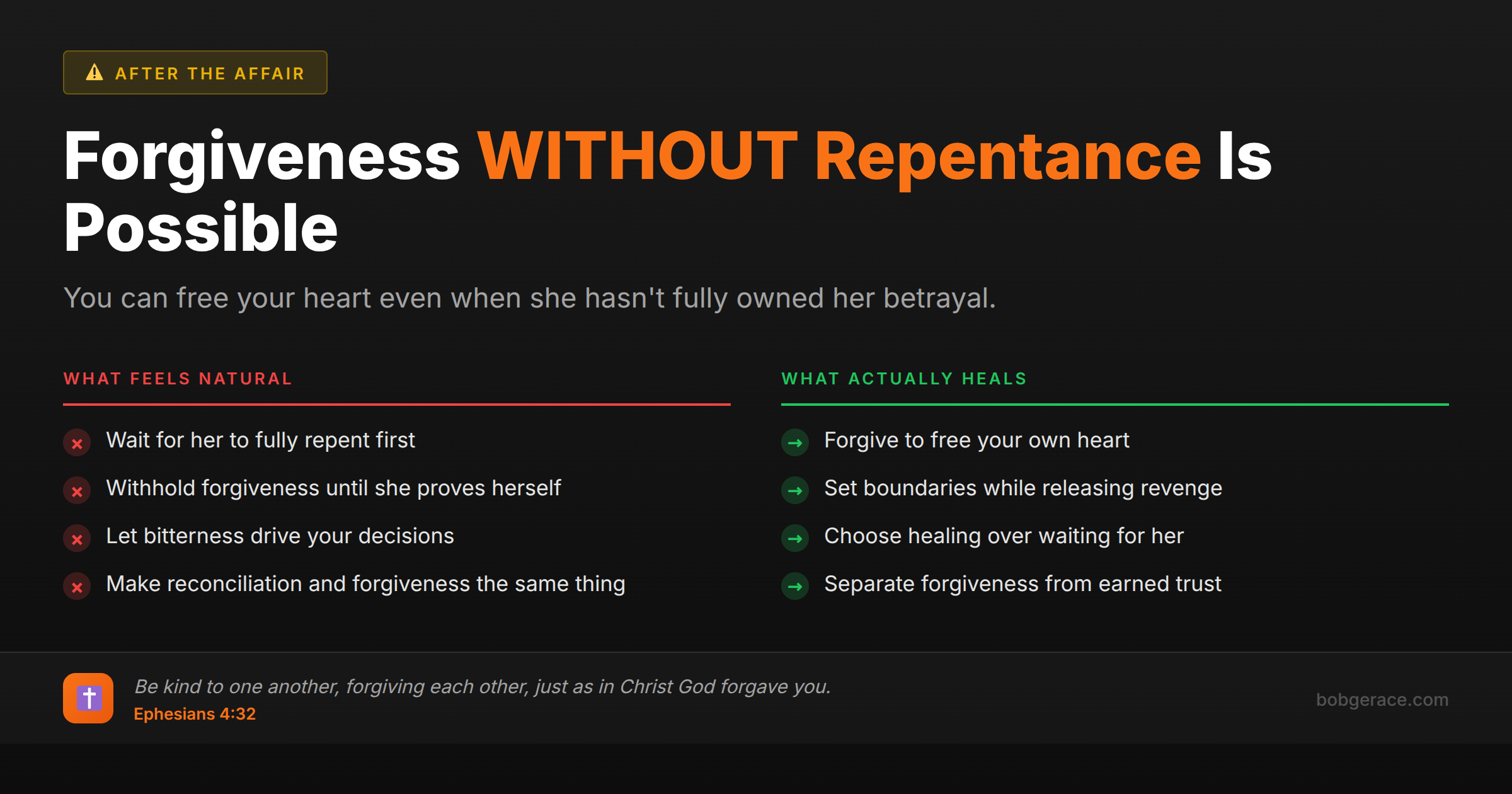
Forgiveness isn't dependent on your spouse's repentance - it's a gift you give yourself and an act of obedience to God. However, forgiveness doesn't equal immediate trust or reconciliation. You can forgive to free your heart from bitterness while still maintaining appropriate boundaries. True reconciliation requires genuine repentance, but your healing doesn't have to wait for her to get there. This is one of the hardest truths in marriage recovery: you're responsible for your response to sin, not for making her repent. Forgiveness protects your heart; boundaries protect your future.
The Full Picture
Here's what I see happening in your marriage right now: You're stuck between two competing desires - the biblical command to forgive and your legitimate need to see genuine change. This tension is normal and actually healthy. It means your conscience is working properly.
The confusion comes from mixing up forgiveness with reconciliation. Forgiveness is unilateral - it's something you do regardless of her response. It's releasing your right to revenge and choosing not to hold the offense against her in your heart. Reconciliation is bilateral - it requires two people working together, and yes, it absolutely requires genuine repentance.
Right now, she may be showing some remorse without true repentance. Remorse is feeling bad about getting caught or facing consequences. Repentance is feeling bad about the sin itself, taking full responsibility, and demonstrating sustained change. You're wise to recognize the difference.
Here's the hard truth: your healing doesn't depend on her repentance, but your marriage's restoration does. You can forgive today to free yourself from the poison of bitterness. You can choose not to rehearse the offense or plot revenge. But you don't have to pretend everything is fine or remove protective boundaries until you see fruit that matches repentance.
This isn't about being unforgiving - it's about being wise. Even Jesus distinguished between forgiveness and trust. He forgave from the cross, but He didn't entrust Himself to everyone (John 2:24). You can follow His example by forgiving freely while stewarding your heart and marriage carefully.
What's Really Happening
What you're experiencing is a normal trauma response to betrayal. Your brain is trying to protect you by withholding full forgiveness until safety is established. This isn't a character flaw - it's wisdom. The key is understanding that forgiveness operates on multiple levels. There's decisional forgiveness - choosing not to seek revenge - and emotional forgiveness - releasing the hurt feelings. You can start with decisional forgiveness even when emotional forgiveness feels impossible.
Many betrayed spouses get stuck because they've been told forgiveness means 'forgive and forget' or 'act like it never happened.' This is psychologically harmful and biblically inaccurate. Healthy forgiveness acknowledges the full weight of the offense while choosing to release the right to payback. It's entirely appropriate to maintain boundaries and require evidence of change.
Your spouse's incomplete repentance is also significant. Without true repentance, she's likely to repeat the behavior because she hasn't addressed the root issues. Premature reconciliation without genuine repentance often leads to re-traumatization. Your instinct to proceed cautiously is protective and wise. Focus on your own healing process while maintaining clear //blog.bobgerace.com/marriage-expectations-christian-reasonable-unreasonable/:expectations for what genuine repentance looks like.
What Scripture Says
Scripture gives us clear guidance on both forgiveness and repentance. Ephesians 4:32 commands us to forgive 'as God in Christ forgave you.' This forgiveness is offered before repentance - Christ died for us while we were still sinners. However, this doesn't mean there are no conditions for full reconciliation.
Luke 17:3-4 provides the framework: 'If your brother sins against you, rebuke him, and if he repents, forgive him.' Notice that confrontation comes first, then repentance, then forgiveness. This isn't contradicting unconditional forgiveness - it's showing us the path to restoration.
Matthew 18:15-17 outlines the process for addressing sin in relationships. Jesus doesn't skip accountability for the sake of quick forgiveness. Instead, He provides a careful process that honors both truth and mercy.
Proverbs 28:13 is clear: 'Whoever conceals his transgressions will not prosper, but he who confesses and forsakes them will obtain mercy.' True repentance involves both confession and forsaking the sin.
Here's the key: you can forgive to obey God and free your heart, while still requiring genuine repentance for full reconciliation. This honors both God's call to forgiveness and His standard of righteousness. Your marriage deserves both mercy and truth working together.
What To Do Right Now
-
1
Choose to forgive in your heart today - release your right to revenge and commit to not rehearsing the offense
-
2
Write down specific behaviors that would demonstrate genuine repentance - full disclosure, counseling, accountability, etc.
-
3
Maintain appropriate boundaries - protect yourself while remaining open to reconciliation when repentance is evident
-
4
Focus on your own healing through counseling, support groups, and spiritual disciplines rather than waiting for her to change
-
5
Communicate clearly what genuine repentance looks like and why it's necessary for rebuilding trust
-
6
Pray for her heart to be softened toward true repentance while entrusting the outcome to God
Related Questions
Ready to Navigate Forgiveness and Healing?
This balance between forgiveness and wisdom requires careful navigation. Let me help you find the path forward that honors both grace and truth in your marriage.
Get Help Now →