Why didn't my past apologies work?
6 min read
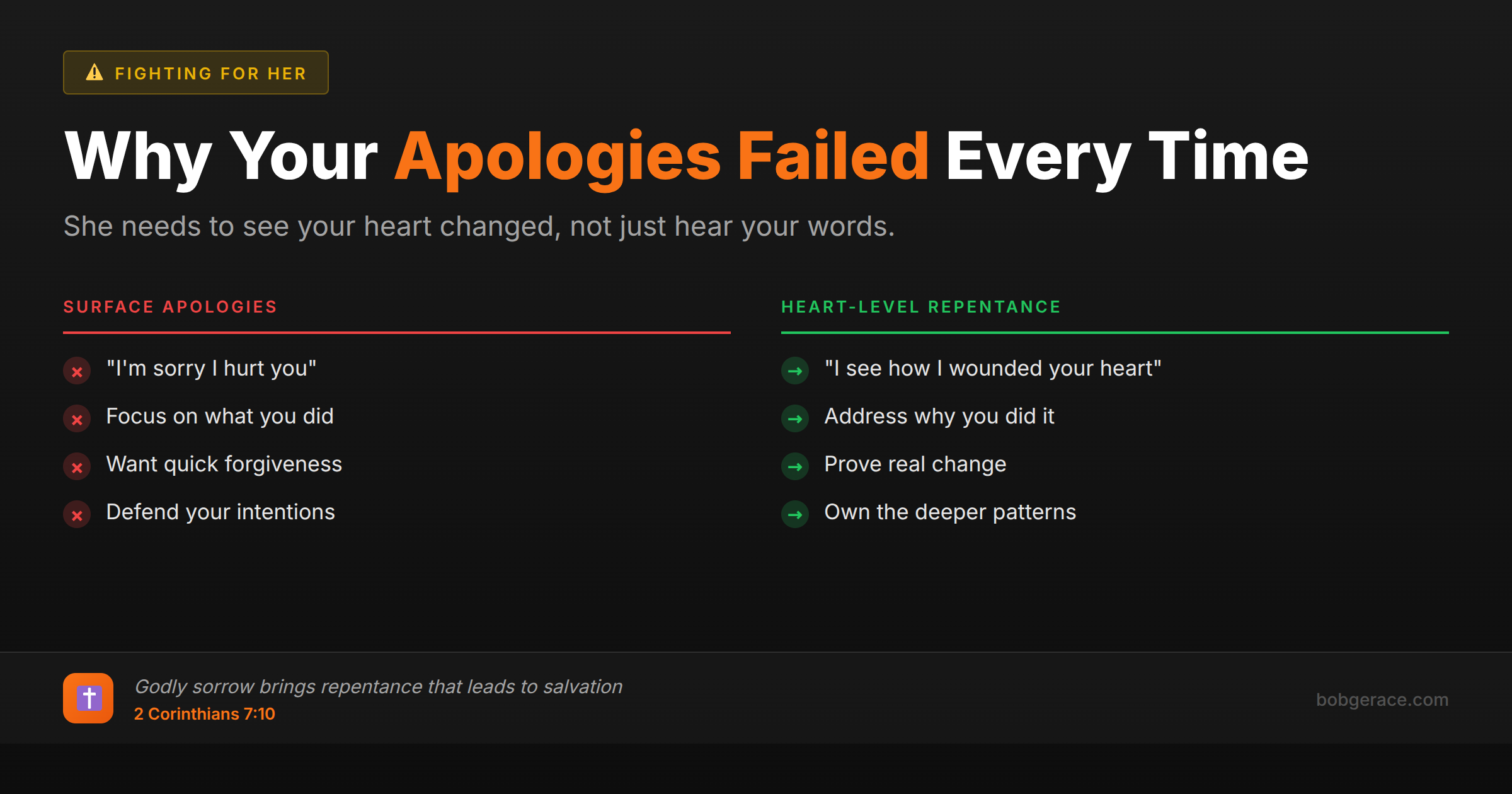
Your past apologies likely failed because they addressed symptoms rather than the heart of the issue. Most men apologize for what they did wrong, but their wives need them to understand why it was wrong and how it affected her. When she's checked out, she's protecting herself from more disappointment. Surface-level apologies that don't demonstrate true understanding of her pain actually confirm her fears that you don't really get it. Effective apologies require ownership of the deeper patterns, empathy for her experience, and concrete changes that prove you've truly learned. Without these elements, apologies become just words that highlight the gap between what you think happened and what she actually experienced.
The Full Picture
When your wife has checked out emotionally, your apologies hit a wall of protective detachment. This isn't stubbornness—it's survival. After years of disappointment, broken promises, or feeling unheard, she's learned that words without lasting change only deepen her wounds.
Most apologies fail because they're self-focused rather than spouse-focused. You apologize to relieve your guilt, to "fix" the immediate tension, or to get things back to normal. But she needs to know you truly understand the impact of your actions on her heart. When you say "I'm sorry I hurt you" without demonstrating that you understand HOW you hurt her, it confirms her belief that you're still missing the point.
Your apologies also fail when they're event-focused instead of pattern-focused. You apologize for forgetting her birthday, but she's really hurt by the ongoing pattern of feeling unimportant. You apologize for losing your temper, but she's wounded by years of walking on eggshells. Until you address the deeper patterns that created her emotional withdrawal, individual apologies feel superficial.
The timing and delivery matter immensely. Rushed apologies, defensive explanations mixed with sorry, or apologies that come with immediate expectations for forgiveness all backfire. When she's checked out, she's hypersensitive to authenticity. She can sense when you're apologizing to get something versus apologizing because you're genuinely broken over how you've affected her.
What's Really Happening
From a clinical perspective, failed apologies in marriages where the wife has emotionally withdrawn typically reflect a fundamental misunderstanding of repair processes in intimate relationships. When attachment security has been compromised through repeated disappointments or relational injuries, the injured spouse develops what we call "hypervigilance to authenticity."
Your wife's brain is essentially scanning your apology for evidence of genuine change versus evidence that this is just another attempt to manage her emotions without addressing core issues. Ineffective apologies trigger her threat detection system because they signal that you still don't understand the depth of the problem, which means it's likely to continue.
The neurological reality is that when trust is broken, the brain requires substantial evidence of safety before it will lower protective barriers. Surface-level apologies actually increase her stress response because they highlight the gap between your perception and her reality. This creates a double injury—the original hurt plus the additional hurt of feeling unseen in her pain.
For repair to occur, apologies must demonstrate what attachment researchers call "earned security"—evidence that you've done the internal work to understand not just what you did wrong, but why those patterns developed and how you're specifically changing them. Without this depth, apologies become re-traumatizing events that confirm her decision to emotionally protect herself through detachment.
What Scripture Says
Scripture makes a clear distinction between worldly sorrow and godly sorrow, which directly applies to why your apologies haven't worked. "Godly sorrow brings repentance that leads to salvation and leaves no regret, but worldly sorrow brings death" (2 Corinthians 7:10). Worldly sorrow focuses on getting caught or facing consequences. Godly sorrow focuses on the heart change needed to love better.
True biblical repentance involves three elements your past apologies likely missed. "Produce fruit in keeping with repentance" (Matthew 3:8) means your apology must be followed by tangible evidence of change. Words alone, no matter how sincere, don't constitute biblical repentance without the fruit that proves transformation has occurred.
"Above all else, guard your heart, for everything you do flows from it" (Proverbs 4:23). This reveals why surface-level apologies fail—they don't address the heart issues that created the hurtful patterns. Until you deal with the pride, selfishness, or fear driving your behavior, your apologies are just damage control rather than heart transformation.
The prodigal son's return illustrates effective repentance: "Father, I have sinned against heaven and against you. I am no longer worthy to be called your son" (Luke 15:21). Notice he took full responsibility without excuses, acknowledged the relationship damage, and didn't demand immediate restoration to his former position. "In your anger do not sin: Do not let the sun go down while you are still angry" (Ephesians 4:26) reminds us that unresolved hurt becomes resentment when apologies don't bring genuine resolution.
What To Do Right Now
-
1
Stop apologizing temporarily and start listening deeply to understand the full scope of her pain without defending yourself
-
2
Write down the patterns behind individual incidents—identify the character issues or selfish motivations that drove hurtful behavior
-
3
Schedule dedicated time to have her explain how your actions affected her heart, asking clarifying questions without offering solutions
-
4
Develop a specific plan addressing the root issues she's identified, including accountability measures and timeline for change
-
5
Demonstrate consistent change for at least 2-3 months before offering another apology, letting your actions rebuild credibility
-
6
When you do apologize again, focus entirely on acknowledging her pain and your responsibility, with no expectations for her response
Related Questions
- What is an 'apology' vs. 'repair' vs. 'attunement'?
- What does she need to hear that I haven't said?
- What is 'felt understanding' and how do I give it?
- What's the difference between explaining and validating?
- What does genuine repair look like for old wounds?
- How do I make amends for years of failure?
- What does 'taking responsibility' actually look like?
- Why do I get defensive every time?
- What does 'godly sorrow' look like in practice?
- How do I hear her without defending myself?
Also find Bob on
Subscribe for weekly videos on Christian marriage.
Get a Coach on This Today
Your specific situation—what you did, what she heard, how deep the damage goes—needs a human who can hear your story and tell you what repair actually looks like in your marriage.
Talk to Bob →