What is restitution and do I owe it?
6 min read
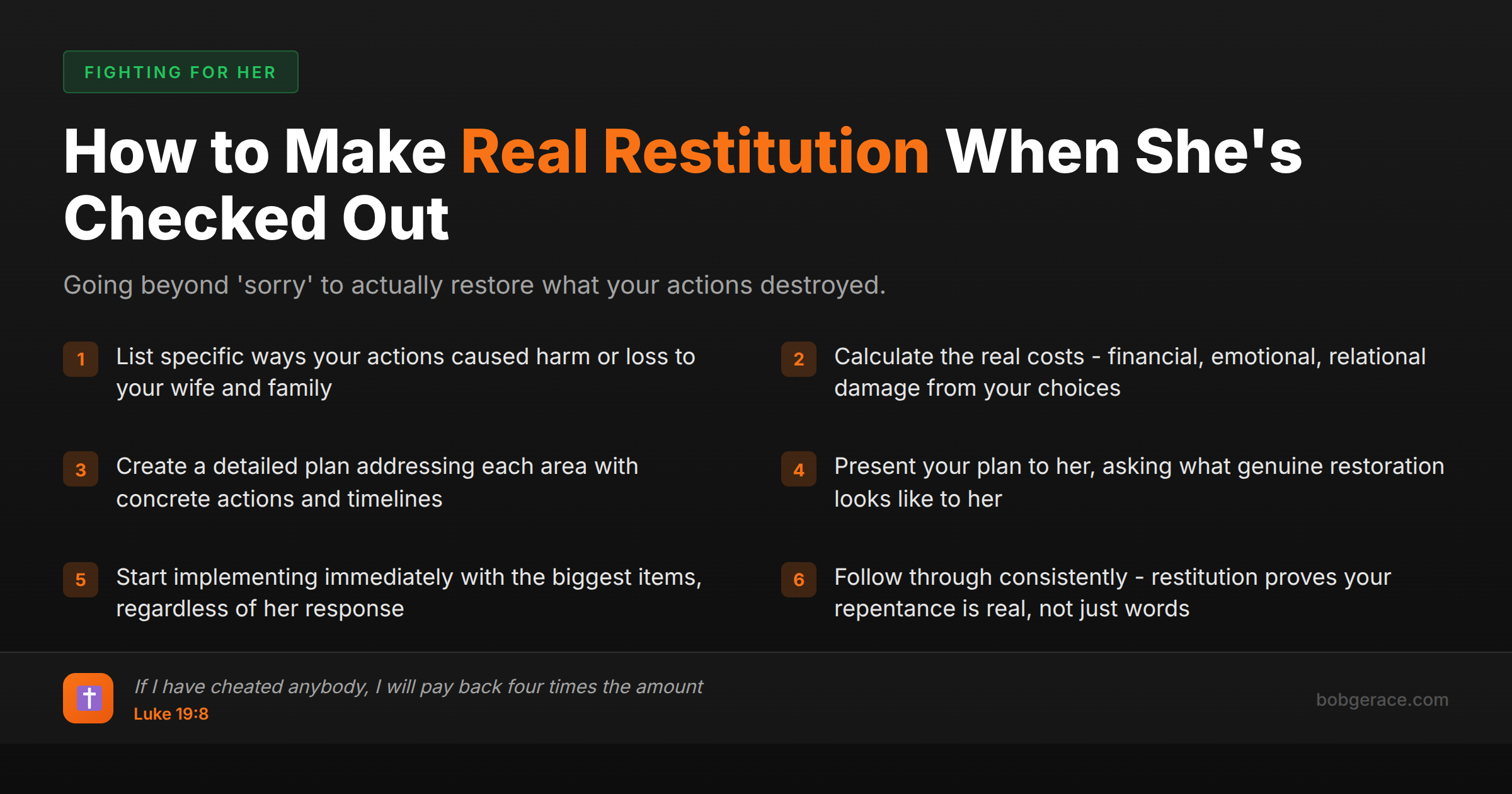
Restitution is making concrete amends for specific wrongs you've committed - going beyond saying 'sorry' to actually restoring what was damaged or lost. Yes, you likely owe restitution if your actions contributed to your wife checking out emotionally. This isn't about groveling or self-flagellation; it's about biblical justice and genuine repentance. Restitution demonstrates that your repentance is real, not just words. It shows you understand the weight of your actions and you're willing to pay the cost to make things right. When she's checked out, restitution becomes even more critical because trust has been shattered. Your willingness to make concrete amends - whether financial, relational, or otherwise - proves you're serious about change.
The Full Picture
Most men think an apology is enough. 'I said I was sorry - what more does she want?' But when your wife has emotionally checked out, sorry isn't sufficient. She needs to see tangible evidence that you understand the damage and you're willing to repair it.
Restitution is different from apology. An apology acknowledges wrong. Restitution restores what was lost or damaged. If you spent money foolishly, restitution means paying it back. If you broke trust through lies, restitution means complete transparency going forward. If you neglected her emotionally, restitution means intentional investment in rebuilding that connection.
The hard truth? Most marriages where she's checked out involve patterns of harm that require restitution. Maybe you: - Made financial decisions without her input - Prioritized work or hobbies over family - Spoke harshly or dismissively repeatedly - Failed to protect her from others (including your family) - Broke promises or commitments - Violated trust through emotional or physical infidelity
Restitution isn't punishment - it's restoration. It demonstrates that your repentance has weight behind it. When done with the right heart, restitution actually accelerates healing because it shows her you truly understand what your actions cost her.
The key is specificity. Vague gestures won't cut it. You need to identify exactly what damage was done and create a concrete plan to restore it. This requires humility, wisdom, and often outside help to see clearly what needs to be restored.
What's Really Happening
When a wife emotionally checks out, it's often because she's experienced what we call 'cumulative micro-traumas' - small but consistent violations of trust, respect, or safety. These create what I term 'relational debt' that must be acknowledged and addressed.
Restitution serves multiple psychological functions in marriage recovery. First, it validates her experience of harm - something many women desperately need when they've been gaslit or minimized. Second, it demonstrates genuine remorse through action, not just words. Third, it begins rebuilding neural pathways of trust that have been damaged.
I see men resist restitution because they fear it admits guilt or sets a precedent for 'owing' things ongoing. This misses the point entirely. Restitution isn't about establishing a debt-based relationship; it's about demonstrating the sincerity of your repentance and your commitment to making things right.
Neurologically, when someone has been hurt repeatedly, their brain develops protective mechanisms that scan for threats. Words alone can't override this - the brain needs evidence of safety through consistent, concrete actions over time. Restitution provides this evidence.
The most effective restitution I've observed involves three elements: specificity (addressing exact harms), proportionality (the response matches the damage), and sustainability (it's something you can maintain long-term). Without these, restitution becomes either meaningless gesture or unsustainable grand-standing.
What Scripture Says
Scripture is clear about restitution as part of genuine repentance. It's not optional when you've caused harm.
Luke 19:8 shows Zacchaeus declaring, 'If I have cheated anybody out of anything, I will pay back four times the amount.' This wasn't required - it was his response to genuine salvation and repentance.
Leviticus 6:4-5 commands: 'When they sin in any of these ways and realize their guilt, they must return what they have stolen or taken by extortion, or what was entrusted to them, or the lost property they found, or whatever it was they swore falsely about. They must make restitution in full, add a fifth of the value to it and give it all to the owner.'
Ezekiel 33:15 describes the wicked man who 'returns what he took in pledge for a loan, gives back what he has stolen, follows the decrees that give life, and does no evil - that person will surely live; they will not die.'
Numbers 5:6-7 states: 'When a man or woman wrongs another in any way and so is unfaithful to the Lord, that person is guilty and must confess the sin they have committed. They must make full restitution for the wrong they have done, add a fifth of the value to it and give it all to the person they have wronged.'
Notice the pattern: confession alone isn't enough. True repentance includes making things right through concrete action. This isn't works-based salvation - it's the natural fruit of genuine repentance. When we truly understand the weight of our sin and the grace we've received, we're compelled to restore what we've damaged.
What To Do Right Now
-
1
Make a specific list of ways your actions caused harm or loss to your wife and family
-
2
Calculate concrete costs - financial, emotional, relational, or otherwise - that resulted from your choices
-
3
Develop a detailed restitution plan that addresses each area of harm with specific actions and timelines
-
4
Present this plan to your wife, asking for her input on what would feel like genuine restoration to her
-
5
Begin implementing immediately with the most significant items, regardless of her response
-
6
Document your progress and adjust the plan based on results and her feedback over time
Related Questions
- What did Zacchaeus model about making things right?
- How do I make amends for years of failure?
- What does repentance look like for accumulated sin?
- What does genuine repair look like for old wounds?
- What is an 'apology' vs. 'repair' vs. 'attunement'?
- What is 'felt understanding' and how do I give it?
- What does biblical forgiveness require of me?
- What's the difference between forgiveness and reconciliation?
- What does 'godly sorrow' look like in practice?
- How do I take care of myself through this?
Also find Bob on
Subscribe for weekly videos on Christian marriage.
Build Your Restitution Plan with Bob
Restitution isn't one-size-fits-all. What you owe depends on what you did and where your marriage is now. A coach who knows your story helps you calibrate what's real amends versus performative groveling.
Talk to Bob →