What are markers of genuine remorse vs. guilt?
6 min read
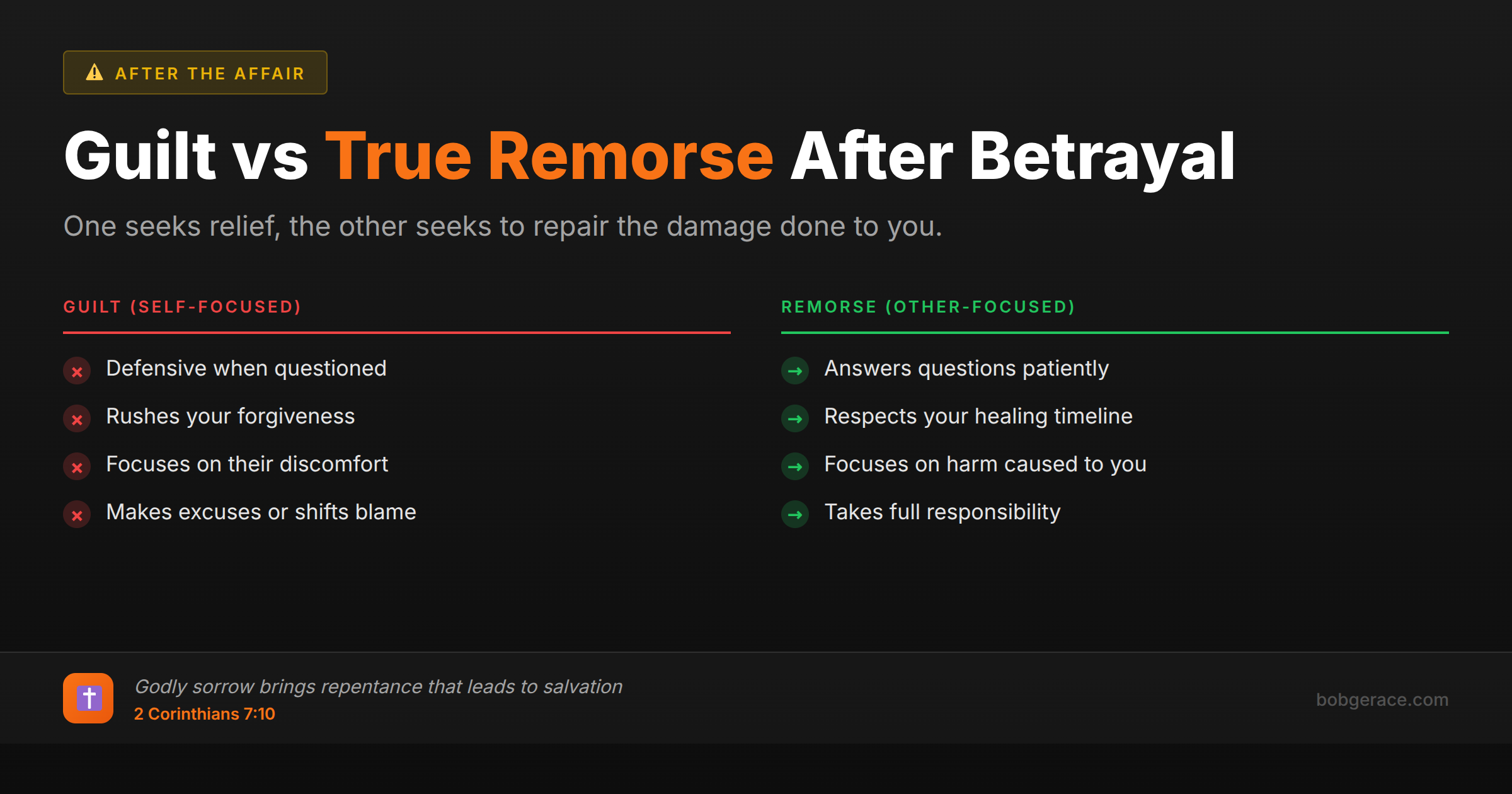
Genuine remorse focuses outward on the harm caused to you and your relationship, while guilt is primarily inward-focused on the cheater's own discomfort. True remorse shows up as consistent actions over time, accepting full responsibility without excuses, and demonstrating patience with your healing process. Guilt, on the other hand, seeks quick relief through defensiveness, blame-shifting, or rushing forgiveness. The key difference is motivation: remorse seeks to repair the damage done to you, while guilt seeks to relieve personal discomfort. Watch for sustained behavioral changes, willingness to answer questions repeatedly, and genuine concern for your emotional well-being rather than just words of apology.
The Full Picture
Understanding the difference between genuine remorse and guilt is absolutely critical for your marriage's recovery. I've seen too many couples get stuck because they mistake guilt for genuine remorse, leading to premature reconciliation attempts that ultimately fail.
Genuine remorse is other-focused and action-oriented. When your spouse shows true remorse, they're primarily concerned with the pain they've caused you and the damage to your relationship. They demonstrate this through consistent behaviors: answering your questions patiently (even the same ones repeatedly), providing complete transparency with phones and accounts, attending counseling willingly, and showing genuine concern when you're triggered or hurting.
Remorseful partners don't rush your healing process. They understand that rebuilding trust takes time and they're willing to do whatever it takes for however long it takes. They take full responsibility without minimizing, justifying, or blame-shifting. You'll hear phrases like "I was completely wrong," "There's no excuse for what I did," and "What can I do to help you heal?"
Guilt, however, is self-focused and comfort-seeking. A guilty spouse is primarily uncomfortable with their own feelings of shame and wants relief from that discomfort as quickly as possible. This shows up as defensiveness when questioned, frustration with your "dwelling" on the affair, attempts to minimize the damage ("it didn't mean anything"), or rushing toward forgiveness and "moving on."
Guilty partners often use phrases like "I feel terrible about this" (focusing on their feelings), "When are you going to get over this?" (rushing your process), or "I already apologized" (expecting one apology to fix everything). They may show initial dramatic displays of sorrow but lack the sustained commitment required for real healing.
The timeline matters too. Guilt tends to fade as the immediate consequences decrease, while genuine remorse remains consistent and often deepens as the partner truly comprehends the full impact of their betrayal.
What's Really Happening
From a clinical perspective, we're looking at fundamentally different psychological processes. Genuine remorse involves what we call "other-oriented empathy" – the ability to truly understand and feel distress about another person's pain. This requires //blog.bobgerace.com/male-emotional-validation-marriage-stop-blame-game/:emotional maturity and the capacity for authentic connection.
Guilt, conversely, is "self-oriented distress" – discomfort with one's own actions that seeks relief rather than repair. Neurologically, these activate different brain regions. Remorse engages areas associated with empathy and social bonding, while guilt primarily activates regions linked to personal threat and self-protection.
In affair recovery, I assess several clinical markers. Genuine remorse shows up as: sustained behavioral changes (not just temporary improvements), proactive transparency (offering information rather than waiting to be asked), emotional regulation during difficult conversations (staying present rather than becoming defensive), and what we call "distress tolerance" – the ability to sit with uncomfortable emotions without seeking immediate relief.
Guilt-driven responses include: emotional volatility when confronted, cognitive distortions like minimization or rationalization, impatience with the betrayed partner's healing timeline, and what I call "performative contrition" – dramatic displays of sorrow that lack corresponding behavioral changes.
The prognosis differs significantly. Couples where the unfaithful partner demonstrates genuine remorse have substantially higher recovery rates. Guilt-based responses often indicate underlying narcissistic traits or emotional immaturity that require extensive individual therapy before meaningful couples work can begin.
Watch for consistency over weeks and months, not just immediate reactions. Genuine remorse typically deepens over time as the partner gains fuller understanding of the betrayal's impact, while guilt tends to fade as consequences decrease.
What Scripture Says
Scripture draws a clear distinction between godly sorrow and worldly sorrow, which parallels the difference between genuine remorse and guilt. 2 Corinthians 7:10 tells us: *"Godly sorrow brings repentance that leads to salvation and leaves no regret, but worldly sorrow brings death."* This godly sorrow is remorse – it leads to genuine change and restoration.
True biblical repentance involves several elements that align with genuine remorse. Psalm 51:3-4 shows David's remorse: *"For I know my transgressions, and my sin is always before me. Against you, you only, have I sinned and done what is evil in your sight."* Notice David takes full responsibility without excuses or blame-shifting.
Luke 3:8 commands us to *"produce fruit in keeping with repentance,"* emphasizing that genuine repentance must be demonstrated through sustained behavioral change, not just words. This is exactly what we see in true remorse – consistent actions over time, not just initial apologies.
Ezekiel 36:31 describes the heart of someone experiencing godly sorrow: *"Then you will remember your evil ways and wicked deeds, and you will loathe yourselves for your sins and detestable practices."* This isn't self-hatred but a genuine understanding of the gravity of sin's impact.
In contrast, worldly sorrow (guilt) seeks relief from consequences rather than genuine restoration. 1 Samuel 15:24-25 shows Saul's guilt-driven response: *"I have sinned. I violated the Lord's command... Now I beg you, forgive my sin."* Saul wanted quick forgiveness to avoid consequences, not genuine change.
James 5:16 calls for confession and prayer for healing, but biblical confession involves specificity, responsibility, and commitment to change – all markers of genuine remorse rather than superficial guilt.
What To Do Right Now
-
1
Document specific behaviors and responses over the next two weeks, noting whether they focus on your pain or their discomfort
-
2
Ask direct questions about the affair and observe whether they answer patiently or become defensive and frustrated
-
3
Request specific actions (transparency, counseling, accountability) and watch for willing compliance or reluctant cooperation
-
4
Pay attention to their language – do they focus on how terrible they feel or on the harm they've caused you?
-
5
Set a reasonable timeline for sustained behavioral change (90 days minimum) before making major reconciliation decisions
-
6
Seek professional guidance from a therapist experienced in affair recovery to help you accurately assess their responses
Related Questions
- What does rebuilding trust require from her?
- What does 'earning back' trust actually look like?
- What is the 'trust timeline' post-affair?
- What does real forgiveness look like?
- How do I forgive when she hasn't fully repented?
- What does 'godly sorrow' look like in practice?
- How do I know if he's really changing?
- Is he manipulating me or actually different?
- How do I tell performance from genuine change?
- What is 'performative remorse'?
Also find Bob on
Subscribe for weekly videos on Christian marriage.
Bring Your Specific Situation to Bob
Reading markers is one thing. Calibrating them to your marriage—what you're actually seeing, what it means for where you are now—is another. A coach who knows your story can help you see what you can't see alone.
Talk to Bob →