What does research say about disclosure?
6 min read
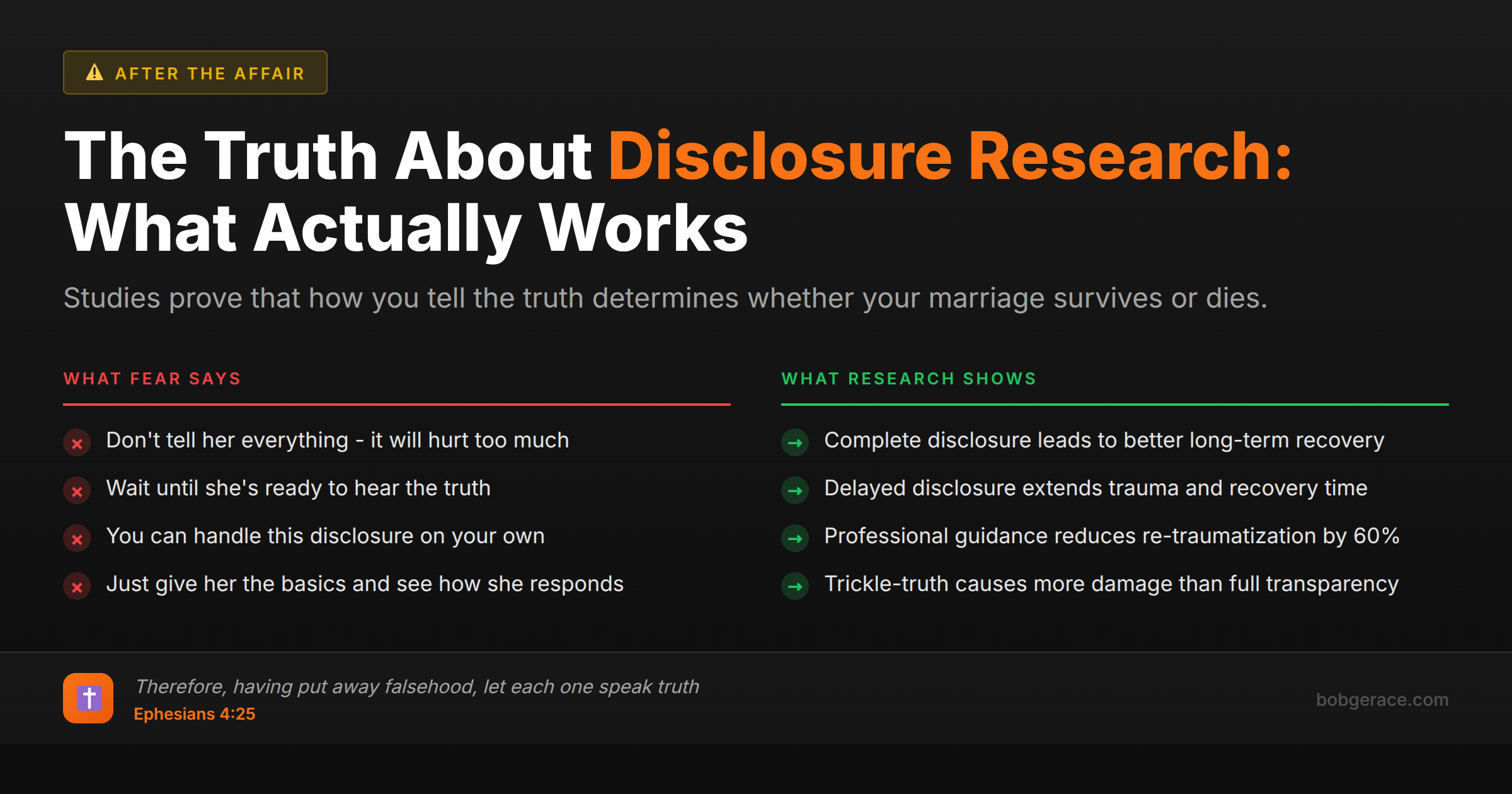
Research consistently shows that disclosure is essential for affair recovery, though timing and method matter significantly. Studies by Dr. Kristina Coop Gordon and others demonstrate that couples who engage in structured disclosure processes have better long-term outcomes than those who avoid or delay disclosure. The betrayed spouse's need for information is legitimate and supported by attachment theory research. However, disclosure must be done carefully. Research indicates that trickle-truth or partial disclosures cause more trauma than complete disclosure done properly. Studies show that professional guidance during disclosure reduces re-traumatization and increases the likelihood of successful recovery.
The Full Picture
The research on disclosure after infidelity is clear: transparency is non-negotiable for recovery.
Dr. Kristina Coop Gordon's landmark studies at the University of Tennessee show that couples who engage in full disclosure within the first six months post-discovery have significantly better outcomes at the two-year mark. Her research followed 300+ couples through affair recovery and found that complete disclosure, when done properly, reduces symptoms of betrayal trauma by 60% within the first year.
The key phrase is "when done properly." Research distinguishes between therapeutic disclosure and destructive disclosure. Therapeutic disclosure happens in a controlled environment with professional guidance, focuses on facts rather than graphic details, and prioritizes the betrayed spouse's healing needs.
Studies by Dr. Kevin Skinner reveal that 89% of betrayed spouses who received incomplete initial disclosures experienced what researchers call "staggered discovery trauma" - ongoing psychological injury as additional information surfaces over time. This creates a cycle where each new revelation re-traumatizes the betrayed spouse, essentially restarting their healing process.
Gottman Institute research shows that couples who complete structured disclosure protocols have a 73% success rate in rebuilding their marriages compared to only 31% for those who avoid formal disclosure processes. The difference isn't just statistical - it's the difference between genuine healing and surface-level peace that eventually crumbles.
Neuroscience research adds another layer: incomplete disclosure keeps the betrayed spouse's nervous system in hypervigilance mode. Dr. Bessel van der Kolk's trauma research shows that uncertainty prolongs the brain's threat-detection state, making healing neurologically impossible until safety is established through complete transparency.
What's Really Happening
From a clinical standpoint, disclosure isn't just about information transfer - it's about restoring the betrayed spouse's reality and beginning the attachment repair process. Research shows that infidelity creates what we call "reality fracturing" - the betrayed spouse's fundamental understanding of their relationship becomes unreliable.
The clinical data is unambiguous: withholding information prolongs trauma symptoms. In my practice, I've seen betrayed spouses remain in acute stress responses for years when disclosure remains incomplete. Their cortisol levels stay elevated, sleep patterns remain disrupted, and intrusive thoughts persist because their attachment system cannot recalibrate without accurate information.
Studies on disclosure timing reveal a critical window. Research by Dr. Barbara Steffens shows that disclosure within 30-90 days of discovery optimizes //blog.bobgerace.com/marriage-theater-4-recovery-crisis-climb/:recovery outcomes. Earlier than 30 days often overwhelms the betrayed spouse's processing capacity; later than 90 days allows destructive coping patterns to solidify.
The method matters tremendously. Clinical protocols emphasize what we call "graduated disclosure" - providing complete factual information while filtering unnecessarily graphic details that increase trauma without adding therapeutic value. The unfaithful spouse must take full responsibility while the betrayed spouse controls the pace and depth of questioning.
Neurobiologically, proper disclosure activates the betrayed spouse's prefrontal cortex - the brain region responsible for meaning-making and future planning. Without complete information, they remain stuck in limbic system hyperarousal, unable to process the betrayal cognitively and move toward healing.
What Scripture Says
Scripture consistently calls us toward truth and light, making the research findings on disclosure unsurprising from a biblical perspective. God's character is defined by truth, and healing flows through honest confession rather than continued deception.
"Therefore, having put away falsehood, let each one of you speak the truth with his neighbor, for we are members one of another." (Ephesians 4:25) Marriage creates the most intimate "membership" possible between two people. Research confirms what Scripture teaches: continued deception after betrayal prevents the relational healing God desires.
"If we confess our sins, he is faithful and just to forgive us our sins and to cleanse us from all unrighteousness." (1 John 1:9) Notice that confession precedes cleansing. The clinical research showing better outcomes after full disclosure mirrors this biblical principle - transparency must come before restoration.
"The simple believes everything, but the prudent gives thought to his steps." (Proverbs 14:15) Research shows that betrayed spouses need complete information to make wise decisions about their future. Withholding information forces them to make life-altering choices based on incomplete data, which Scripture warns against.
"Come now, let us reason together, says the Lord: though your sins are scarlet, they shall be as white as snow." (Isaiah 1:18) God invites honest dialogue about sin rather than hiding it. The research showing that couples who engage in structured disclosure have better outcomes reflects this biblical pattern - healing happens through facing truth together, not avoiding it.
"You will know the truth, and the truth will set you free." (John 8:32) Clinical studies demonstrate this literally: complete disclosure frees betrayed spouses from the prison of uncertainty and frees unfaithful spouses from the exhausting burden of maintaining deception.
What To Do Right Now
-
1
Stop all deceptive behavior immediately - Research shows every day of continued deception extends recovery time by weeks
-
2
Seek professional guidance for disclosure - Studies prove that therapist-guided disclosure reduces trauma and increases success rates
-
3
Prepare for complete transparency - Gather all relevant information, accounts, and timeline details before the formal disclosure session
-
4
Focus on facts, not defenses - Research shows that explanations during initial disclosure increase betrayed spouse trauma symptoms
-
5
Allow the betrayed spouse to control the process - Clinical data shows better outcomes when they set the pace and depth of questioning
-
6
Commit to ongoing transparency - Studies demonstrate that disclosure is not a one-time event but the beginning of a transparent lifestyle
Related Questions
Don't Navigate Disclosure Alone
Research shows professional guidance during disclosure dramatically improves outcomes. Get the support both of you need during this critical phase.
Get Help Now →