What does affair recovery therapy look like?
6 min read
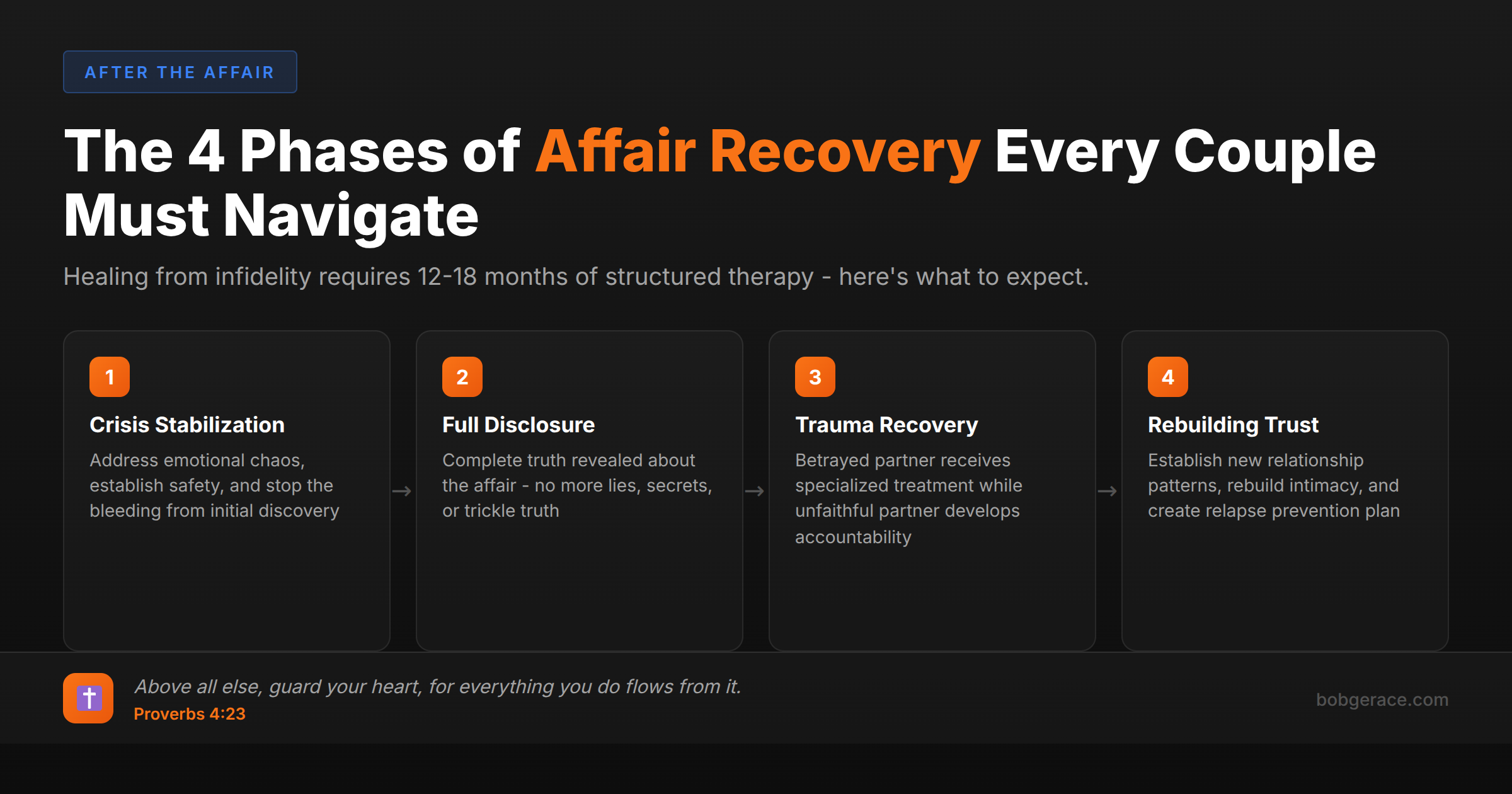
Affair recovery therapy follows a structured, phased approach designed to heal both partners after infidelity. The process typically begins with crisis stabilization, where the immediate emotional chaos is addressed and safety is established. This is followed by a disclosure phase where full truth is revealed, then a trauma recovery period focusing on the betrayed partner's healing. The final phases involve rebuilding trust, establishing new relationship patterns, and relapse prevention. The therapy process is intensive and usually requires 12-18 months of consistent work. It involves both individual sessions for each partner and joint couple sessions. The betrayed partner receives specialized treatment for betrayal trauma, while the unfaithful partner works on understanding their choices and developing accountability. Success depends on the unfaithful partner's genuine remorse and commitment to transparency, combined with both partners' willingness to engage in the difficult but transformative work of rebuilding their marriage.
The Full Picture
Affair recovery therapy isn't a quick fix—it's a comprehensive healing journey that addresses the deep wounds infidelity creates. The process typically unfolds in five distinct phases, each building upon the previous one.
Phase 1: Crisis Stabilization (Weeks 1-4) The immediate aftermath of discovery is chaotic. Therapy begins by establishing safety and reducing the emotional volatility. This includes creating boundaries, managing triggers, and helping both partners understand what they're experiencing is normal trauma responses.
Phase 2: Full Disclosure (Weeks 4-12) This phase involves the unfaithful partner revealing the complete truth about their affair(s). Often facilitated through a formal disclosure process, this stage is crucial because healing cannot begin without full honesty. The betrayed partner needs to know exactly what they're healing from.
Phase 3: Trauma Recovery (Weeks 8-20) The betrayed partner receives specialized treatment for betrayal trauma while the unfaithful partner works on understanding their behavior patterns. Individual therapy is crucial during this phase, as each person has different healing needs.
Phase 4: Rebuilding (Weeks 16-40) As individual healing progresses, couple work intensifies. This involves rebuilding trust through consistent actions, developing new communication patterns, and creating shared meaning around the experience.
Phase 5: Relapse Prevention (Weeks 30-52+) The final phase focuses on maintaining progress and preventing future betrayals. This includes ongoing accountability, continued individual growth, and regular relationship maintenance.
The therapy format typically includes: - Weekly individual sessions for both partners - Bi-weekly or weekly couple sessions - Intensive workshops or retreats - Support group participation - Specialized assessments (polygraph, psychological testing) - Homework assignments and daily check-ins
Recovery is possible, but it requires professional guidance, complete commitment from both partners, and usually takes 12-24 months of intensive work.
What's Really Happening
From a clinical perspective, affair recovery therapy addresses multiple trauma responses simultaneously. The betrayed partner is experiencing symptoms consistent with PTSD—intrusive thoughts, hypervigilance, emotional numbing, and physiological reactivity. Their nervous system is dysregulated, making rational processing nearly impossible initially.
The therapeutic approach must be trauma-informed, recognizing that traditional couples therapy techniques can actually retraumatize the betrayed partner. We use specialized interventions like EMDR, somatic therapy, and attachment-focused treatment to help regulate their nervous system first.
For the unfaithful partner, we're addressing what's often a complex web of underlying //blog.bobgerace.com/marriage-deep-probe-questions-root-issues/:issues—attachment wounds, addictive behaviors, compartmentalization patterns, and distorted thinking. Many unfaithful partners exhibit characteristics of sexual addiction or compulsive behavior that require specialized treatment protocols.
The neurobiological impact of betrayal creates what we call 'betrayal trauma,' which differs significantly from other forms of trauma because it involves someone who was supposed to be safe. This creates a unique therapeutic challenge—the person who caused the trauma is also expected to be part of the healing process.
Successful therapy requires the unfaithful partner to demonstrate genuine empathy and remorse, not just regret about consequences. Without this authentic emotional engagement, the betrayed partner's nervous system won't feel safe enough to begin healing. The therapy process literally rewires neural pathways damaged by betrayal, but this requires consistent safety and transparency over extended periods.
Recovery isn't just about staying together—it's about creating a completely new relationship built on authentic intimacy rather than the illusion of connection that existed before.
What Scripture Says
Scripture provides a clear framework for understanding both the devastation of betrayal and the pathway to restoration. Marriage is a covenant relationship that reflects Christ's love for the church, making infidelity not just a personal betrayal but a breaking of sacred vows.
"Above all else, guard your heart, for everything you do flows from it." (Proverbs 4:23) This verse speaks to the preventive work needed in marriage—protecting our hearts from temptation and maintaining proper boundaries.
"Therefore confess your sins to each other and pray for each other so that you may be healed." (James 5:16) The disclosure process in therapy mirrors this biblical principle. Healing requires confession, but it must be complete and motivated by genuine repentance, not just getting caught.
"The simple believe anything, but the prudent give thought to their steps." (Proverbs 14:15) For the betrayed spouse, this speaks to the wisdom of not immediately accepting promises without seeing consistent behavioral change over time. Trust must be rebuilt through actions, not words.
"Be kind and compassionate to one another, forgiving each other, just as in Christ God forgave you." (Ephesians 4:32) Forgiveness is central to recovery, but biblical forgiveness doesn't mean immediate reconciliation or ignoring consequences. It means releasing the right to revenge while still requiring repentance and change.
"He heals the brokenhearted and binds up their wounds." (Psalm 147:3) God specializes in healing what seems impossible to repair. The therapeutic process becomes a means of grace through which God works restoration.
"Create in me a pure heart, O God, and renew a steadfast spirit within me." (Psalm 51:10) David's prayer after his own adultery shows the heart transformation required for true recovery. Both partners need this kind of spiritual renewal—the unfaithful partner for obvious reasons, and the betrayed partner to heal from bitterness and trauma.
What To Do Right Now
-
1
Find a certified betrayal trauma therapist (CSAT or APSATS trained) who specializes in affair recovery, not just general couples therapy
-
2
Establish immediate safety by creating physical and emotional boundaries until you can process what's happened
-
3
Begin individual therapy before couples therapy - each partner needs specialized support for their unique healing needs
-
4
Document everything related to the affair while it's fresh in your memory, as trauma can affect recall later
-
5
Connect with a support group for betrayed spouses (like Beyond Betrayal) to reduce isolation and shame
-
6
Commit to the full recovery process timeline (12-24 months minimum) rather than looking for quick solutions
Related Questions
- Can a marriage survive infidelity?
- How long does recovery take?
- What is the typical betrayal trauma recovery timeline?
- What does rebuilding trust require from her?
- What are markers of genuine remorse vs. guilt?
- What does full recovery actually look like?
- What does 'the work' actually mean?
- Do I need therapy, coaching, or both?
- What therapies actually work for anger?
- What does quality coaching/therapy include?
Also find Bob on
Subscribe for weekly videos on Christian marriage.
Bring Your Affair Recovery to Bob
Therapy models are one thing. Your marriage—your timeline, your triggers, your specific betrayal—is another. A coach who knows your story keeps you from guessing alone.
Talk to Bob →