What is the 'trust timeline' post-affair?
6 min read
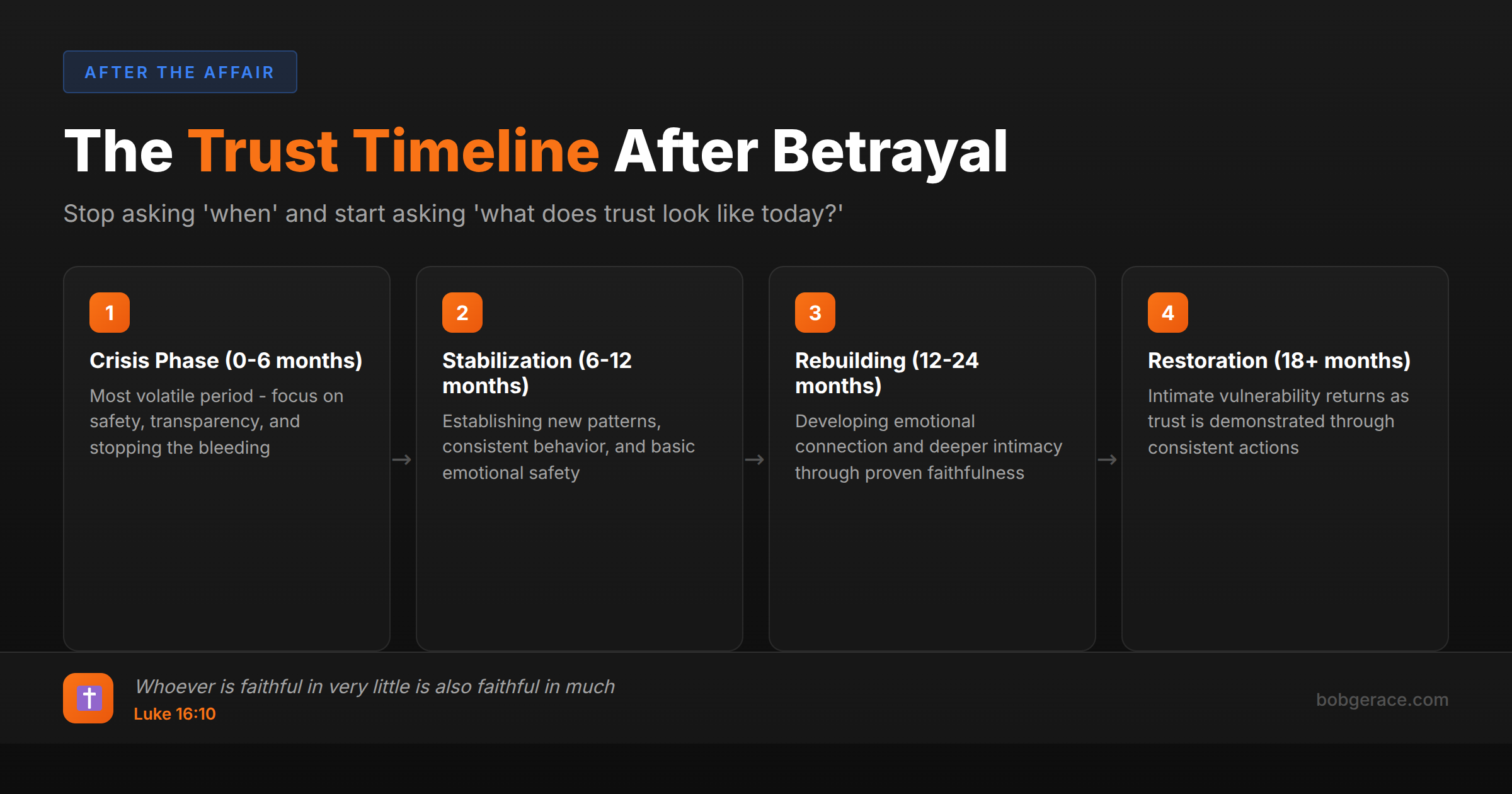
The trust timeline post-affair isn't a neat 6-month or 1-year recovery plan. In my experience working with hundreds of couples, genuine trust rebuilding typically takes 18 months to 3 years, with the first 6 months being the most volatile. The timeline depends on factors like the length of the affair, the betrayer's transparency, the betrayed partner's trauma response, and whether both spouses are fully committed to the process. Here's what I tell couples: stop asking 'when will I trust again' and start asking 'what does trust look like today?' Trust rebuilds in phases - first comes safety and transparency, then emotional connection, and finally intimate vulnerability. Each phase has its own timeline and can't be rushed.
The Full Picture
Let me be brutally honest about trust timelines - most marriage advice gets this wrong because it tries to give false hope with unrealistic timeframes. The truth is that rebuilding trust after an affair is measured in years, not months, and it's not a linear process.
Phase 1: Crisis and Safety (0-6 months) This is the emergency room phase. The betrayed spouse is in trauma, emotions are everywhere, and the primary goal is stopping the bleeding. Trust isn't even on the table yet - you're focused on basic safety and transparency. The unfaithful spouse must end all contact with the affair partner, provide complete transparency (phone, email, whereabouts), and begin individual therapy. This phase can last anywhere from 3-12 months depending on the betrayed spouse's trauma response.
Phase 2: Stabilization and Understanding (6-18 months) Once the crisis subsides, couples can begin the real work of understanding how the affair happened and what needs to change. This is where most couples think trust should return, but it's actually where the hard work begins. The betrayed spouse starts to feel safe enough to be vulnerable again, but trust is still fragile and conditional.
Phase 3: Rebuilding and Integration (18 months-3 years) This is where genuine trust begins to emerge. The betrayed spouse can think about the future without constant fear, and the unfaithful spouse has demonstrated consistent change over time. However, trust at this level isn't the same as before - it's actually stronger because it's based on reality rather than assumption.
What Affects the Timeline Several factors can accelerate or slow down trust recovery: the affair partner's identity (coworker vs. stranger), length of the affair, whether there were multiple affairs, the unfaithful spouse's attitude (defensive vs. remorseful), quality of professional help, and both spouses' attachment styles.
What's Really Happening
From a clinical perspective, trust rebuilding after infidelity follows predictable neurobiological and psychological patterns that can't be rushed. When betrayal occurs, the brain's threat detection system goes into overdrive, flooding the betrayed spouse with stress hormones and hypervigilance. This isn't a choice - it's a survival response.
The 18-month to 3-year //blog.bobgerace.com/marriage-crisis-timeline-rushing-extends-recovery/:timeline isn't arbitrary. Research shows it takes approximately 18-24 months for trauma symptoms to significantly decrease with proper treatment, and another 6-12 months for new neural pathways of safety to solidify. The brain literally needs time to rewire itself from a state of chronic threat to one of safety.
I often see couples frustrated because they think trust should return once the unfaithful spouse 'does everything right' for a few months. But trust operates on what we call 'earned security' - it requires consistent, reliable behavior over extended periods. The betrayed spouse's brain needs thousands of micro-experiences of safety before it will lower its defenses.
The concept of 'trust milestones' is more helpful than rigid timelines. Early milestones might include: the unfaithful spouse voluntarily sharing their whereabouts, the betrayed spouse having a good day without thinking about the affair, or both partners having a conflict without the affair being mentioned. Later milestones include: the betrayed spouse feeling safe when their partner travels, both partners discussing the future together, or physical intimacy returning without triggers.
What accelerates healing is when both partners understand that trust rebuilding is a process of co-regulation - the unfaithful spouse learns to consistently provide safety cues, while the betrayed spouse gradually allows their nervous system to calm down. This dance can't be rushed, but it can be supported with proper clinical intervention.
What Scripture Says
Scripture has a lot to say about trust, time, and the process of restoration. First, we need to understand that God Himself operates on His own timeline for healing and restoration, not ours.
Trust Must Be Earned Over Time *"Whoever is faithful in very little is also faithful in much, and whoever is dishonest in very little is also dishonest in much."* - Luke 16:10. This verse shows us that trustworthiness is demonstrated through consistent faithfulness in small things over time. After an affair, trust must be rebuilt through thousands of small acts of faithfulness.
God's Restoration Takes Time *"And after you have suffered a little while, the God of all grace, who has called you to his eternal glory in Christ, will himself restore, confirm, strengthen, and establish you."* - 1 Peter 5:10. Even God's restoration process involves a season of suffering and waiting. We can't expect marriage restoration to happen faster than God's own timeline.
Wisdom in Gradual Trust *"The simple believe anything, but the prudent give thought to their steps."* - Proverbs 14:15. After betrayal, it's actually wise and biblical for the betrayed spouse to be cautious about trusting again. Blind trust isn't faith - it's foolishness.
The Process of Bearing Fruit *"But the one who received the seed that fell on good soil is the man who hears the word and understands it. He produces a crop, yielding a hundred, sixty or thirty times what was sown."* - Matthew 13:23. True repentance and change produce fruit over time. The betrayed spouse has every right to look for sustained fruit before fully trusting again.
Patience in the Process *"Be patient, then, brothers and sisters, until the Lord's coming. See how the farmer waits for the land to yield its valuable crop, patiently waiting for the autumn and spring rains."* - James 5:7. Just as a farmer can't rush the growing season, couples can't rush trust recovery. There are seasons to this process that must be honored.
What To Do Right Now
-
1
Stop pressuring yourself or your spouse about timeline expectations - focus on today's choices and behaviors instead
-
2
Identify which phase you're currently in (crisis, stabilization, or rebuilding) and adjust your expectations accordingly
-
3
Create specific, measurable trust milestones rather than asking vague questions like 'when will I trust again'
-
4
Establish weekly check-ins where you can honestly discuss trust levels without judgment or defensiveness
-
5
Get professional help from a therapist who specializes in affair recovery - this process is too complex to navigate alone
-
6
Document progress in a journal to recognize growth during the inevitable setbacks and discouraging days
Related Questions
- How long does recovery take?
- What does rebuilding trust require from her?
- What does 'earning back' trust actually look like?
- What is the typical betrayal trauma recovery timeline?
- What are markers of genuine remorse vs. guilt?
- When do triggers decrease in intensity?
- How do I know if he's really changing?
- What timeframe indicates real change?
- How long does real transformation take?
- What should I expect to see at 30/90/180 days?
Also find Bob on
Subscribe for weekly videos on Christian marriage.
Your Timeline Won't Match the Textbook
A coach who knows your specific story can tell you what phase you're actually in and what to focus on this month. You don't have to keep guessing alone.
Talk to Bob →