What is 'repetition compulsion'?
6 min read
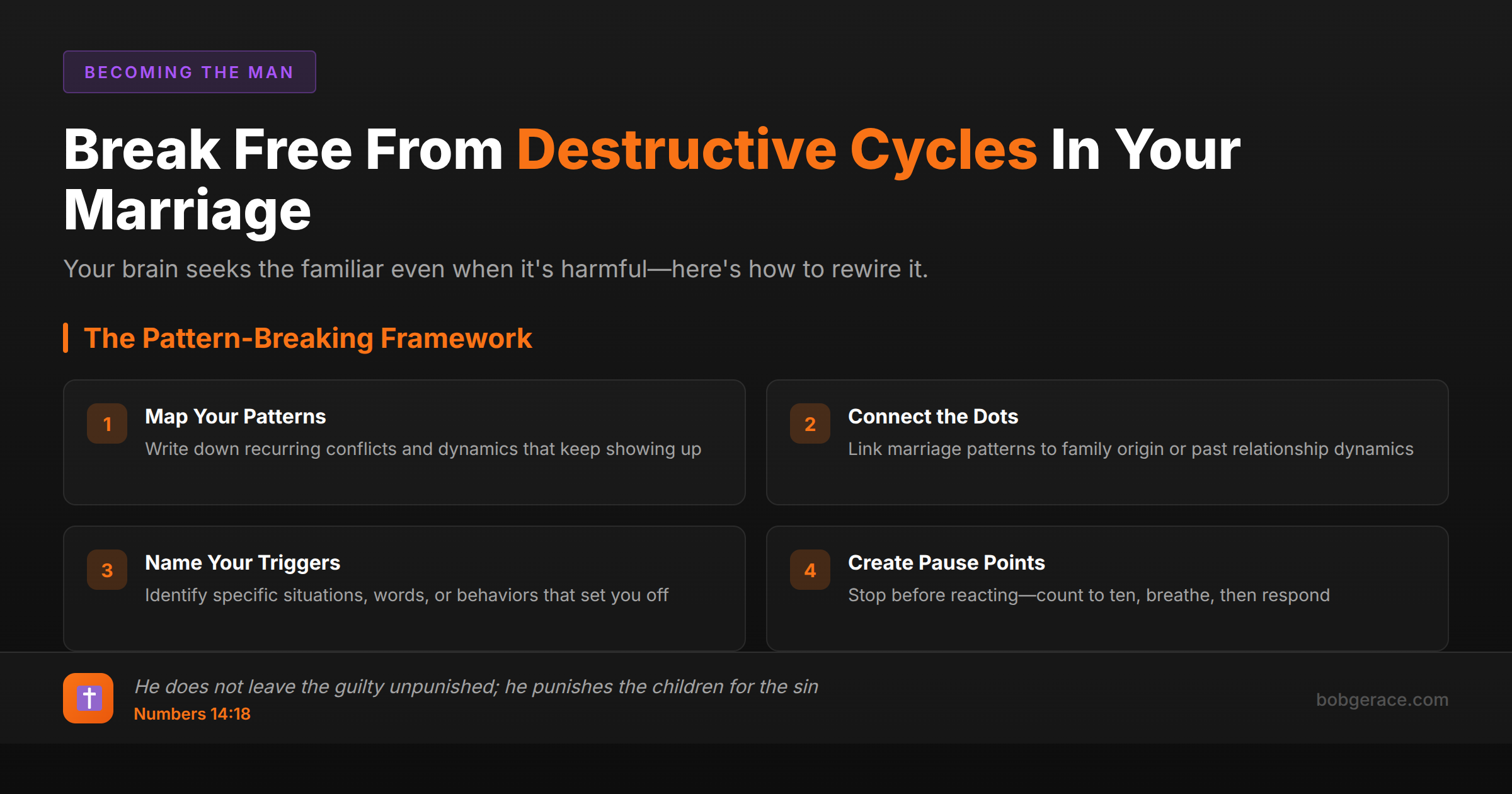
Repetition compulsion is a psychological phenomenon where you unconsciously repeat destructive patterns, behaviors, or relationship dynamics—even when they cause pain. It's like being stuck in a loop where you keep making the same mistakes despite knowing better. In marriage, this might look like repeatedly picking the same fights, falling into familiar patterns of criticism and withdrawal, or recreating childhood dynamics in your relationship. Your brain actually seeks out the familiar, even when the familiar is harmful, because it feels 'normal' based on your past experiences. Understanding repetition compulsion is crucial because awareness is the first step toward breaking these destructive cycles.
The Full Picture
Repetition compulsion isn't just a fancy psychology term—it's a real force that might be sabotaging your marriage right now. Here's what's actually happening: your unconscious mind is driven to repeat familiar patterns, especially those from childhood or previous relationships, because familiarity feels safe even when it's destructive.
How It Shows Up in Marriage:
- Conflict Patterns: You find yourselves having the same argument over and over, just with different triggers - Communication Cycles: One person criticizes, the other withdraws, rinse and repeat - Relationship Roles: You recreate the same unhealthy dynamics you witnessed growing up - Self-Sabotage: Things get good, then you unconsciously do something to mess it up - Partner Selection: You're attracted to people who recreate familiar (but unhealthy) dynamics
Why Your Brain Does This:
Your brain prioritizes predictability over happiness. If chaos, criticism, or emotional distance was 'normal' in your family of origin, your nervous system learned to expect and even create these conditions. What feels 'right' isn't necessarily what's healthy.
The Marriage Impact:
Repetition compulsion can keep couples trapped in cycles where they're both trying to heal old wounds through their marriage, but end up re-wounding each other instead. You might find yourself saying, 'Why do we keep doing this?' or 'This feels just like my parents' marriage.'
The good news? Once you recognize these patterns, you can start making conscious choices instead of unconscious repetitions. Awareness breaks the compulsion's power.
What's Really Happening
From a clinical perspective, repetition compulsion operates through what we call 'implicit memory'—your nervous system's learned responses that bypass conscious thought. When you experience repetition compulsion in marriage, you're not being weak or stupid; you're responding to deeply embedded neural pathways formed during your most formative years.
The Neurological Reality:
Your brain's limbic system, which processes emotions and memories, doesn't distinguish between past and present. When triggered, it responds as if childhood threats or dynamics are happening right now. This is why you might find yourself reacting with intensity that doesn't match the current situation.
Three Key Mechanisms:
1. Trauma Bonding: If love came with pain in your early experiences, you might unconsciously associate conflict with intimacy 2. Familiarity Bias: Your brain seeks what it knows, even when what it knows is harmful 3. Unfinished Business: You unconsciously try to 'fix' past relationships through current ones
Breaking the Pattern:
The therapeutic approach involves developing what we call 'earned security'—consciously learning new responses. This requires recognizing your triggers, understanding their origins, and practicing new behaviors until they become automatic. It's not about willpower; it's about retraining your nervous system through consistent, conscious practice.
The key insight is that repetition compulsion isn't about the present—it's about the past playing out in your current relationship. Once you understand this, you can begin responding to your spouse as they actually are, not as representatives of earlier relationships.
What Scripture Says
Scripture speaks directly to the reality of destructive patterns and God's power to break them. The Bible acknowledges that we can be trapped in cycles, but it also provides the path to freedom.
Breaking Generational Patterns:
*"The Lord is slow to anger, abounding in love and forgiving sin and rebellion. Yet he does not leave the guilty unpunished; he punishes the children for the sin of the parents to the third and fourth generation."* - Numbers 14:18
This doesn't mean God punishes children for parents' sins, but that destructive patterns get passed down through families. The good news is that God also breaks these cycles.
Transformation Through Renewal:
*"Do not conform to the pattern of this world, but be transformed by the renewing of your mind. Then you will be able to test and approve what God's will is—his good, pleasing and perfect will."* - Romans 12:2
God's solution to destructive patterns is mind renewal—literally retraining how we think and respond.
Freedom from Bondage:
*"So if the Son sets you free, you will be free indeed."* - John 8:36
*"It is for freedom that Christ has set us free. Stand firm, then, and do not let yourselves be burdened again by a yoke of slavery."* - Galatians 5:1
Repetition compulsion is a form of bondage, but Christ's freedom includes freedom from destructive patterns. This freedom requires both God's power and our active participation in change.
New Creation Reality:
*"Therefore, if anyone is in Christ, the new creation has come: The old has gone, the new is here!"* - 2 Corinthians 5:17
Your past doesn't have to determine your marriage's future. Through Christ, you have access to new ways of thinking, feeling, and relating that aren't bound by old patterns.
What To Do Right Now
-
1
Map Your Patterns: Write down the recurring conflicts or dynamics in your marriage. What themes keep showing up?
-
2
Connect the Dots: Identify similarities between your marriage patterns and your family of origin or past relationships
-
3
Name Your Triggers: Recognize what situations, words, or behaviors consistently trigger your strongest reactions
-
4
Create Pause Points: Develop a practice of stopping before reacting when you feel triggered (count to ten, take three deep breaths)
-
5
Choose Conscious Responses: Instead of reacting automatically, ask yourself: 'How do I want to respond based on who I am today, not who I was then?'
-
6
Seek Professional Help: Consider couples therapy or individual counseling to help identify and break deeply embedded patterns
Related Questions
- Why do I repeat patterns I hate?
- I know what to do but can't do it
- It's like I'm sabotaging myself
- What is the 'inner critic' and why does it sabotage?
- What does my pattern protect me from?
- What role did my childhood play in my anger patterns?
- What is 'intergenerational transmission'?
- What does 'sins of the fathers' mean?
- How did I learn these patterns?
- What patterns did I inherit vs. choose?
Also find Bob on
Subscribe for weekly videos on Christian marriage.
Breaking the Loop Takes a Coach
You see the pattern. You know it's happening. But stopping it alone—especially when you're in it—is a different game. A coach sees what you can't see in real time, calibrates to your specific marriage, and helps you interrupt the cycle before it runs again.
Talk to Bob →