What are 'neural pathways' and why do patterns persist?
6 min read
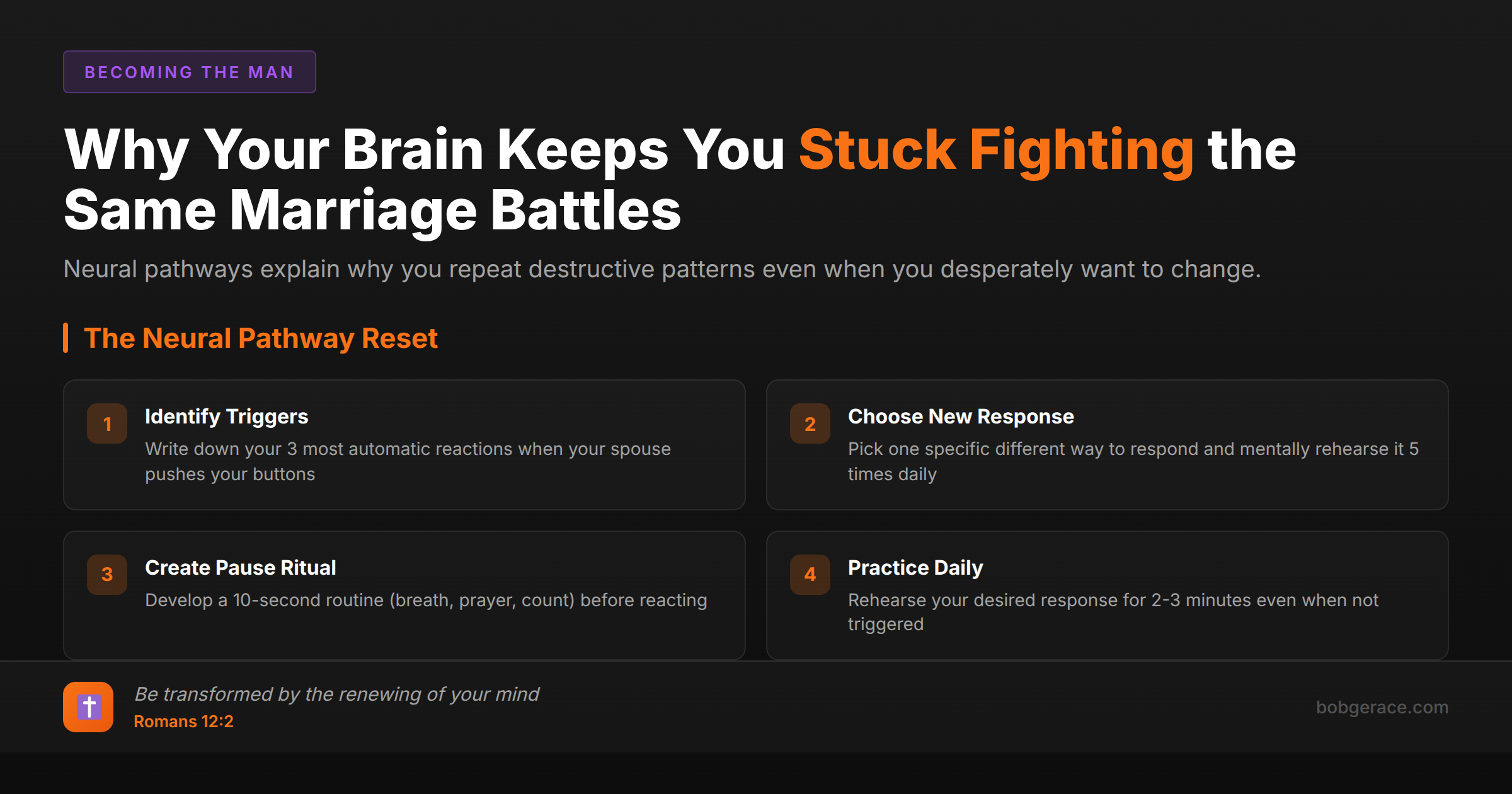
Neural pathways are like superhighways in your brain - physical connections between neurons that carry information and control your thoughts, emotions, and behaviors. When you repeat the same reactions in your marriage over and over, you're literally strengthening these pathways, making those responses automatic. Think of it like walking through a field. The first time, you push through tall grass. But walk that same path repeatedly, and you create a worn trail that's easy to follow. Your brain works similarly - the more you use certain thought or behavior patterns, the stronger those neural 'trails' become. This is why you can feel trapped repeating the same arguments, reactions, or emotional responses in your marriage, even when you genuinely want to change.
The Full Picture
Your brain is constantly rewiring itself based on what you do, think, and experience. This process, called neuroplasticity, means that every time you have a particular thought or emotional reaction to your spouse, you're strengthening the neural pathway that makes that response more likely in the future.
Here's what's happening: When your spouse does something that triggers you, your brain doesn't pause to thoughtfully consider the best response. Instead, it takes the path of least resistance - the well-worn neural highway you've traveled countless times before. Maybe that's getting defensive, shutting down, raising your voice, or bringing up past hurts. These aren't character flaws; they're literally the easiest routes for your brain to take.
The Formation Process
Neural pathways form through repetition and emotional intensity. The more emotionally charged an experience, the deeper it gets carved into your neural network. This is why arguments or moments of rejection in your marriage can create such persistent patterns - they're often highly emotional events that your brain wants to 'remember' to protect you in the future.
Why Change Feels So Hard
Creating new neural pathways requires conscious effort and repetition. It's like deciding to walk through untamed grass instead of taking the established path - it's harder work, at least initially. Your brain will keep defaulting to familiar patterns because they require less energy and feel 'safer' even when they're destructive to your marriage.
The good news? With intentional practice, new pathways can become stronger than old ones. Your brain can literally be rewired for healthier responses to your spouse.
What's Really Happening
From a clinical perspective, understanding neural pathways is crucial for couples therapy because it explains why insight alone rarely creates lasting change. Many couples come to me saying, 'We know what we're doing wrong, but we keep doing it anyway.' This isn't a lack of willpower - it's neuroscience.
The brain regions involved in our automatic responses (like the amygdala and basal ganglia) operate much faster than our prefrontal cortex, where conscious decision-making happens. When your spouse triggers you, your automatic response system can activate before your rational mind even knows what's happening. This is why you might find yourself in the middle of an argument wondering, 'How did we get here again?'
The Role of Mirror Neurons
Mirror neurons add another layer of complexity. These specialized cells fire both when we act and when we observe others acting. In marriage, this means you're literally mirroring your spouse's emotional states and responses, which can create feedback loops that strengthen negative patterns for both partners simultaneously.
Neurochemical Reinforcement
When familiar patterns activate, your brain releases neurochemicals that can actually feel rewarding, even when the behavior is destructive. The brain interprets 'familiar' as 'safe,' which is why couples often feel oddly comfortable in their dysfunction.
The therapeutic implication is clear: changing marriage patterns requires rewiring the brain through consistent, intentional practice of new responses. This takes time - typically 8-12 weeks of daily practice to create noticeable pathway changes. Couples need patience with themselves and each other during this neurological renovation process.
What Scripture Says
Scripture anticipated what neuroscience now proves - that transformation requires the renewal of our minds and the formation of new patterns. God's Word provides both the framework and the power for rewiring our brains toward love.
Renewing Your Mind
*'Do not conform to the pattern of this world, but be transformed by the renewing of your mind. Then you will be able to test and approve what God's will is—his good, pleasing and perfect will.'* (Romans 12:2)
This verse describes exactly what happens when we create new neural pathways. The Greek word 'metamorphoo' (transformed) implies a complete change in form - literally a rewiring of how we think and respond.
The Power of Repetitive Practice
*'Finally, brothers and sisters, whatever is true, whatever is noble, whatever is right, whatever is pure, whatever is lovely, whatever is admirable—if anything is excellent or praiseworthy—think about such things.'* (Philippians 4:8)
Paul understood that what we repeatedly focus on shapes our minds. This isn't just positive thinking - it's neural pathway formation guided by God's truth.
Breaking Destructive Patterns
*'In your anger do not sin: Do not let the sun go down while you are still angry.'* (Ephesians 4:26)
God knows that unresolved anger creates destructive neural pathways. His instruction to deal with anger quickly prevents the formation of resentment patterns that become increasingly difficult to break.
The Role of the Holy Spirit
*'But when he, the Spirit of truth, comes, he will guide you into all the truth.'* (John 16:13)
The Holy Spirit works with our renewed minds to create pathways aligned with God's design for marriage. This is supernatural neuroplasticity - God literally helping rewire our brains for love, forgiveness, and connection.
What To Do Right Now
-
1
Identify your automatic responses - Write down your three most common reactions when triggered by your spouse
-
2
Choose one new response - Pick a specific, different way you want to respond and practice it mentally five times daily
-
3
Create a pause ritual - Develop a 10-second routine (deep breath, quick prayer, count to five) to engage your prefrontal cortex before reacting
-
4
Practice the new pattern daily - Even when not triggered, rehearse your desired response for 2-3 minutes each day to strengthen the pathway
-
5
Track your progress - Keep a simple log of when you used old vs. new responses, celebrating small wins
-
6
Be patient with the process - Expect 8-12 weeks of consistent practice before the new pathway feels natural
Related Questions
Ready to Rewire Your Marriage Patterns?
Understanding neuroscience is just the beginning. Get personalized strategies to create lasting change in your relationship patterns.
Work With Me →