What does it take to build new neural pathways?
6 min read
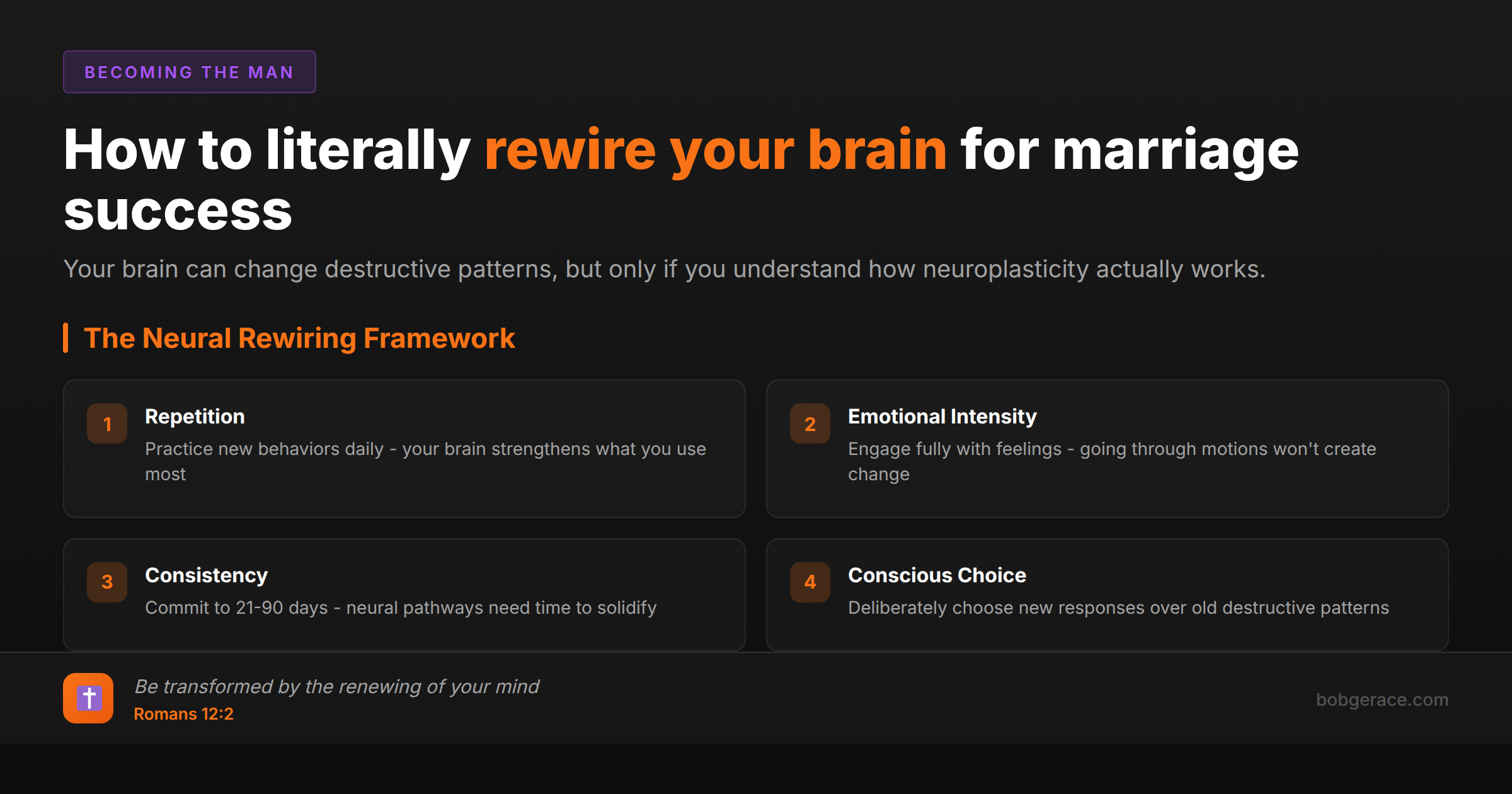
Building new neural pathways requires three essential elements: repetition, emotional intensity, and consistency over time. Your brain literally rewires itself through neuroplasticity, but this process demands intentional practice of new behaviors for 21-90 days depending on complexity. The key is combining conscious repetition with emotional engagement - simply going through motions won't cut it. In marriage, this means practicing new communication patterns, conflict resolution skills, or intimacy habits with full emotional investment. Each time you choose the new response over your old destructive pattern, you're strengthening that neural pathway while weakening the old one. The process isn't instant, but it's absolutely possible when you understand how your brain actually works.
The Full Picture
Your brain is constantly changing - this is called neuroplasticity. Every thought, emotion, and action creates neural pathways, and the ones you use most become superhighways. The destructive patterns sabotaging your marriage? They're deeply grooved pathways your brain defaults to because they're familiar.
The good news: You can build new pathways at any age. The challenging news: it requires intentional effort and patience.
## The Three Non-Negotiables
Repetition is the foundation. You must consciously choose the new behavior repeatedly. If you're learning to pause before reacting in anger, you need to practice that pause hundreds of times. Each repetition sends electrical signals down the new pathway, gradually making it stronger.
Emotional intensity accelerates the process. Experiences with strong emotion - positive or negative - create stronger neural connections. This is why traumatic events can instantly rewire your brain, but it also means positive, emotionally-charged experiences build helpful pathways faster.
Consistency over time is crucial. Sporadic effort won't cut it. You need sustained practice over weeks or months. Research shows simple habits take 21 days to form, but complex behavioral changes in relationships can take 60-90 days.
## What Derails the Process
Stress hormones like cortisol actually inhibit the formation of new neural pathways while strengthening old, reactive ones. This is why you default to your worst patterns during conflict - your brain literally can't access the new pathways you're trying to build.
Inconsistency also undermines progress. Every time you revert to the old pattern, you're reinforcing that pathway while weakening the new one.
What's Really Happening
From a clinical perspective, understanding neuroplasticity transforms how we approach marriage therapy. I see couples frustrated that they 'know better' but keep repeating destructive patterns. The issue isn't knowledge - it's neural architecture.
When we're triggered, the amygdala hijacks our prefrontal cortex - the area responsible for rational decision-making. This is why you can attend marriage seminars, read books, and genuinely want to change, but still explode during conflict. Your brain is literally wired for the old response.
The therapeutic breakthrough happens when we work with the brain, not against it. I teach couples to recognize their 'window of tolerance' - the emotional zone where they can access new learning and responses. Outside this window, during high stress or conflict, the old neural pathways dominate.
This is why practicing new communication skills during calm moments is essential. You're building neural infrastructure that might be accessible during lower-level conflicts. But expecting to use brand-new skills during intense fights is neurologically unrealistic.
I also emphasize the role of co-regulation in rewiring. When one partner remains calm and regulated, it actually helps the other's nervous system calm down, creating space for new neural pathways to engage. This is why 'taking a break' during heated arguments isn't avoiding conflict - it's creating neurological conditions where change is possible.
The most successful couples I work with understand that building new patterns is literally brain surgery - it takes time, patience, and the right conditions.
What Scripture Says
Scripture speaks powerfully about the renewal of our minds and transformation of our patterns. God designed our brains with the capacity for change, and His Word provides the framework for this renewal.
Romans 12:2 commands us to "be transformed by the renewing of your mind." The Greek word for 'transformed' is *metamorphoo* - the same word used for a caterpillar becoming a butterfly. This isn't minor adjustment; it's complete restructuring at the neural level.
Philippians 4:8 gives us the content for new pathways: "Whatever is true, whatever is noble, whatever is right, whatever is pure, whatever is lovely, whatever is admirable - if anything is excellent or praiseworthy - think about such things." This isn't positive thinking; it's intentional neural pathway construction.
2 Corinthians 10:5 describes the process: "We take captive every thought to make it obedient to Christ." This is exactly what happens when you interrupt old thought patterns and consciously choose new ones. You're literally taking thoughts captive and redirecting neural traffic.
Ephesians 4:22-24 explains the mechanism: "Put off your old self... be made new in the attitude of your minds; and put on the new self." The 'putting off' weakens old neural pathways through disuse, while 'putting on' builds new ones through practice.
God doesn't expect instant transformation - even the Israelites took 40 years to develop new patterns. Lamentations 3:22-23 reminds us that His mercies are "new every morning," providing fresh opportunities to build new pathways each day.
Galatians 6:9 encourages persistence: "Let us not become weary in doing good, for at the proper time we will reap a harvest if we do not give up." Building new neural pathways requires this same perseverance, trusting that consistent effort will yield transformation.
What To Do Right Now
-
1
Identify one specific pattern you want to change - Write down exactly what you currently do and what you want to do instead
-
2
Practice the new behavior daily during calm moments - Don't wait for conflict; rehearse new responses when you're regulated
-
3
Create environmental cues - Set phone reminders, sticky notes, or other triggers to prompt the new behavior
-
4
Track your progress for 30 days - Mark each time you choose the new response to reinforce the neural pathway
-
5
Engage emotions positively - Celebrate small wins and visualize the benefits to add emotional intensity to new pathways
-
6
Plan for setbacks - When you revert to old patterns, immediately practice the new response three times to counteract the reinforcement
Related Questions
- What is 'neuroplasticity' and how do I leverage it?
- How long does it take to rewire the brain?
- What conditions optimize neural rewiring?
- How do I change patterns that feel hardwired?
- What role does repetition play?
- What is 'state-dependent learning'?
- How long does real change actually take?
- What does trauma recovery look like?
- What is the typical betrayal trauma recovery timeline?
- How do I rewire trauma responses?
Also find Bob on
Subscribe for weekly videos on Christian marriage.
You Can't Rewire Your Marriage Alone
Knowing the neuroscience is one thing. Applying it to your specific marriage—your patterns, your triggers, your wife—requires a coach who sees what you can't see.
Talk to Bob →