What is 'habit loop' and how do I interrupt it?
6 min read
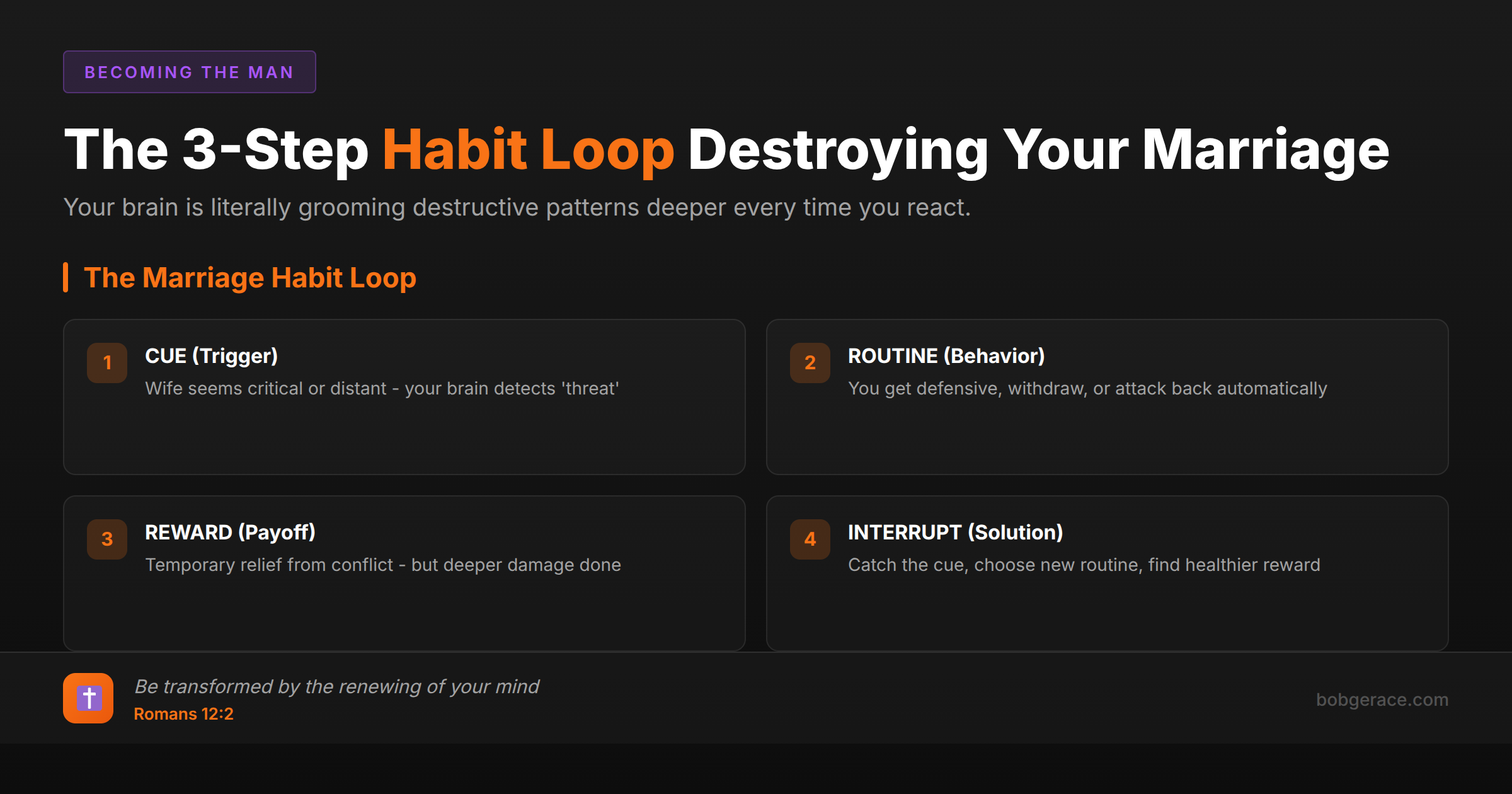
A habit loop is your brain's automatic three-step process: cue (trigger), routine (behavior), and reward (payoff). In marriage, this might look like: feeling criticized (cue), getting defensive or withdrawing (routine), and experiencing temporary relief from conflict (reward). Your brain literally grooves these patterns deeper each time you repeat them. To interrupt the loop, you need to identify your specific cue, consciously choose a different routine, and find a healthier reward. The key is catching yourself at the cue stage before the automatic behavior kicks in. This requires awareness, intentionality, and practice - but it absolutely works when you commit to the process.
The Full Picture
Your brain is designed for efficiency, not excellence in relationships. It creates habit loops to conserve mental energy by automating repeated behaviors. While this helps you drive a car without thinking about every turn, it wreaks havoc in marriage when destructive patterns become automatic.
Here's how the habit loop works in marriage:
The cue is any trigger - your spouse's tone, a certain look, coming home to dishes in the sink, or feeling unappreciated. Your brain recognizes this pattern and prepares for the familiar routine.
The routine is your automatic response - shutting down, arguing, criticizing, withdrawing, scrolling your phone, or whatever you typically do. This happens so fast you barely realize you're choosing it.
The reward is what your brain gets from this behavior - avoiding vulnerability, feeling righteous anger, getting attention, or escaping discomfort. Even negative rewards count because they're familiar and predictable.
Why you keep repeating destructive patterns:
Your brain doesn't care if the habit serves your marriage well. It only cares that the loop is complete and efficient. Each repetition strengthens the neural pathway, making the behavior more automatic and harder to change.
The most frustrating part? You probably know your patterns are destructive, but knowing isn't enough. Your prefrontal cortex (logical brain) gets hijacked by your limbic system (emotional brain) before you can choose differently. This is why willpower alone fails - you're fighting against deeply grooved neural pathways.
But here's the hope: neuroplasticity means your brain can change. You can literally rewire these patterns with consistent, intentional practice. It takes time and effort, but you're not stuck with the loops you have today.
What's Really Happening
From a neuroscience perspective, habit loops form in the basal ganglia, a primitive part of your brain that operates below conscious awareness. This is why you can find yourself in the middle of an argument wondering 'how did we get here again?' Your emotional brain literally hijacked your rational thinking.
What makes marriage habits particularly stubborn is that they're often formed during moments of emotional intensity. When you're hurt, angry, or scared, your brain is flooded with stress hormones that actually strengthen memory consolidation. This means the patterns you develop during conflict become more deeply embedded than habits formed in calm moments.
The reward phase is crucial to understand. Even seemingly negative outcomes can be rewarding to your brain if they're familiar or serve an unconscious need. For example, starting an argument might feel terrible, but if it leads to passionate makeup sessions, your brain may file 'conflict' under 'path to intimacy.' Or if withdrawing gets your spouse to pursue you, the attention becomes the reward that reinforces the withdrawal behavior.
Interrupting these loops requires what I call 'conscious competence' - deliberately engaging your prefrontal cortex to override automatic responses. This means creating space between stimulus and response, which is literally rewiring your neural networks. The good news is that with consistent practice, new patterns become just as automatic as old ones. Studies show that it takes an average of 66 days to form a new habit, but even small changes can begin shifting the dynamic immediately.
What Scripture Says
God's Word speaks directly to the process of breaking destructive patterns and forming new ones. The Bible calls this transformation 'renewing your mind' and 'putting off the old self.'
Romans 12:2 reminds us: *'Do not conform to the pattern of this world, but be transformed by the renewing of your mind. Then you will be able to test and approve what God's will is—his good, pleasing and perfect will.'* The word 'transformed' here is 'metamorphosis' - the same process that changes a caterpillar into a butterfly. God designed your brain for this kind of radical change.
Ephesians 4:22-24 gives us the three-step process: *'You were taught, with regard to your former way of life, to put off your old self, which is being corrupted by its deceitful desires; to be made new in the attitude of your minds; and to put on the new self, created to be like God in true righteousness and holiness.'* This is literally describing how to interrupt habit loops - recognize the old pattern, renew your thinking, and choose new behaviors.
2 Corinthians 10:5 addresses the mental battle: *'We demolish arguments and every pretension that sets itself up against the knowledge of God, and we take captive every thought to make it obedient to Christ.'* Taking thoughts captive happens at the cue stage - before they become automatic routines.
James 1:19-20 gives practical wisdom for marriage habits: *'Everyone should be quick to listen, slow to speak and slow to become angry, because human anger does not produce the righteousness that God desires.'* This 'slow to speak, slow to anger' is exactly the pause you need to interrupt destructive loops.
God didn't design you to be enslaved to destructive patterns. He gave you the capacity for transformation and the power of His Spirit to change. Your marriage can reflect His love, but it requires intentionally cooperating with how He designed your brain to work.
What To Do Right Now
-
1
Map your specific loop - Write down your most common cue, routine, and reward. Be brutally honest about what payoff you're getting from destructive behaviors.
-
2
Identify your warning signs - Notice physical sensations, thoughts, or emotions that happen right before you engage the routine. This is your intervention point.
-
3
Plan your replacement routine - Choose a specific alternative behavior that gives you a similar reward but serves your marriage better. Make it concrete and actionable.
-
4
Create environmental cues - Set phone reminders, write notes, or use physical objects to prompt your new routine until it becomes automatic.
-
5
Practice the pause - When you notice your cue, take three deep breaths before responding. This engages your prefrontal cortex and gives you choice.
-
6
Track your progress - Keep a simple log of when you catch yourself and choose differently. Celebrating small wins rewires your brain for success.
Related Questions
Ready to Break Free from Destructive Patterns?
You don't have to stay stuck in cycles that hurt your marriage. Let me help you identify your specific loops and create lasting change.
Get Help Now →