What does 'sins of the fathers' mean and how do I break the cycle?
5 min read
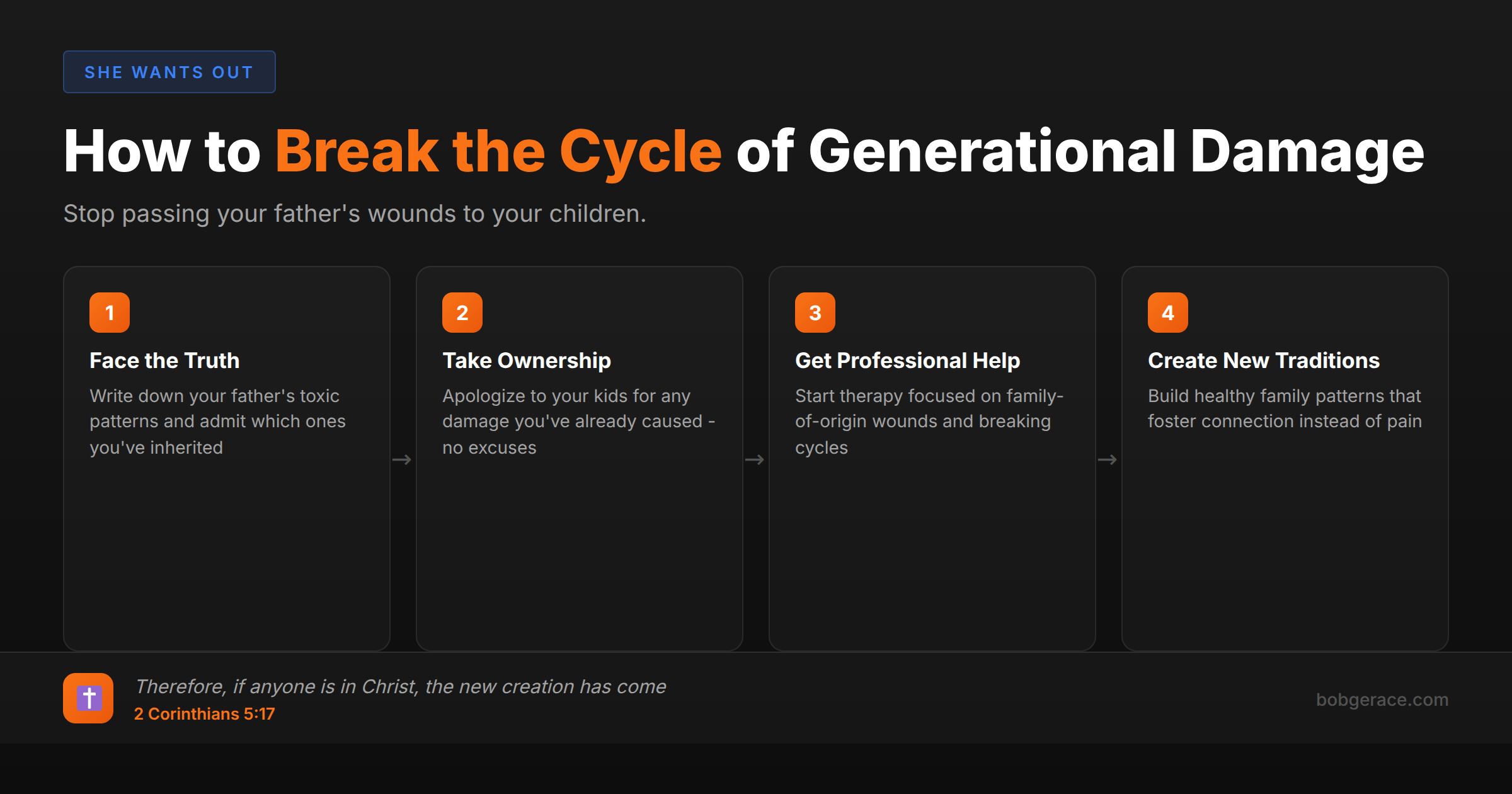
The 'sins of the fathers' refers to destructive patterns that get passed down through generations - addiction, anger, abandonment, abuse, or emotional unavailability. It's not about being cursed, but about learned behaviors and unhealed wounds creating cycles that damage families. Here's the hard truth: if you don't deal with what was done to you, you'll likely pass it on to your kids, even if you swear you won't. Breaking the cycle starts with brutal honesty about your own wounds and the patterns you've inherited. It means doing the hard work of healing so your kids inherit blessing instead of brokenness. The good news? God specializes in turning generational curses into generational blessings. But it requires intentional action, not just good intentions.
The Full Picture
Generational patterns are like invisible scripts that run in the background of families. Your father's explosive anger becomes your cold withdrawal. His workaholism becomes your emotional unavailability. His criticism becomes your perfectionism that crushes your kids' spirits.
The most common generational patterns I see:
• Emotional patterns - Anger, depression, anxiety, or emotional numbness passed down like DNA • Relational patterns - Inability to connect, fear of intimacy, conflict avoidance, or explosive arguments • Behavioral patterns - Addiction, workaholism, financial irresponsibility, or sexual dysfunction • Spiritual patterns - Religious legalism, spiritual apathy, or using faith as a weapon instead of a source of healing
Here's what most men don't understand: you don't have to repeat the exact same behaviors to continue the cycle. If your dad was a raging alcoholic, you might become a workaholic who's never present. Different expression, same wound - abandoning your family emotionally instead of physically.
The cycle continues because we often swing to the opposite extreme without actually healing the root issue. You promise to never yell like your father did, so you shut down completely when conflict arises. Your kids still don't feel safe - they just fear your silence instead of your rage.
Breaking the cycle requires understanding that trauma creates templates. The way your parents handled stress, conflict, intimacy, and responsibility becomes your default programming. Without conscious intervention, you'll parent from your wounds, not your wisdom.
What's Really Happening
From a clinical perspective, generational patterns are transmitted through both genetic predispositions and environmental modeling. Research in epigenetics shows that trauma can literally alter gene expression, potentially affecting multiple generations. However, this doesn't doom families to repeat destructive cycles.
Attachment theory explains much of this transmission. Children develop internal working models of relationships based on their early caregiving experiences. A father who was emotionally neglected often struggles with attunement - the ability to read and respond to his child's emotional needs. He's not intentionally harmful; he simply lacks the neural pathways for secure attachment because they were never developed in his own childhood.
Neuroplasticity research offers hope: the brain can form new neural pathways throughout life. When fathers engage in intentional healing work - therapy, support groups, mindfulness practices - they literally rewire their brains for healthier responses. This creates new templates for their children.
The therapeutic concept of 'earned security' is particularly relevant. Adults who experienced insecure attachment in childhood can develop secure attachment patterns through healing relationships and intentional growth work. These individuals often become exceptional parents precisely because they've done the work to break generational cycles.
Key clinical indicators of successful cycle-breaking include increased self-awareness, emotional regulation skills, the ability to make amends, and creating new family traditions that foster connection rather than perpetuating dysfunction.
What Scripture Says
Scripture addresses generational patterns directly, but with a message of hope and transformation. Exodus 34:7 describes God as 'visiting the iniquity of the fathers on the children and the children's children, to the third and the fourth generation.' This isn't divine punishment but a recognition that sin creates consequences that ripple through families.
However, Ezekiel 18:20 offers powerful hope: 'The soul who sins shall die. The son shall not suffer for the iniquity of the father, nor the father suffer for the iniquity of the son.' You are not doomed to repeat your father's failures. God holds each generation accountable for their own choices.
Deuteronomy 30:19 calls us to active choice: 'I have set before you life and death, blessing and curse. Therefore choose life, that you and your offspring may live.' Breaking generational cycles is about choosing life - choosing healing, growth, and transformation over familiar dysfunction.
Psalm 78:4-6 reveals God's heart for generational blessing: 'We will not hide them from their children, but tell to the coming generation the glorious deeds of the Lord... that the next generation might know them, the children yet unborn, and arise and tell them to their children.' Instead of passing down wounds, we're called to pass down testimonies of God's faithfulness.
2 Corinthians 5:17 reminds us that 'if anyone is in Christ, he is a new creation. The old has passed away; behold, the new has come.' This isn't just positional truth but practical reality - God can break what seems unbreakable and heal what seems unhealable.
What To Do Right Now
-
1
Identify the specific patterns you inherited by writing down your father's emotional, relational, and behavioral patterns - then honestly assess which ones show up in your life
-
2
Apologize to your children for any ways you've already passed down harmful patterns, taking full responsibility without making excuses or blaming your own upbringing
-
3
Begin therapy or counseling focused specifically on family-of-origin work and breaking generational patterns
-
4
Create new family traditions that foster connection and healing rather than perpetuating dysfunction
-
5
Establish accountability with other men who are committed to breaking generational cycles in their own families
-
6
Start praying specifically for your children's future families, asking God to establish generational blessings that will continue long after you're gone
Related Questions
- How do I model Christ to my kids in this?
- What legacy am I leaving them through this crisis?
- How do I teach them about marriage when mine is failing?
- What does faithful fatherhood look like through divorce?
- How do I show them grace without excusing sin?
- How do I pray with them when I'm barely holding on?
- What role did my childhood play in my anger patterns?
- What patterns did I inherit vs. choose?
- What is 'intergenerational transmission'?
- How do generational patterns work spiritually?
Also find Bob on
Subscribe for weekly videos on Christian marriage.
You Don't Have to Figure This Out Alone
Breaking what your father passed to you is different work for every man. A coach who knows your specific story can help you see the patterns you're blind to and build the new ones that stick.
Talk to Bob →