How do I model Christ to my kids in this?
5 min read
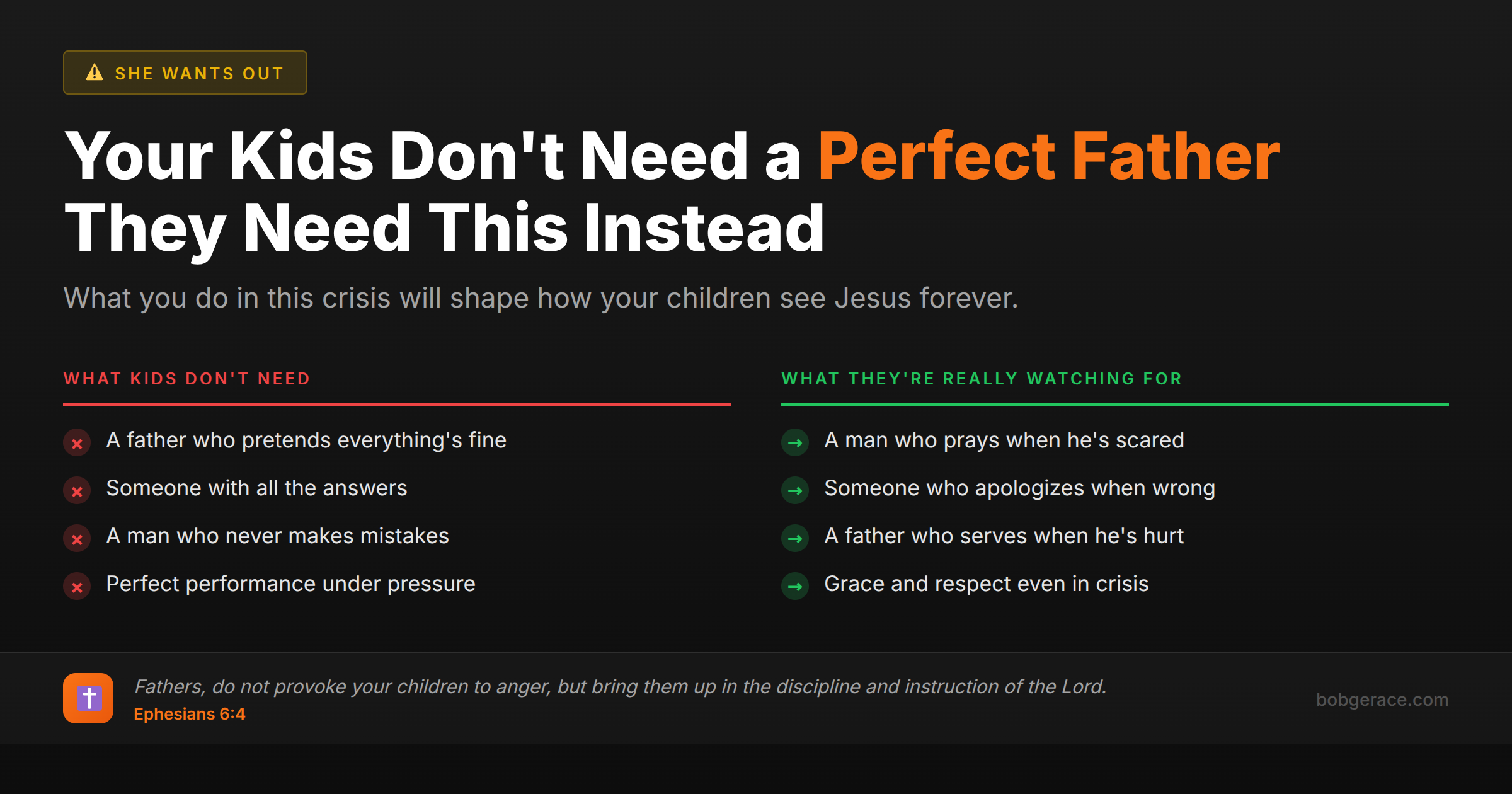
Your kids are watching how you handle this crisis, and right now you have an incredible opportunity to show them what Jesus looks like in real life. They don't need a perfect father - they need an authentic one who demonstrates grace under pressure, owns his mistakes, and treats their mother with respect even when things are falling apart. Modeling Christ isn't about having all the answers or pretending everything's fine. It's about showing them a man who prays when he's scared, apologizes when he's wrong, serves when he's hurt, and loves unconditionally even when love isn't returned. Your children will remember more about how you handled this season than what caused it.
The Full Picture
Your marriage crisis isn't happening in a vacuum - your children are absorbing every interaction, every tone of voice, every response you make. This is simultaneously one of the most challenging and most important seasons of your fatherhood.
The reality is stark: Your kids are forming their understanding of what it means to be a husband, a father, and a man of God based on how you navigate this storm. They're learning whether faith is something that holds up under pressure or just words we say on Sunday.
Many fathers make the mistake of thinking they're protecting their children by pretending everything is fine. Others swing too far the other direction, making their kids emotional confidants or turning them against their mother. Both approaches cause lasting damage.
Christ-like fatherhood during crisis looks different:
• Transparency without oversharing - Your kids can sense tension, but they don't need adult details • Consistency in character - Your values don't change based on circumstances • Servant leadership in action - Continuing to serve your family even when you're not appreciated • Emotional regulation - Showing them how a man processes difficult emotions in healthy ways
Your children need to see that their father's faith isn't dependent on favorable circumstances. They need to witness a man who can be disappointed without becoming bitter, who can be hurt without seeking revenge, and who can be under attack without compromising his character.
What's Really Happening
From a developmental psychology perspective, children learn relationship patterns primarily through observation rather than instruction. During high-conflict periods, their nervous systems are already heightened, making them even more attuned to parental behavior and emotional regulation.
Research in attachment theory shows that children develop their internal working models of relationships based on what they witness between their parents. When fathers maintain emotional stability and moral consistency during marital crisis, children develop resilience and secure attachment patterns that serve them throughout life.
The neuroscience is clear: Children's developing brains are particularly sensitive to parental stress and conflict. However, when they observe a parent managing difficult emotions constructively - through prayer, healthy coping mechanisms, and consistent values - they develop stronger emotional regulation capabilities themselves.
What's particularly significant is that children often internalize blame during parental conflict. When fathers model appropriate responsibility-taking without self-destruction, children learn healthy boundaries between personal responsibility and circumstances beyond their control.
The clinical observation I've made repeatedly: Fathers who maintain their character during marital crisis raise children with stronger faith foundations and healthier relationship patterns. Conversely, fathers who become reactive, vindictive, or emotionally dysregulated during these seasons often see their children struggle with trust and emotional security for years to come.
This season, though painful, represents a profound opportunity to demonstrate that your faith and character aren't circumstantial but foundational.
What Scripture Says
Scripture provides clear guidance on faithful fatherhood, especially during difficult seasons. Ephesians 6:4 instructs us: "Fathers, do not provoke your children to anger, but bring them up in the discipline and instruction of the Lord." During marital crisis, this means not allowing your pain to spill over into harsh treatment of your children.
Philippians 4:8-9 offers the blueprint: "Finally, brothers, whatever is true, whatever is honorable, whatever is just, whatever is pure, whatever is lovely, whatever is commendable, if there is any excellence, if there is anything worthy of praise, think about these things. What you have learned and received and heard and seen in me—practice these things, and the God of peace will be with you." Your children need to see these qualities lived out in real time.
1 Corinthians 11:1 captures the heart of Christian modeling: "Be imitators of me, as I am of Christ." Paul wasn't claiming perfection but demonstrating a life oriented toward Christ's example. Your children need to see a father who consistently points toward Jesus through his actions and responses.
James 1:19-20 provides practical guidance: "Know this, my beloved brothers: let every person be quick to hear, slow to speak, slow to anger; for the anger of man does not produce the righteousness of God." During conflict, your children are learning whether you practice what you've taught them about emotional self-control.
Proverbs 20:7 reminds us of the generational impact: "The righteous who walks in his integrity—blessed are his children after him!" Your faithfulness during this season creates a spiritual inheritance that will impact your children's children.
What To Do Right Now
-
1
Establish consistent daily prayer time where your children can see your dependence on God during difficulty
-
2
Apologize to your children for any harsh words or emotional outbursts without making excuses or blaming circumstances
-
3
Continue serving your family practically (meals, bedtime routines, household responsibilities) regardless of marital tension
-
4
Speak respectfully about their mother in front of them, even when you're hurt or angry with her
-
5
Create age-appropriate conversations acknowledging family stress without burdening them with adult details
-
6
Demonstrate healthy emotional processing by verbalizing how you're taking your concerns to God rather than acting out
Related Questions
- How do I be a good dad through this?
- What does faithful fatherhood look like through divorce?
- How do I teach them about marriage when mine is failing?
- How do I show them grace without excusing sin?
- How do I pray with them when I'm barely holding on?
- What legacy am I leaving them through this crisis?
- What does humility in conflict look like?
- How do I not let lawyers poison what's left?
- What does it mean to love without grasping?
- How do I grieve while also fighting?
Also find Bob on
Subscribe for weekly videos on Christian marriage.
Your Kids Need You to Get This Right
Modeling Christ through crisis isn't theoretical—it's daily decisions in your specific situation with your actual kids. A coach who knows your story helps you see what you can't see alone.
Talk to Bob →