What should I see in how he handles stress?
6 min read
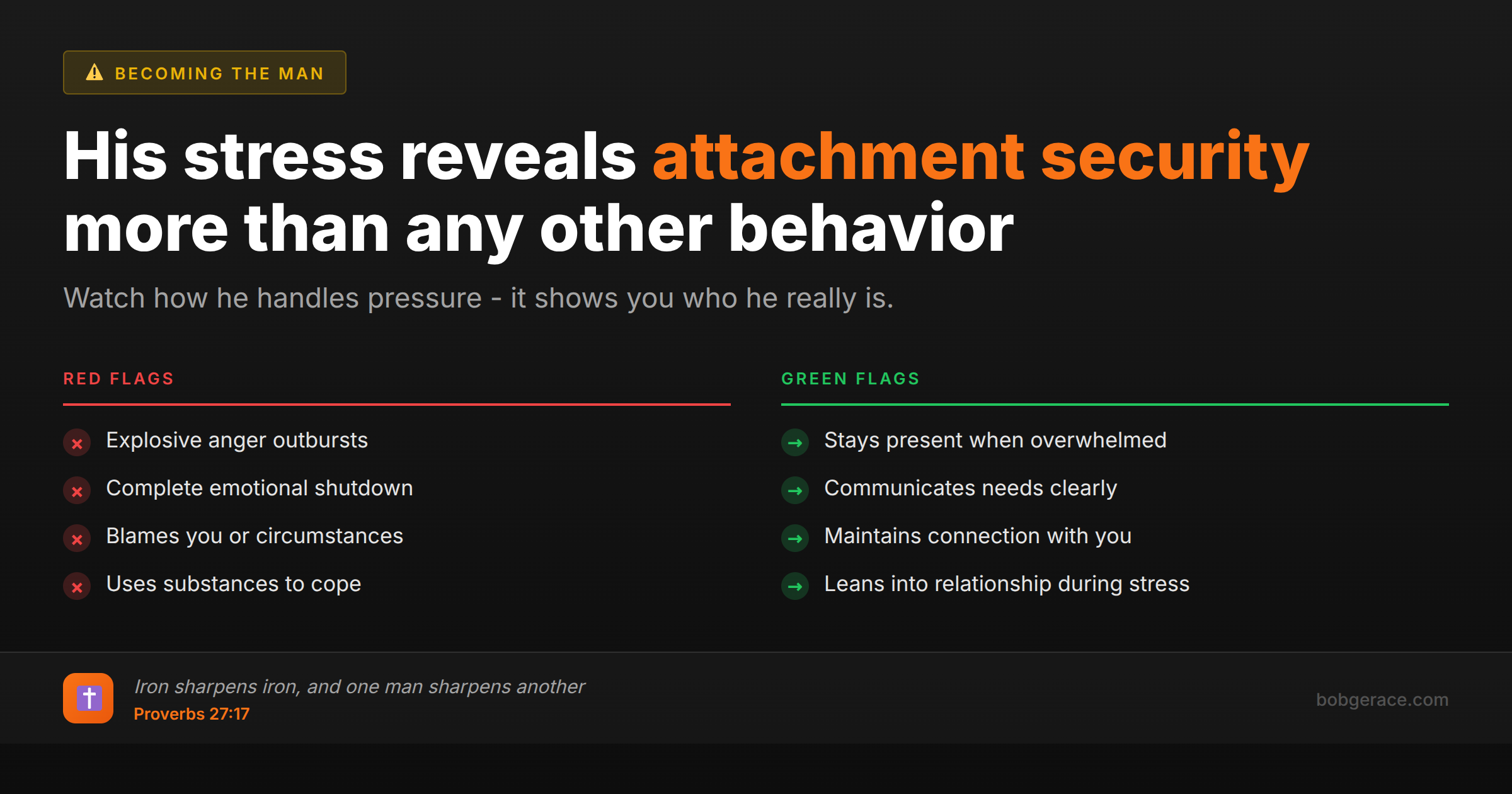
A man's stress response reveals his attachment security more than almost any other behavior. Look for emotional regulation - does he stay present when overwhelmed, or does he shut down completely? Healthy stress responses include acknowledging the pressure, communicating his needs clearly, and maintaining connection with you even when struggling. Red flags include explosive anger, complete emotional withdrawal, blame-shifting, or using substances to cope. The key isn't that he never feels stressed - it's how he processes and communicates during those moments. A securely attached man will lean into relationships during stress, not away from them.
The Full Picture
Stress doesn't create character - it reveals it. When life pressures mount, you get to see who your man really is underneath the everyday pleasantries and routines.
A securely attached man handles stress like a tree with deep roots. He might bend in the storm, but he doesn't break or abandon his foundation. You'll notice he:
- Stays communicative even when struggling - Asks for help without shame or defensiveness - Takes responsibility for his emotions and reactions - Maintains physical and emotional presence in the relationship - Uses healthy outlets like exercise, prayer, or trusted friendships
Contrast this with insecure attachment patterns. The anxiously attached man becomes clingy and desperate under stress, seeking constant reassurance. The avoidantly attached man disappears entirely - emotionally, physically, or both. He'll work late, go silent, or find reasons to be anywhere but present with his feelings and his family.
Here's what's crucial: Everyone has stress responses shaped by their upbringing and past experiences. The question isn't whether he has triggers - it's whether he's willing to own them and grow. A man who recognizes his stress patterns and actively works to improve them shows the kind of character you can build a life with.
Pay attention to his recovery time too. How quickly does he return to baseline after a stressful episode? Does he repair any damage his stress response may have caused to your connection? These patterns will play out for decades of marriage - choose accordingly.
What's Really Happening
From a clinical perspective, stress responses are deeply rooted in our early attachment experiences and nervous system development. When we're under pressure, the prefrontal cortex - our rational thinking center - goes offline, and we default to primitive survival patterns.
Men with secure attachment typically learned early that relationships are safe harbors during storms. Their caregivers helped them co-regulate emotions, so they internalized the ability to stay connected while processing difficult feelings. Under stress, they instinctively move toward support rather than away from it.
Insecurely attached individuals learned the opposite - that relationships become dangerous or unavailable during stress. The avoidant pattern develops when emotional expression was punished or ignored, leading to hyper-independence. The anxious pattern emerges from inconsistent caregiving, creating hypervigilance about relationship security.
Neurologically, chronic stress actually reshapes the brain. Men who've experienced trauma or chronic childhood stress often have overactive amygdalas (fear centers) and weakened prefrontal cortexes. This isn't an excuse for poor behavior, but it explains why some men struggle more with emotional regulation.
The encouraging news: neuroplasticity means these patterns can change. Men who commit to therapy, mindfulness practices, or other growth work can literally rewire their stress responses. Look for a man who's not just aware of his patterns but actively engaged in changing them.
What Scripture Says
Scripture has much to say about how we handle pressure and trials. God's design for masculinity includes emotional strength that draws others closer, not pushes them away.
Proverbs 27:17 reminds us that "Iron sharpens iron, and one man sharpens another." A godly man understands that growth happens in relationship, especially during difficult seasons. He won't isolate when stressed but will lean into godly counsel and support.
Ecclesiastes 4:12 teaches that "a cord of three strands is not quickly broken." This applies beautifully to marriage - when stress hits, a wise man strengthens the cords that bind you together rather than fraying them through withdrawal or anger.
James 1:19-20 instructs us to be "quick to hear, slow to speak, slow to anger; for the anger of man does not produce the righteousness of God." Notice the emphasis on emotional regulation and thoughtful response rather than reactive behavior.
1 Corinthians 16:13-14 calls men to "be watchful, stand firm in the faith, act like men, be strong. Let all that you do be done in love." True biblical masculinity combines strength with love - never using stress as an excuse to abandon either.
Philippians 4:6-7 offers the ultimate stress management strategy: "Do not be anxious about anything, but in everything by prayer and supplication with thanksgiving let your requests be made known to God. And the peace of God, which surpasses all understanding, will guard your hearts and your minds in Christ Jesus."
A man who turns toward God and toward his family during stress reflects the heart of biblical masculinity.
What To Do Right Now
-
1
Observe his stress responses without immediately trying to fix or judge - just gather information
-
2
Ask direct questions: 'How do you typically handle pressure?' and 'What helps you feel most supported when you're stressed?'
-
3
Notice his recovery patterns - does he repair emotional disconnection after stressful episodes?
-
4
Pay attention to whether he takes responsibility for his stress responses or blames external circumstances
-
5
Watch for healthy coping mechanisms versus concerning ones (exercise vs. substance use, prayer vs. isolation)
-
6
Have honest conversations about stress management expectations and boundaries in your potential future together
Related Questions
- What should I see in how he handles my emotions?
- What does non-defensive response look like?
- What does taking responsibility sound like?
- How will he handle my doubt if he's genuine?
- What daily practices indicate commitment?
- What should change in his emotional regulation?
- What is 'amygdala hijack' and how do I interrupt it?
- How do I regulate when my body is in fight-or-flight?
- What is 'window of tolerance' and how do I widen mine?
- How do I stay in prefrontal cortex during conflict?
Also find Bob on
Subscribe for weekly videos on Christian marriage.
Not Sure What You're Seeing?
A coach who knows your specific relationship can help you read what's actually happening in his stress patterns — and what it means for your marriage.
Talk to Bob →