What is 'window of tolerance' and how do I widen mine?
6 min read
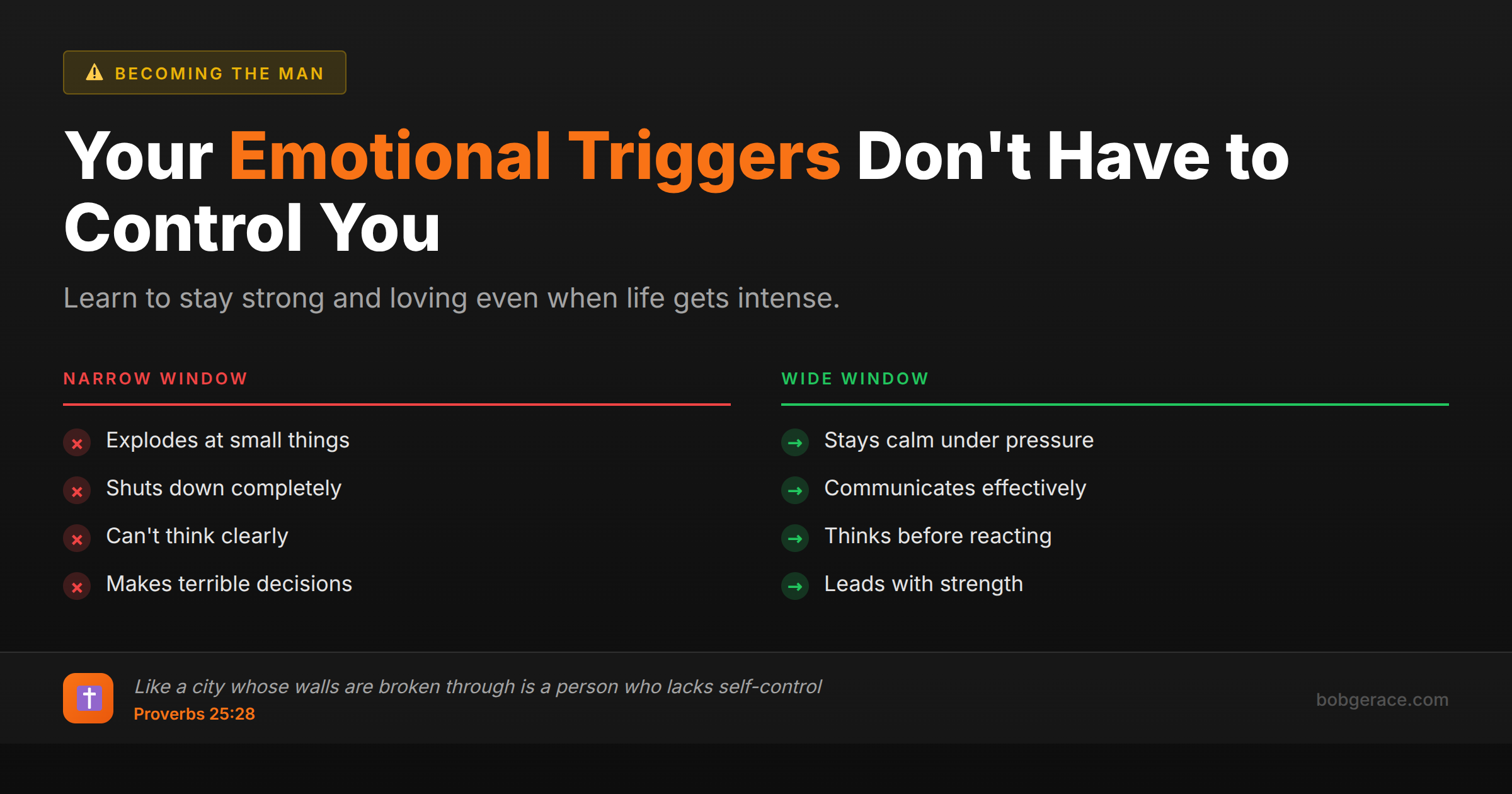
Your 'window of tolerance' is the zone where you can handle stress, conflict, and emotions without losing control or shutting down. Think of it as your emotional bandwidth - the space between exploding in anger and completely withdrawing. When you're in this window, you can think clearly, communicate effectively, and make good decisions even under pressure. When you're outside this window, you either go into hyperarousal (anger, panic, rage) or hypoarousal (numbness, withdrawal, depression). The good news? You can absolutely widen your window through specific practices like breathing techniques, regular exercise, adequate sleep, and developing emotional awareness. It's not about never feeling stressed - it's about expanding your capacity to stay functional and loving even when life gets intense.
The Full Picture
Your window of tolerance determines whether you respond to your spouse with wisdom or react from a place of emotional chaos. This concept, developed by psychiatrist Dan Siegel, explains why some people can handle conflict calmly while others explode or shut down at the smallest trigger.
Inside your window: You feel challenged but capable. You can listen to your spouse's concerns, express your own needs clearly, and work toward solutions together. Your nervous system is regulated, your brain is functioning optimally, and you can access empathy and wisdom.
Outside your window (hyperarousal): You're in fight-or-flight mode. Everything feels like a threat. Your spouse's tone triggers rage, minor disagreements become battles, and you say things you later regret. Your sympathetic nervous system has taken over.
Outside your window (hypoarousal): You've shut down completely. You feel numb, disconnected, or hopeless. You might give your spouse the silent treatment, withdraw emotionally, or feel like nothing matters. Your nervous system has collapsed into freeze mode.
The width of your window isn't fixed - it's influenced by your childhood experiences, current stress levels, physical health, and daily habits. Trauma, chronic stress, poor sleep, and unhealthy relationships all narrow your window. But here's what most people don't realize: you have more control over this than you think.
Widening your window isn't about becoming emotionless or never feeling triggered. It's about expanding your capacity to stay present and loving even when your marriage hits rough patches. It's the difference between being a thermometer (reacting to the emotional temperature around you) and being a thermostat (regulating the emotional climate of your relationship).
What's Really Happening
When we examine the window of tolerance from a neuroscience perspective, we're looking at the interplay between your autonomic nervous system and your ability to maintain emotional regulation. The width of this window is directly correlated with the health of your vagus nerve - the longest cranial nerve that connects your brain to your heart, lungs, and digestive system.
Individuals with narrow windows often have dysregulated nervous systems, typically stemming from early attachment experiences or unresolved trauma. When your window is narrow, even minor stressors can push you into hyperarousal (sympathetic activation) or hypoarousal (parasympathetic shutdown). In marriage, this shows up as explosive anger over small issues or complete emotional withdrawal during conflict.
The remarkable news is that neuroplasticity allows us to literally rewire these patterns. Through consistent practice of regulation techniques, we can strengthen the neural pathways associated with calm, thoughtful responses. Breathwork, for instance, directly stimulates the vagus nerve and signals safety to your nervous system.
What I see clinically is that couples often have complementary dysregulation patterns - one partner goes high (hyperarousal) while the other goes low (hypoarousal). This creates a destructive cycle where the pursuer becomes more activated and the withdrawer becomes more shut down. Breaking this cycle requires both partners to work on widening their individual windows of tolerance while learning to co-regulate together.
The goal isn't to eliminate all emotional reactivity - emotions are data and serve important functions. The goal is to maintain enough nervous system flexibility that you can feel your emotions without being hijacked by them.
What Scripture Says
Scripture consistently calls us to emotional regulation and self-control, which aligns perfectly with the concept of widening our window of tolerance. God designed us with emotions, but He also expects us to manage them wisely.
Proverbs 25:28 - "Like a city whose walls are broken through is a person who lacks self-control." Your window of tolerance is like the walls of a city - they determine what gets in and how you respond. Narrow walls (a narrow window) mean you're constantly under siege from minor stressors.
Proverbs 14:29 - "Whoever is patient has great understanding, but one who is quick-tempered displays folly." Patience is essentially having a wide window of tolerance. It's the capacity to remain understanding even when provoked.
Galatians 5:22-23 - "But the fruit of the Spirit is love, joy, peace, forbearance, kindness, goodness, faithfulness, gentleness and self-control." Notice that self-control comes last - it's the culmination of all the other fruits. You can't manufacture self-control through willpower alone; it flows from being connected to God's Spirit.
Ephesians 4:26-27 - "In your anger do not sin: Do not let the sun go down while you are still angry, and do not give the devil a foothold." This isn't about never feeling anger - it's about staying within your window when anger arises. Unprocessed anger narrows your window and gives the enemy access to your marriage.
God calls us to be "slow to anger" (James 1:19) not because anger is wrong, but because rushing into anger usually means we've left our window of tolerance. When we're regulated, we can feel anger without being controlled by it, addressing issues with both truth and grace.
What To Do Right Now
-
1
Learn your warning signs: Notice physical sensations (tight chest, clenched jaw, racing heart) that signal you're approaching the edge of your window
-
2
Practice the 4-7-8 breath: Inhale for 4, hold for 7, exhale for 8. This activates your parasympathetic nervous system and widens your window immediately
-
3
Create a daily regulation practice: 10 minutes of prayer/meditation, progressive muscle relaxation, or gentle movement to keep your baseline calm
-
4
Improve your sleep hygiene: Poor sleep dramatically narrows your window. Aim for 7-9 hours with consistent bedtimes and a screen-free bedroom
-
5
Use the 24-hour rule: When you feel yourself leaving your window during conflict, take a break and revisit the conversation when you're regulated
-
6
Track your window patterns: Notice what narrows it (hunger, stress, lack of exercise) and what widens it (prayer, nature, quality time with spouse) to make informed daily choices
Related Questions
Ready to Stop Reacting and Start Responding?
Your marriage doesn't have to be held hostage by your emotional reactions. Let's work together to widen your window of tolerance and transform how you handle conflict.
Get Started →