What's happening in my brain when I rage?
6 min read
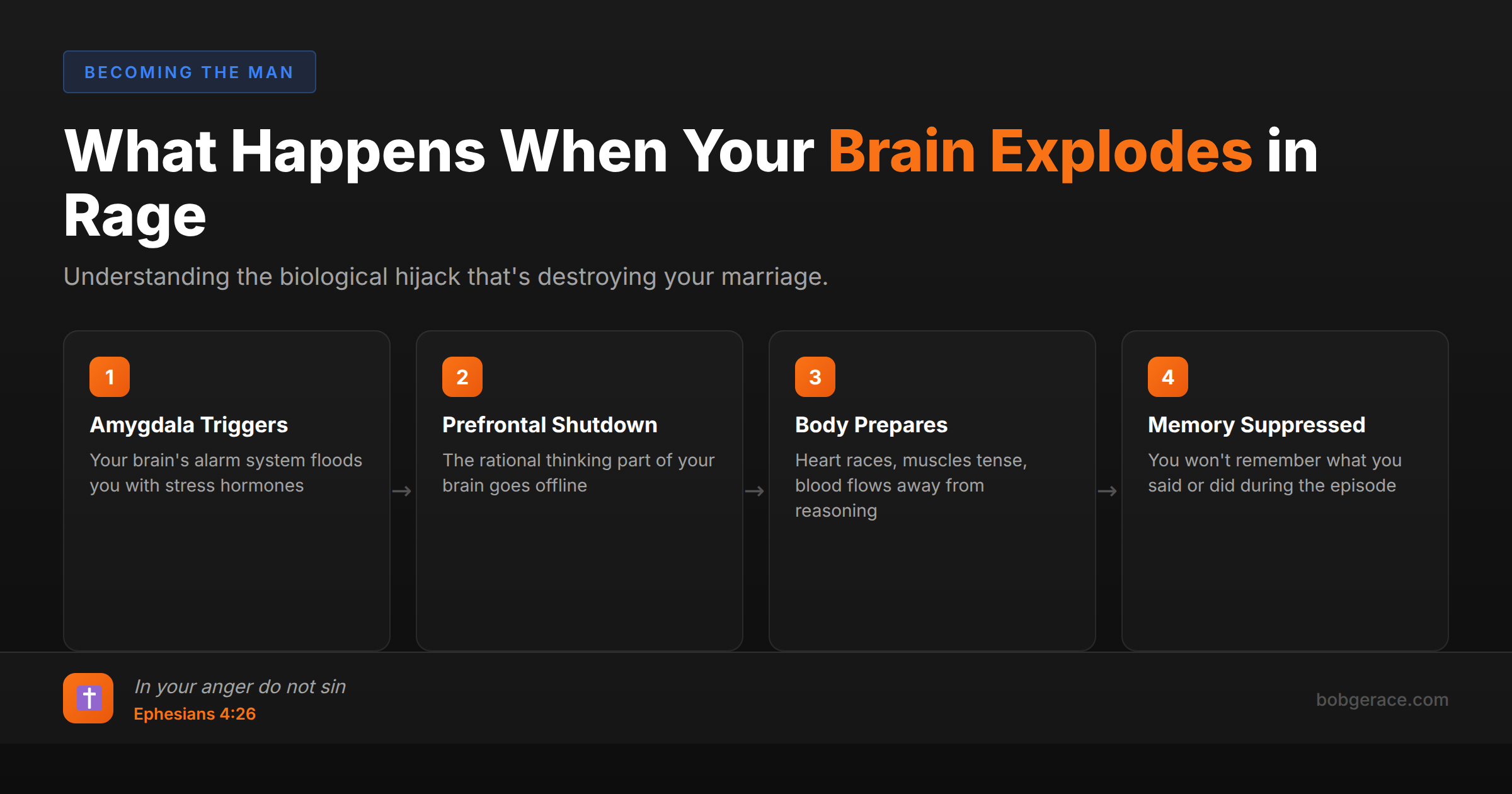
When you rage, your brain essentially goes into survival mode. The amygdala - your brain's alarm system - floods your system with stress hormones like cortisol and adrenaline while simultaneously shutting down your prefrontal cortex, the rational thinking part of your brain. This creates what scientists call 'amygdala hijack' - you literally can't think straight. Your body prepares for fight-or-flight: heart rate spikes, muscles tense, and blood flows away from higher reasoning centers. The hippocampus, responsible for memory formation, also gets suppressed, which is why you might not remember everything you said or did during a rage episode. This isn't an excuse for your behavior, but understanding this process is the first step toward gaining control and protecting your marriage from the damage rage can cause.
The Full Picture
Rage isn't just 'being really angry' - it's a complete neurological takeover that temporarily transforms your brain into a primitive survival machine. Here's exactly what happens in those critical moments:
The Trigger Phase: Something happens (your spouse criticizes you, you feel misunderstood, etc.) and your amygdala interprets this as a threat. Within milliseconds, it sends distress signals throughout your brain.
The Hijack: Your sympathetic nervous system floods your body with stress hormones. Your prefrontal cortex - responsible for empathy, reasoning, and impulse control - essentially goes offline. This is why during rage, you might say things you'd never normally say or act in ways that seem completely out of character.
Physical Changes: Your heart rate can jump from 80 to 180 beats per minute. Blood pressure spikes. Muscles tense for action. Your breathing becomes shallow. Your body is literally preparing for physical combat, even though you're having an argument with your spouse in your living room.
Memory Disruption: The hippocampus, your brain's filing system, gets suppressed during intense emotional states. This creates fragmented memories of rage episodes - you might remember bits and pieces, but not the full sequence of events.
The Aftermath: Once the episode passes, it can take 20-60 minutes for your brain chemistry to return to baseline. During this recovery period, you're still neurologically compromised and prone to re-triggering.
Understanding this process isn't about making excuses - it's about recognizing that you need specific strategies to interrupt this cycle before it destroys your marriage.
What's Really Happening
From a clinical perspective, rage episodes represent a complete dysregulation of your emotional processing system. The most critical thing to understand is that during rage, you're not operating from your adult brain - you're functioning from what we call the 'reptilian brain,' focused solely on survival.
Neuroimaging studies show that during intense anger, activity in the prefrontal cortex can decrease by up to 70%. This means your capacity for empathy, future thinking, and moral reasoning is severely compromised. You're literally not the same person your spouse married when you're in this state.
The challenge for marriages is that your spouse experiences the full impact of your rage while you're operating from a diminished neurological state. They receive the emotional violence while you have limited awareness or memory of your actions. This creates a devastating cycle where the person being hurt has to carry the full weight of the damage.
What's particularly concerning is that repeated rage episodes actually reshape your brain through neuroplasticity. The pathways to rage become more established and easier to trigger over time. However, this also means you can rewire these patterns with consistent intervention.
The key clinical insight is recognizing your personal rage warning signs - increased heart rate, tension, racing thoughts - and implementing immediate circuit breakers before the amygdala fully takes over. Once you're in full rage, neurologically speaking, you're past the point of rational intervention until your brain chemistry resets.
What Scripture Says
Scripture acknowledges the reality of anger while calling us to a higher standard of self-control. Understanding your brain doesn't excuse your behavior - it equips you to align with God's design for emotional regulation.
'In your anger do not sin': Do not let the sun go down while you are still angry (Ephesians 4:26). God acknowledges anger as a normal human emotion but draws a clear line at sinful expression. The neuroscience of rage shows us exactly why Paul emphasizes not letting anger linger - unresolved anger creates neural pathways that make future episodes more likely.
'Everyone should be quick to listen, slow to speak and slow to become angry, because human anger does not produce the righteousness that God desires' (James 1:19-20). This passage perfectly describes the prefrontal cortex functions that get hijacked during rage - listening, thoughtful speech, and emotional regulation. James is essentially giving us a neurological prescription for healthy relationships.
'Above all else, guard your heart, for everything you do flows from it' (Proverbs 4:23). Your 'heart' in biblical terms encompasses your emotional and mental state. Guarding your heart means protecting your neurological well-being through healthy boundaries, stress management, and spiritual disciplines.
'A person without self-control is like a city with broken-down walls' (Proverbs 25:28). This metaphor perfectly captures what happens during rage - your emotional defenses collapse, leaving you and your spouse vulnerable to devastating damage.
God's design includes emotions, but He calls us to steward them wisely. Your brain's capacity for both rage and self-control reflects the reality that you're both fallen and made in His image. The goal isn't to eliminate anger but to express it in ways that honor God and protect your marriage.
What To Do Right Now
-
1
Learn Your Warning Signs: Track your physical sensations before rage episodes - racing heart, muscle tension, heat, shallow breathing. Create a written list.
-
2
Implement the 20-Minute Rule: When you feel warning signs, immediately remove yourself for 20 minutes minimum. Tell your spouse 'I need to cool down' and leave.
-
3
Use Physiological Reset Techniques: During cooldown, do jumping jacks, take a cold shower, or practice deep breathing to reset your nervous system.
-
4
Create Accountability: Tell a trusted friend or counselor about your rage patterns and give them permission to ask hard questions about your progress.
-
5
Address Root Triggers: Identify what situations consistently trigger your rage and develop specific game plans for handling them differently.
-
6
Seek Professional Help: If rage episodes continue despite your efforts, work with a therapist who understands both trauma and neuroscience to address deeper patterns.
Related Questions
- What is 'amygdala hijack' and how do I interrupt it?
- What is the 'rage circuit' and how do I rewire it?
- What does chronic anger do to my nervous system?
- What's the relationship between stress and anger threshold?
- What role does cortisol play in my reactivity?
- What is 'window of tolerance' and how do I widen mine?
- What's happening to my nervous system right now?
- What is amygdala hijack and how do I get out of it?
- How do I regulate when my body is in fight-or-flight?
- What does 'window of tolerance' mean and why am I outside it?
Also find Bob on
Subscribe for weekly videos on Christian marriage.
Get a Coach on This Today
Rage is burning down your marriage right now. A human who knows your specific triggers and your wife's actual breaking point can help you stop the cycle before the next 30 days decide everything.
Talk to Bob →