What's the relationship between stress and anger threshold?
6 min read
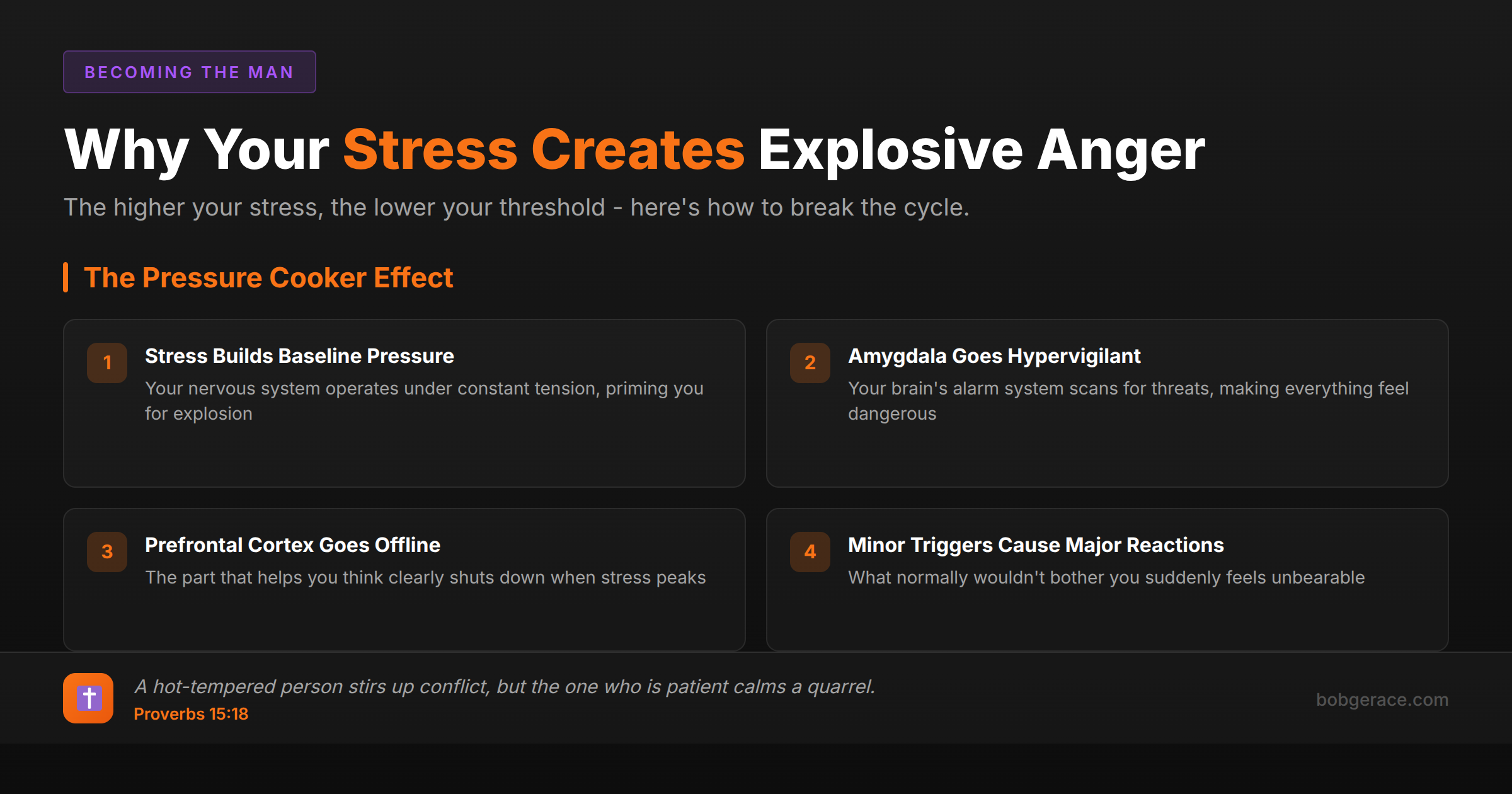
Stress and your anger threshold have an inverse relationship - the higher your stress, the lower your capacity to handle frustration before exploding. Think of it like a pressure cooker: stress builds baseline pressure in your nervous system, so it takes far less to make you blow your lid. When you're chronically stressed, your brain's alarm system (the amygdala) becomes hypervigilant, constantly scanning for threats. Your prefrontal cortex - the part that helps you think clearly and respond reasonably - goes offline. This means situations that wouldn't normally bother you suddenly feel unbearable, and you react with disproportionate anger toward your spouse.
The Full Picture
Your anger threshold isn't fixed - it fluctuates based on your stress levels throughout the day, week, and season of life. When stress hormones like cortisol and adrenaline are constantly elevated, your nervous system operates in survival mode, interpreting neutral situations as threats.
The Stress-Anger Cycle Works Like This:
First, chronic stressors accumulate - work pressure, financial strain, parenting demands, relationship tension. Your body never fully returns to baseline calm. Then, your spouse does something minor - leaves dishes in the sink, asks about weekend plans, or makes an innocent comment. But because your system is already maxed out, this small trigger feels massive.
What would normally be a 2 out of 10 on your irritation scale suddenly feels like an 8. You explode disproportionately, damaging your marriage and creating more stress, which lowers your threshold even further. It's a vicious cycle.
Physical Signs Your Threshold Is Compromised: - Everything feels urgent and overwhelming - Small noises or interruptions feel unbearable - Your spouse's normal habits suddenly seem intolerable - You're snapping before you even realize you're irritated - Recovery time between conflicts gets longer
The good news? Understanding this relationship gives you power to interrupt the cycle before it destroys your marriage.
What's Really Happening
From a neurological standpoint, chronic stress literally rewires your brain for anger. When cortisol levels remain elevated, it shrinks the prefrontal cortex while enlarging the amygdala - your fear and anger center. This creates a brain that's primed for fight-or-flight responses.
The concept of 'window of tolerance' is crucial here. This is your optimal zone where you can handle life's challenges without becoming dysregulated. Chronic stress narrows this window dramatically. What used to be manageable suddenly pushes you into hyperarousal - that explosive, reactive state where rational thinking disappears.
I see this constantly with couples in my practice. The husband who loses it over dinner plans isn't really angry about dinner - he's operating from a nervous system that's been hijacked by accumulated stress. His capacity for emotional regulation has been compromised.
The physiological markers are clear: elevated heart rate variability, disrupted sleep patterns, digestive issues, and muscle tension. These aren't just stress symptoms - they're indicators that your anger threshold is dangerously low.
Recovery requires both immediate stress management and long-term nervous system regulation. This isn't about willpower or trying harder - it's about healing an overloaded system that's doing exactly what it's designed to do under threat.
What Scripture Says
God's Word acknowledges the reality of human stress and anger while calling us to something better. Proverbs 15:18 tells us, *"A hot-tempered person stirs up conflict, but the one who is patient calms a quarrel."* This isn't just good advice - it's recognizing that our internal state directly impacts our relationships.
Matthew 11:28-30 offers the antidote to overwhelming stress: *"Come to me, all you who are weary and burdened, and I will give you rest. Take my yoke upon you and learn from me, for I am gentle and humble in heart, and you will find rest for your souls. For my yoke is easy and my burden is light."* Jesus understands that we weren't designed to carry crushing loads that make us reactive and explosive.
The Psalms repeatedly show us how to process stress before it becomes destructive anger. Psalm 62:8 instructs, *"Trust in him at all times, you people; pour out your hearts to him, for God is our refuge."* David modeled bringing his overwhelm to God rather than taking it out on others.
Ephesians 4:26-27 gives us the framework: *"In your anger do not sin: Do not let the sun go down while you are still angry, and do not give the devil a foothold."* God knows we'll face situations that could provoke anger, but He calls us to process it quickly and righteously rather than letting stress accumulate into explosive reactions.
Philippians 4:6-7 provides the ultimate stress management strategy: *"Do not be anxious about anything, but in every situation, by prayer and petition, with thanksgiving, present your requests to God. And the peace of God, which transcends all understanding, will guard your hearts and your minds in Christ Jesus."*
What To Do Right Now
-
1
Monitor Your Stress Load Daily - Rate your stress level 1-10 each morning and recognize when you're operating above a 6, meaning your anger threshold is compromised
-
2
Create Stress Release Rituals - Implement 5-minute breathing exercises, brief walks, or prayer breaks throughout your day to prevent accumulation
-
3
Communicate Your State - Tell your spouse honestly: 'I'm feeling maxed out today, so I might be more reactive than usual'
-
4
Practice the 24-Hour Rule - When stress is high, avoid important conversations or decisions until you've had time to regulate your nervous system
-
5
Address Root Stressors - Identify the top 3 sources of chronic stress in your life and create specific action plans to address them
-
6
Build Recovery Time - Schedule genuine rest and restoration into your week, not just entertainment or distraction but actual nervous system recovery
Related Questions
- What is 'amygdala hijack' and how do I interrupt it?
- What's happening in my brain when I rage?
- What role does cortisol play in my reactivity?
- What is 'window of tolerance' and how do I widen mine?
- What does chronic anger do to my nervous system?
- Why does anger feel like the only accessible emotion?
- What's happening to my nervous system right now?
- What is 'hypervigilance' and why am I doing it?
- How do I function when my body won't calm down?
Also find Bob on
Subscribe for weekly videos on Christian marriage.
Your Marriage Needs More Than Stress Management
A coach who knows your specific triggers and your wife's actual patterns can help you lower the baseline pressure before the next blowup. You don't have to keep white-knuckling this alone.
Talk to Bob →