How do I function when my body won't calm down?
6 min read
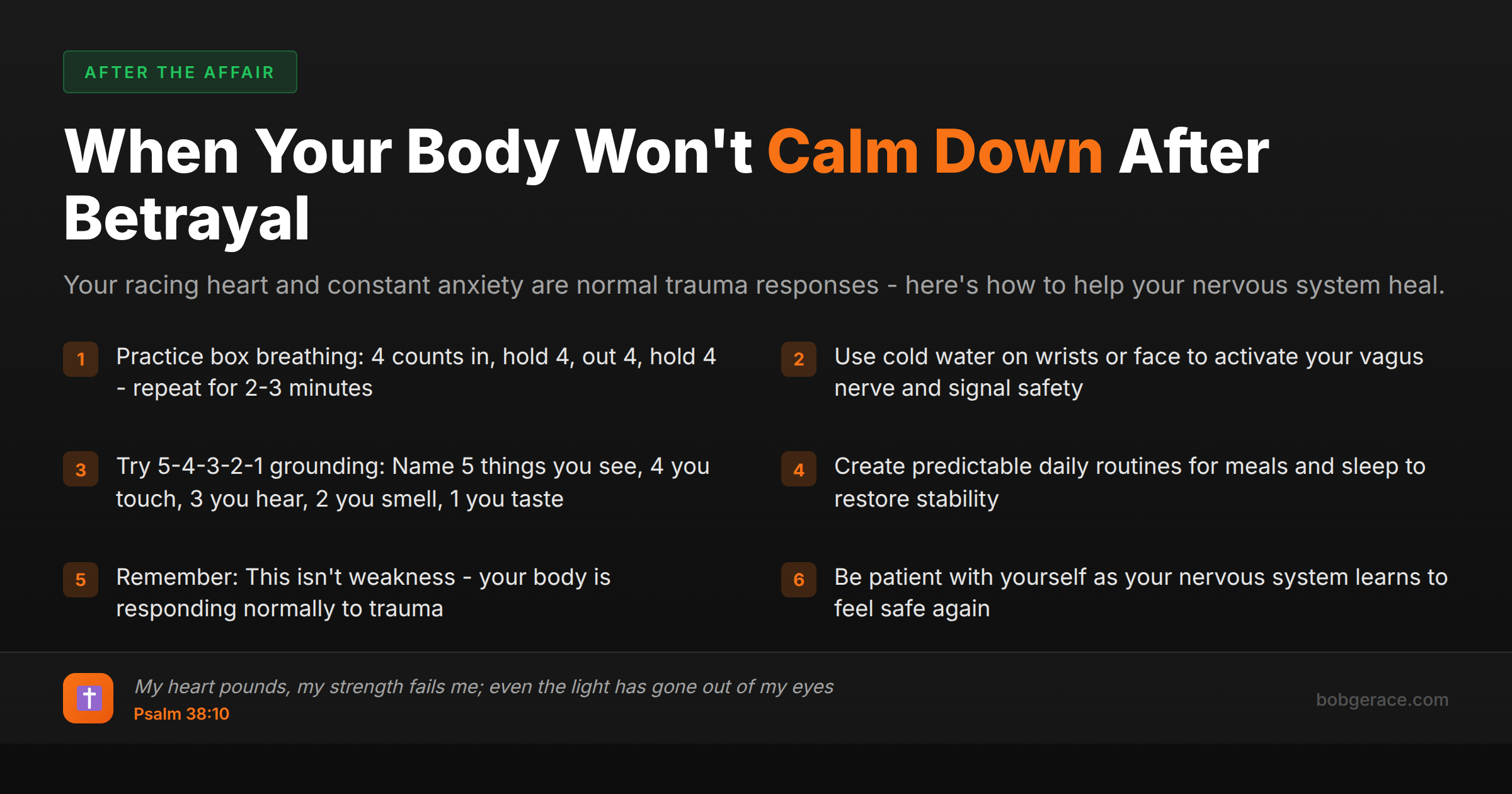
When betrayal trauma hits, your nervous system goes into survival mode, creating physical symptoms like racing heart, inability to sleep, digestive issues, and constant anxiety. This isn't weakness - it's your body's natural response to threat. The key is understanding that you're experiencing a normal trauma response and learning specific techniques to help your nervous system regulate. Start with basic grounding exercises: deep breathing, cold water on your wrists, and naming five things you can see around you. These aren't just feel-good suggestions - they're evidence-based methods that activate your parasympathetic nervous system and signal safety to your body.
The Full Picture
Betrayal trauma doesn't just break your heart - it hijacks your entire nervous system. When you discover infidelity or deception, your body interprets this as a life-threatening situation. Your sympathetic nervous system floods you with stress hormones, preparing you for fight, flight, or freeze. The problem is, this system was designed for short-term physical threats, not the ongoing emotional crisis of marital betrayal.
What you're experiencing physically is real and normal: - Racing heart or heart palpitations - Inability to sleep or disrupted sleep patterns - Digestive issues, nausea, or loss of appetite - Muscle tension, especially in neck and shoulders - Difficulty concentrating or making decisions - Hypervigilance - constantly scanning for threats - Feeling disconnected from your body or surroundings
These symptoms can persist for weeks or months because your nervous system remains activated, constantly scanning for danger. Your body doesn't distinguish between a physical threat and the emotional threat of your marriage being unsafe. Understanding this helps normalize your experience and guides your path toward healing.
The goal isn't to immediately return to normal - there is no quick fix. Instead, focus on small, consistent actions that signal safety to your nervous system. Recovery happens in layers, and your physical symptoms will gradually subside as you process the trauma and implement nervous system regulation techniques.
What's Really Happening
From a clinical perspective, betrayal trauma creates what we call 'dysregulation' of the autonomic nervous system. Your body's alarm system becomes hypersensitive, triggering stress responses even in safe situations. This isn't psychological weakness - it's a neurobiological response to attachment injury.
The vagus nerve, which controls your rest-and-digest response, becomes compromised during trauma. This explains why you might feel constantly 'wired' or unable to settle down. Your nervous system is //blog.bobgerace.com/plateau-breakthrough-christian-marriage-reignite-momentum/:stuck in a state of hyperarousal, making it difficult to access the calm, connected state necessary for healing and decision-making.
Effective regulation requires a multi-layered approach. First, we address the immediate physical symptoms through breathing techniques, movement, and sensory grounding. Second, we work on cognitive processing to help your mind make sense of the trauma. Third, we focus on rebuilding a sense of safety and predictability in your environment.
It's crucial to understand that healing isn't linear. You may have good days followed by difficult ones. This is normal and expected in trauma recovery. The key is building a toolkit of regulation strategies you can use consistently, not perfectly. Small, frequent interventions are more effective than sporadic intensive efforts.
What Scripture Says
Scripture acknowledges the deep connection between our emotional and physical well-being. God designed us as integrated beings, and trauma affects every part of who we are.
God understands your physical distress: "My heart pounds, my strength fails me; even the light has gone out of my eyes" (Psalm 38:10). David's words capture the physical impact of emotional pain. Your racing heart and exhaustion are recognized and understood by God.
He offers His peace for your anxious body: "Peace I leave with you; my peace I give you. I do not give to you as the world gives. Do not let your hearts be troubled and do not be afraid" (John 14:27). This isn't just emotional comfort - it's a promise of peace that affects your entire being.
Rest is not optional, it's commanded: "Come to me, all you who are weary and burdened, and I will give you rest" (Matthew 11:28). When your body won't calm down, this is an invitation to intentionally seek rest in God's presence.
Your body is worthy of care: "Do you not know that your bodies are temples of the Holy Spirit?" (1 Corinthians 6:19). Taking care of your physical symptoms isn't selfish - it's stewardship of what God has entrusted to you.
God sustains you through the storm: "Cast all your anxiety on him because he cares for you" (1 Peter 5:7). This includes your physical anxiety, your sleepless nights, and your body's stress response. He cares about every aspect of your suffering and will sustain you through this season.
What To Do Right Now
-
1
Practice box breathing: Inhale for 4 counts, hold for 4, exhale for 4, hold for 4. Repeat for 2-3 minutes whenever you feel overwhelmed.
-
2
Use cold water therapy: Run cold water over your wrists or splash it on your face to activate your vagus nerve and signal calm to your nervous system.
-
3
Implement the 5-4-3-2-1 grounding technique: Name 5 things you see, 4 you can touch, 3 you hear, 2 you smell, 1 you taste.
-
4
Create a safety routine: Establish predictable daily rhythms for meals, sleep, and basic self-care to help your nervous system feel secure.
-
5
Move your body gently: Take short walks, do light stretching, or try restorative yoga to help process stress hormones naturally.
-
6
Seek professional support: Connect with a trauma-informed therapist who understands betrayal trauma and can guide your healing process.
Related Questions
You Don't Have To Navigate This Alone
Betrayal trauma requires specialized support. I understand what you're going through and can help you find stability in the chaos.
Get Support Now →