Why do I feel like I'm going to die?
6 min read
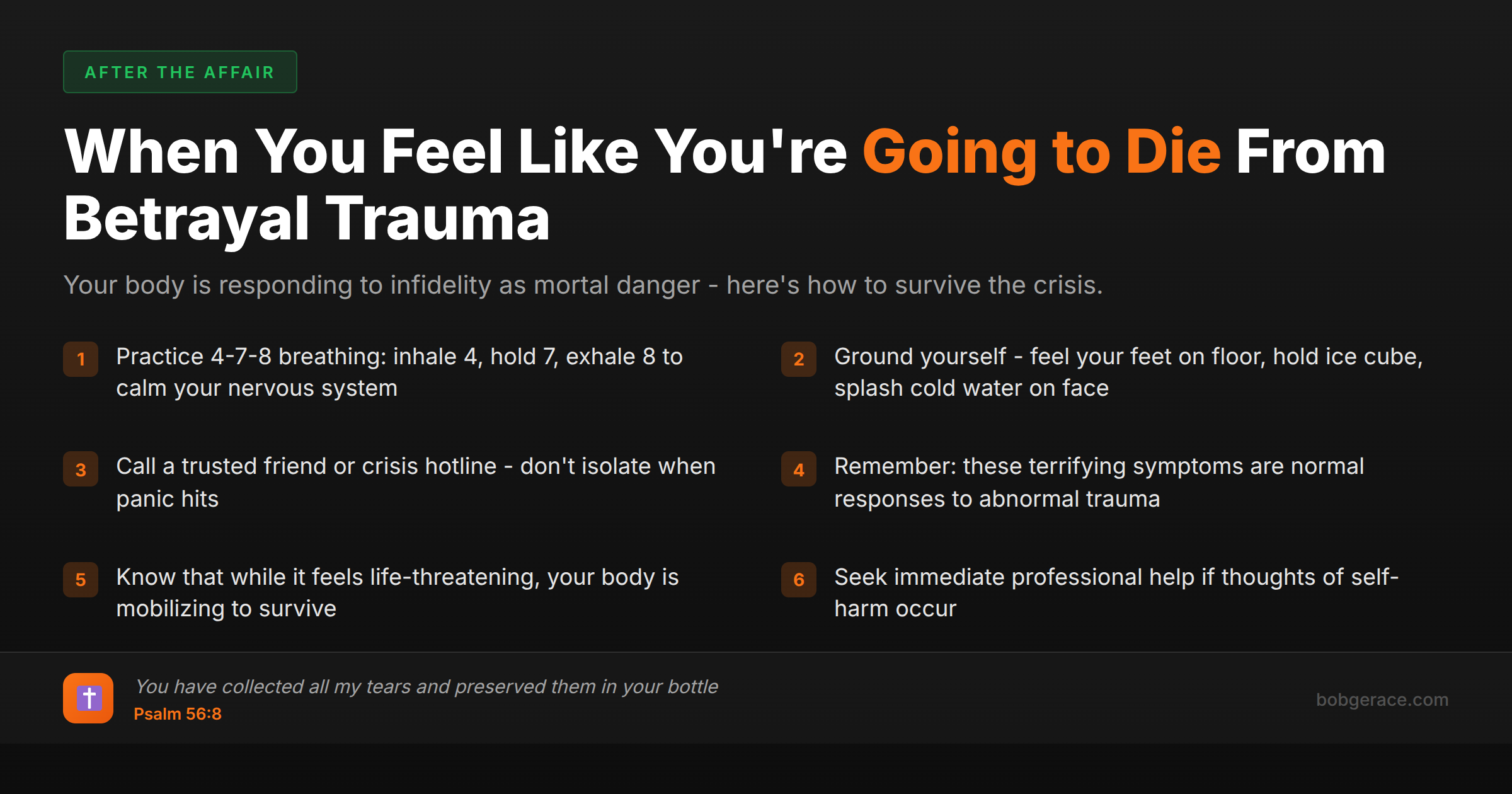
What you're experiencing is real and terrifying - betrayal trauma literally hijacks your nervous system, triggering fight-or-flight responses that can feel life-threatening. Your body is responding to the discovery of infidelity as if facing mortal danger, flooding your system with stress hormones that create chest pain, breathing difficulties, heart palpitations, and overwhelming panic. This isn't weakness or overreaction - it's your brain trying to process a threat to everything you believed was safe. The intense physical symptoms you're feeling are normal responses to abnormal circumstances. While it feels like you might die, these sensations, though frightening, are your body's way of mobilizing resources to survive this crisis.
The Full Picture
When betrayal strikes, your entire world gets turned upside down in an instant. The person you trusted most has shattered that trust, and your mind and body are reeling from the impact. What you're experiencing isn't just emotional pain - it's a full-body trauma response that can feel absolutely overwhelming.
Your nervous system has been hijacked. Discovery of infidelity triggers the same neurological pathways as life-threatening physical danger. Your amygdala - the brain's alarm system - starts screaming "DANGER!" and floods your body with stress hormones like cortisol and adrenaline. This creates a perfect storm of physical symptoms that can genuinely feel like you're dying.
These symptoms might include: racing heart that feels like it's going to explode, chest tightness or pain, difficulty breathing or feeling like you're suffocating, dizziness or feeling faint, nausea or stomach pain, trembling or shaking, hot or cold flashes, and overwhelming panic that something terrible is about to happen.
This is betrayal trauma, and it's real. Unlike other forms of trauma that come from strangers or accidents, betrayal trauma comes from the person who was supposed to protect you. It attacks your fundamental sense of safety and reality. Your brain is struggling to process how the person you loved and trusted could inflict this kind of pain.
The intensity of what you're feeling doesn't mean you're weak or overreacting. It means you're human, and you're responding normally to an abnormal situation. Your body is trying to protect you the only way it knows how - by preparing you to fight or flee from danger.
What's Really Happening
From a clinical perspective, what you're experiencing is a textbook trauma response to what we call "attachment injury." When the person who represents safety and security becomes the source of danger, it creates a neurological crisis that can indeed feel life-threatening.
Your autonomic //blog.bobgerace.com/nervous-system-regulation-christian-marriage-master-ttc/:nervous system has shifted into hyperarousal - essentially, your body believes it's under attack. The vagus nerve, which regulates your heart rate, breathing, and digestive system, becomes dysregulated. This explains the physical symptoms: the racing heart, shallow breathing, nausea, and overwhelming sense of impending doom.
What's particularly challenging about betrayal trauma is that it attacks your attachment system - the fundamental way you connect with others. This isn't just about broken trust; it's about a threat to your very survival system. Humans are wired for connection, and when that primary connection becomes dangerous, your brain doesn't know how to categorize the threat.
The good news is that these intense physical responses, while frightening, are temporary. Your nervous system can heal and regulate again. Understanding that your body is responding appropriately to an inappropriate situation can help reduce the secondary fear - the fear of your own fear. Grounding techniques, breathwork, and professional support can help your system begin to calm and process this trauma in healthy ways.
What Scripture Says
Even in this darkest moment, God sees your pain and hasn't abandoned you. Scripture acknowledges that life can bring suffering so intense it feels unbearable, yet promises God's presence through it all.
God knows your anguish: "You have seen me tossing and turning through the night. You have collected all my tears and preserved them in your bottle! You have recorded every one in your book" (Psalm 56:8). Your pain matters to God - every tear, every sleepless night, every moment of panic is seen and collected by your loving Father.
He is near to the broken: "The Lord is close to the brokenhearted and saves those who are crushed in spirit" (Psalm 34:18). In your darkest hour, when it feels like you can't breathe, God draws closer, not further away. Your brokenness doesn't repel Him - it attracts His comfort.
There is hope beyond this moment: "For his anger lasts only a moment, but his favor lasts a lifetime; weeping may stay for the night, but rejoicing comes in the morning" (Psalm 30:5). This intense pain you're feeling isn't permanent. Morning will come - maybe not tomorrow, but it will come.
Cast your anxiety on Him: "Cast all your anxiety on him because he cares for you" (1 Peter 5:7). Those overwhelming feelings, that crushing weight on your chest, the fear that's consuming you - give it all to God. He can handle what feels like it's going to destroy you.
He will sustain you: "Cast your cares on the Lord and he will sustain you; he will never let the righteous be shaken" (Psalm 55:22). You won't be shaken beyond what you can endure with His help.
What To Do Right Now
-
1
Breathe intentionally - Practice 4-7-8 breathing: inhale for 4, hold for 7, exhale for 8. This activates your parasympathetic nervous system and tells your body it's safe.
-
2
Ground yourself physically - Feel your feet on the floor, hold an ice cube, or splash cold water on your face. These techniques help bring you back to the present moment.
-
3
Reach out for immediate support - Call a trusted friend, family member, or crisis hotline. Don't isolate yourself when your nervous system is this activated.
-
4
Consider professional help - A trauma-informed counselor can provide tools to help your nervous system regulate and process this betrayal safely.
-
5
Limit caffeine and alcohol - Both can exacerbate anxiety symptoms and interfere with your body's natural ability to calm down.
-
6
Create safety in your environment - Remove triggers when possible, establish routines, and surround yourself with people and things that represent stability and care.
Related Questions
You Don't Have to Face This Alone
Betrayal trauma is real, and recovery is possible. Let me help you navigate this crisis with practical tools and hope for healing.
Get Help Now →