Is this PTSD?
6 min read
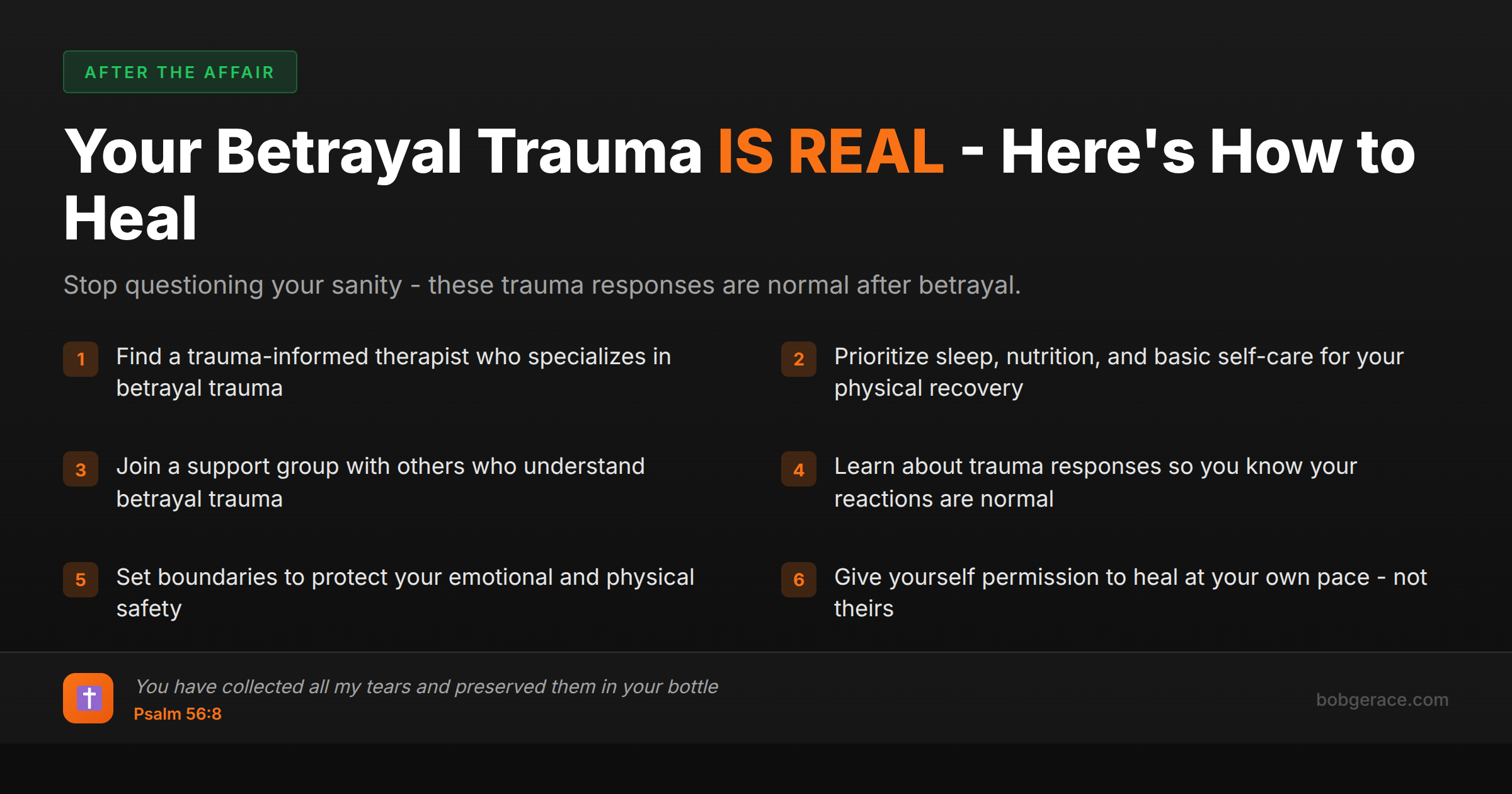
Yes, what you're experiencing likely shares many characteristics with PTSD. Betrayal trauma from infidelity can trigger the same neurological responses as other traumatic events - intrusive thoughts, hypervigilance, emotional numbness, and sleep disturbances. Your brain is responding normally to an abnormal situation. While betrayal trauma isn't technically classified as PTSD in diagnostic manuals, the symptoms are remarkably similar. You might find yourself replaying the discovery, feeling constantly on edge, or experiencing physical symptoms like panic attacks. This isn't weakness - it's your mind trying to process a profound violation of trust and safety in your most intimate relationship.
The Full Picture
When you discover your spouse's betrayal, your entire world shifts. The symptoms you're experiencing - the racing thoughts, the inability to concentrate, the constant replaying of events, the hypervigilance about their whereabouts - these mirror classic PTSD responses because betrayal IS trauma.
The trauma response includes: - Intrusive thoughts about the affair or betrayal - Hypervigilance - constantly checking their phone, whereabouts, behavior - Emotional numbing or overwhelming feelings that swing between extremes - Sleep disturbances and nightmares - Physical symptoms like panic attacks, nausea, or headaches - Avoidance of triggers that remind you of the betrayal - Difficulty concentrating on work, parenting, or daily tasks
Your nervous system has been hijacked. The person who was supposed to be your safe harbor became the source of danger. Your brain is now scanning for threats because the one person you trusted most proved untrustworthy.
This isn't about being "too sensitive" or "not getting over it fast enough." Betrayal trauma often impacts women more severely than men because women typically invest more deeply in the emotional intimacy of marriage. When that's shattered, the psychological impact can be devastating.
Understand that healing from betrayal trauma takes time - typically 2-5 years with proper support. Your symptoms are normal responses to abnormal circumstances. You're not broken; you're responding exactly as someone should when their fundamental sense of safety and trust has been violated.
What's Really Happening
From a clinical perspective, betrayal trauma activates the same neural pathways as other forms of PTSD. When you discovered the affair, your amygdala - the brain's alarm system - went into overdrive, flooding your system with stress hormones like cortisol and adrenaline.
What makes betrayal trauma particularly complex is something called 'attachment injury.' Unlike other traumas where the threat comes from outside sources, betrayal trauma occurs within your primary attachment relationship. The person who should provide safety and comfort is the same person who caused the wound.
This creates a neurological conflict: your attachment system wants to seek comfort from your spouse, but your survival system recognizes them as a threat. This internal battle explains why you might find yourself wanting to be close to your husband one moment and feeling repulsed or terrified the next.
The symptoms you're experiencing - hypervigilance, intrusive thoughts, emotional dysregulation - are your nervous system's attempt to //blog.bobgerace.com/heroic-protection-christian-marriage-shield-not-sword/:protect you from future harm. Your brain is essentially saying, 'I missed the signs before, so now I'm going to be on high alert for everything.'
Recovery requires both individual healing and, if you choose to reconcile, rebuilding safety within the relationship. This means your spouse must understand that their actions created trauma, not just 'hurt feelings.' True healing happens when safety is restored both neurologically and relationally.
What Scripture Says
Scripture acknowledges the deep pain of betrayal, especially from those closest to us. Your trauma response isn't a lack of faith - it's a human response to a profound violation that God Himself grieves.
God sees your pain: *"You have seen me tossing and turning through the night. You have collected all my tears and preserved them in your bottle! You have recorded every one in your book."* - Psalm 56:8 (TLB). Your sleepless nights, your tears, your anguish - God sees and cares about every moment.
Betrayal wounds deeply: *"Even my close friend, someone I trusted, one who shared my bread, has turned against me."* - Psalm 41:9. David understood the unique pain of betrayal from someone trusted. Jesus experienced this same betrayal, so He understands your trauma intimately.
Healing takes time: *"He heals the brokenhearted and binds up their wounds."* - Psalm 147:3. Notice it doesn't say He instantly fixes everything. Healing and binding wounds is a process that requires time, care, and often help from others.
Peace in the storm: *"Peace I leave with you; my peace I give you. I do not give to you as the world gives. Do not let your hearts be troubled and do not be afraid."* - John 14:27. This doesn't minimize your trauma but offers hope that God's peace can coexist with your healing process.
Truth brings freedom: *"Then you will know the truth, and the truth will set you free."* - John 8:32. Part of healing involves facing difficult truths about what happened, your marriage, and your spouse's choices.
God's faithfulness remains: *"Because of the Lord's great love we are not consumed, for his compassions never fail. They are new every morning; great is your faithfulness."* - Lamentations 3:22-23. Even when human faithfulness fails, God's remains constant.
What To Do Right Now
-
1
Find a trauma-informed therapist who understands betrayal trauma - not all counselors are equipped for this specific type of trauma
-
2
Prioritize your physical safety and emotional stability - sleep, nutrition, and basic self-care are essential for healing
-
3
Join a support group for betrayal trauma survivors - you need people who truly understand what you're experiencing
-
4
Educate yourself about trauma responses so you understand your symptoms are normal reactions to abnormal circumstances
-
5
Set firm boundaries with your spouse about transparency, accountability, and their recovery work if reconciliation is being considered
-
6
Give yourself permission to take as much time as you need - healing from betrayal trauma typically takes years, not months
Related Questions
- What is 'betrayal trauma' and do I have it?
- Why am I having intrusive thoughts/images?
- What is 'hypervigilance' and why am I doing it?
- What's happening to my nervous system right now?
- What does betrayal do to the brain?
- How long does acute trauma response last?
- What is triggered vs. legitimately upset?
- How do I manage my nervous system through legal proceedings?
- What does trauma recovery look like?
- What therapies help with this kind of trauma?
Also find Bob on
Subscribe for weekly videos on Christian marriage.
Your Marriage Isn't a Textbook Case
The trauma you're living through has details only you know. A coach who hears your specific story can help you stabilize faster than guessing alone.
Talk to Bob →