What does healing timeline look like?
6 min read
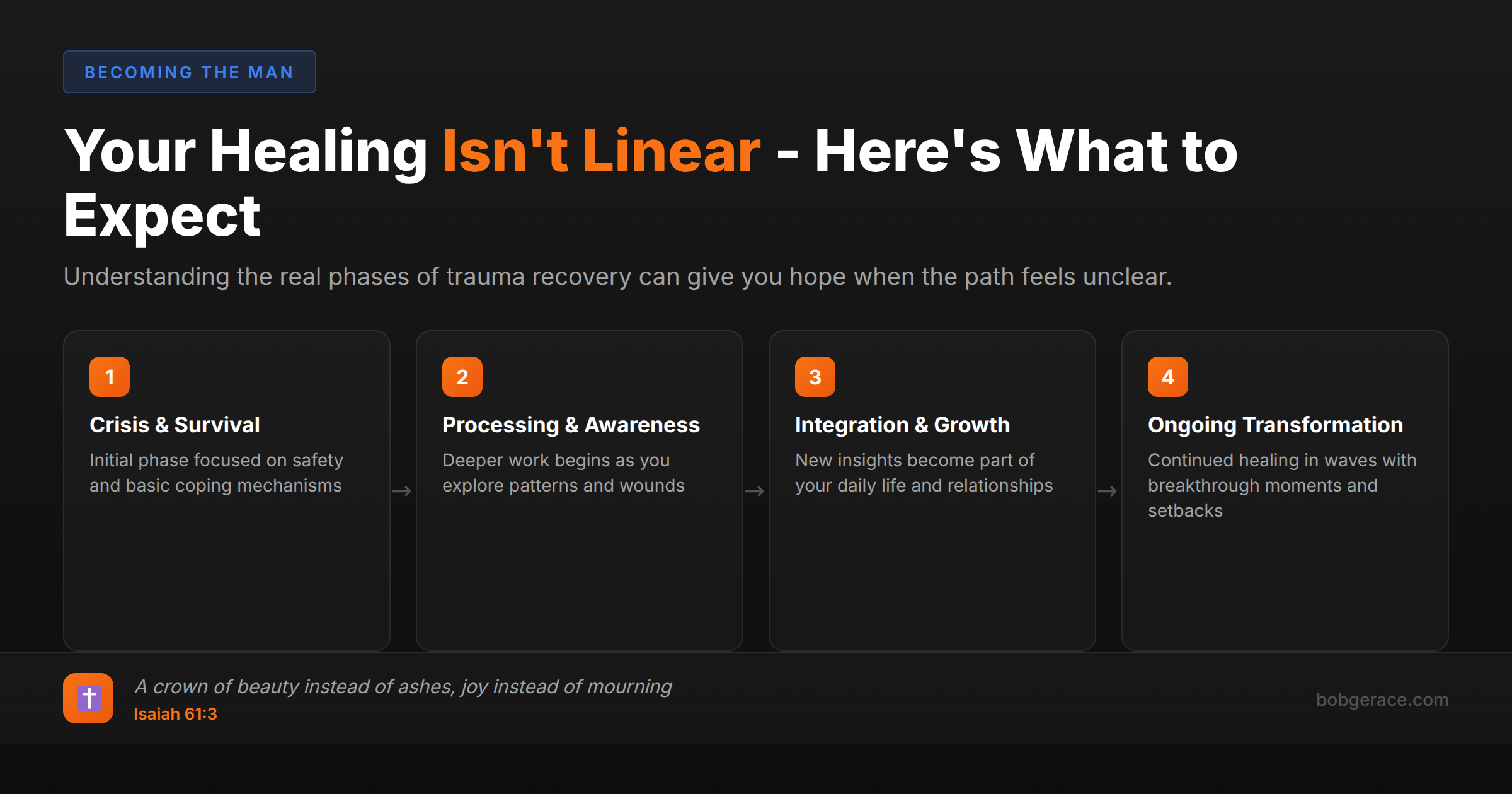
Healing from trauma isn't a straight line - it's more like climbing a mountain with switchbacks, rest stops, and occasional detours. There's no universal timeline because your trauma, your resources, and your circumstances are unique to you. However, most healing journeys follow recognizable phases: initial crisis and survival, followed by periods of deeper processing, integration, and growth. The timeline can range from months to years, and that's completely normal. Some women see significant shifts in 6-12 months of consistent work, while others need 2-3 years or more for complex trauma. What matters isn't speed - it's direction. Healing happens in waves, not a steady upward climb. You'll have breakthrough moments followed by difficult days, and both are part of the process.
The Full Picture
Let me be straight with you - anyone who gives you a specific timeline for healing is either lying or doesn't understand trauma. Your healing journey is as unique as your fingerprint, shaped by factors like the type of trauma, how long it occurred, your support system, and your own resilience.
The typical phases look like this:
Phase 1: Safety and Stabilization (3-12 months) This is about getting your feet under you. You're learning to manage symptoms, establishing safety in your relationships and environment, and building basic coping skills. Your nervous system is learning it's okay to start relaxing.
Phase 2: Remembrance and Mourning (6 months - 2+ years) Here you're processing the actual traumatic experiences and their impact. This phase often feels like you're getting worse before you get better because you're finally dealing with what you've been surviving. It's messy, painful, and absolutely necessary.
Phase 3: Reconnection (ongoing) You're rebuilding your sense of self, your relationships, and your future. You're not the same person you were before trauma, but you're becoming someone stronger and more whole.
What slows healing down: - Ongoing trauma or unsafe relationships - Lack of support system - Trying to rush the process - Perfectionism about your progress - Comparing your journey to others
What speeds healing up: - Consistent therapy or coaching - Strong support network - Self-compassion and patience - Addressing physical health alongside emotional healing - Spiritual practices and community
Remember, setbacks aren't failures - they're part of the process. Healing isn't linear, and the goal isn't to go back to who you were before. It's to become who God created you to be, integrated and whole.
What's Really Happening
From a clinical perspective, trauma healing timelines vary dramatically based on several key factors. The type of trauma - whether it's a single incident or complex, repeated trauma - significantly impacts recovery duration. Complex trauma, particularly from childhood or intimate relationships, typically requires longer healing periods because it affects core beliefs about safety, trust, and self-worth.
Neurobiologically, we're literally rewiring the brain during trauma recovery. The nervous system has adapted to survive threat, and it takes time to teach it that safety is possible. This process cannot be rushed - the brain needs repetitive, positive experiences to create new neural pathways.
I often see women become frustrated with their progress around the 6-month mark when initial improvements plateau. This is actually normal and indicates deeper work is beginning. The brain has addressed surface-level symptoms and is now ready to process core wounds.
Research shows that having a secure therapeutic relationship accelerates healing significantly. Women with strong support systems and consistent professional help typically see meaningful progress within 12-18 months, though full integration may take 2-3 years. Those dealing with complex trauma or limited resources may need 3-5 years of consistent work.
It's crucial to understand that 'healed' doesn't mean 'unaffected.' Healing means having integrated your experiences in a way that no longer controls your present. You develop resilience, emotional regulation, and the ability to form healthy relationships. The goal isn't to erase your past but to transform your relationship with it.
What Scripture Says
God's Word gives us a framework for understanding healing that's both hopeful and realistic. Scripture shows us that healing is God's heart for us, but it also acknowledges that this side of heaven, we're in a process of becoming whole.
Isaiah 61:3 promises that God will give us "a crown of beauty instead of ashes, the oil of joy instead of mourning, and a garment of praise instead of a spirit of despair." Notice this is an exchange - God transforms what was meant for harm into something beautiful, but the process involves Him working in and through our pain.
Psalm 147:3 tells us "He heals the brokenhearted and binds up their wounds." The Hebrew word for 'heals' here implies a gradual process of restoration, like how a broken bone knits back together stronger than before. God is actively involved in our healing timeline, working at the pace that's best for us.
2 Corinthians 4:16-17 reminds us, "Though outwardly we are wasting away, yet inwardly we are being renewed day by day. For our light and momentary troubles are achieving for us an eternal glory that far outweighs them all." Healing happens daily, often in ways we can't see or feel in the moment.
Romans 8:28 doesn't promise that everything happens for a reason, but that God works all things together for good for those who love Him. Your healing journey, including the difficult days and setbacks, is part of God's larger work of redemption in your life.
Jeremiah 30:17 declares, "I will restore you to health and heal your wounds," says the Lord. This is God's promise and His timeline. He's committed to your wholeness, even when the process feels slow or uncertain.
God isn't in a hurry, and neither should we be. His timing is perfect, even when it doesn't match our expectations.
What To Do Right Now
-
1
Release timeline expectations and focus on showing up consistently for your healing work each day
-
2
Track your progress in small ways - journal weekly about moments of peace, joy, or strength you noticed
-
3
Build your support team including professional help, trusted friends, and spiritual community
-
4
Create safety rituals and practices that help regulate your nervous system daily
-
5
Celebrate small wins and have compassion for difficult days - both are part of your journey
-
6
Connect with God regularly through prayer, worship, or time in nature to remember His presence in your process
Related Questions
- What does trauma recovery look like?
- What is 'post-traumatic growth'?
- How long does recovery take?
- What does full recovery actually look like?
- When do triggers decrease in intensity?
- What are the stages of betrayal trauma recovery?
- How long does acute trauma response last?
- What is the typical betrayal trauma recovery timeline?
- What does PTSD recovery look like in marriage context?
- What does 'integration' of the affair into our story look like?
Also find Bob on
Subscribe for weekly videos on Christian marriage.
Your Timeline Needs a Human in Your Corner
Healing in waves means you need someone who knows where you've been and where you're headed. A coach calibrates to your actual marriage, not a generic timeline.
Talk to Bob →