What therapies help with this kind of trauma?
6 min read
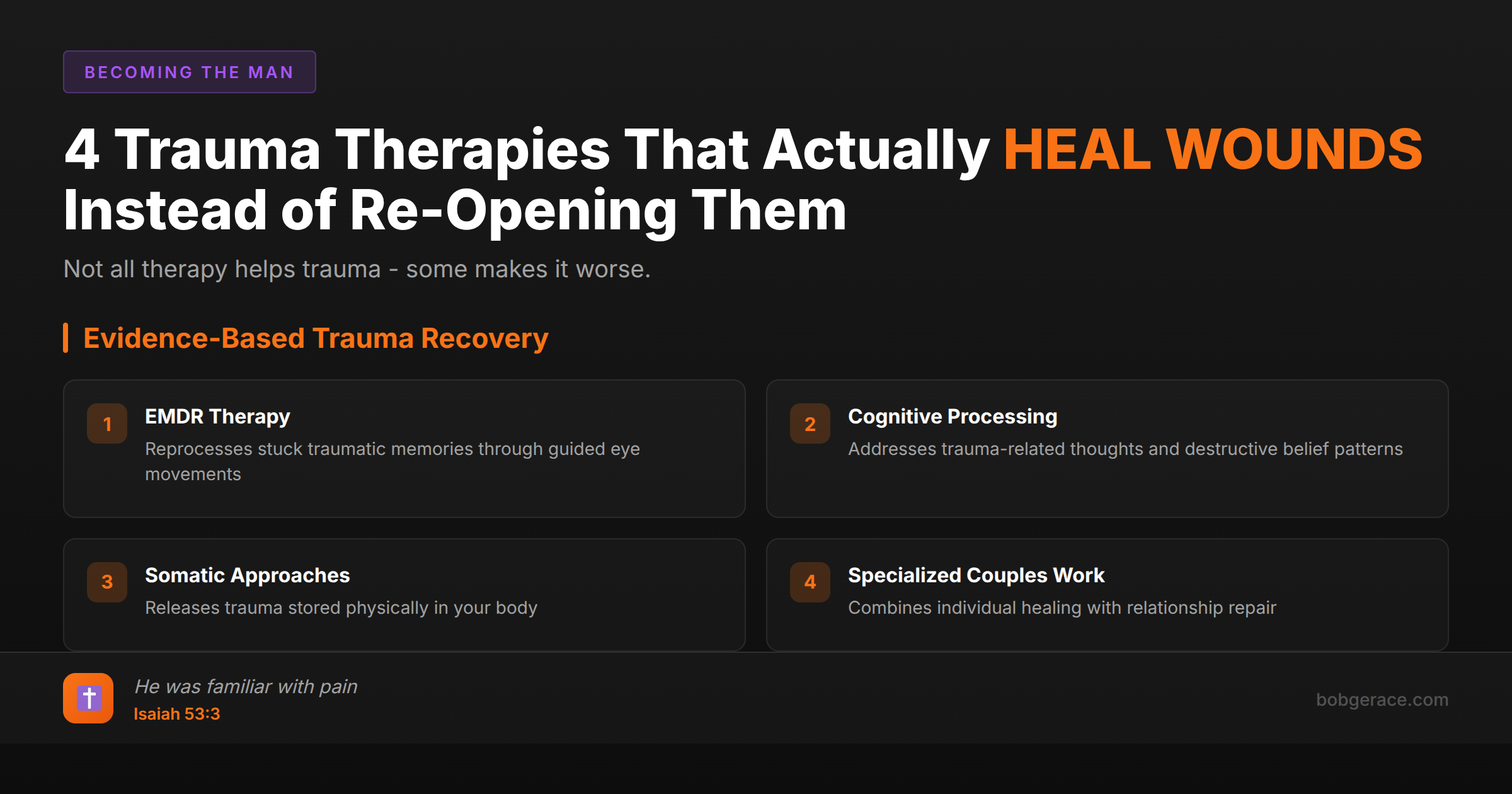
Several evidence-based therapies effectively treat trauma, each targeting different aspects of healing. EMDR (Eye Movement Desensitization and Reprocessing) is highly effective for processing traumatic memories by helping your brain reprocess stuck experiences. Cognitive Processing Therapy (CPT) addresses trauma-related thoughts and beliefs, while Trauma-Focused CBT combines behavioral techniques with trauma processing. Somatic therapies like EMDR and body-based approaches address how trauma gets stored physically. For couples dealing with betrayal or relational trauma, specialized approaches that combine individual trauma work with relationship repair are crucial. The key is finding a therapist trained specifically in trauma work - not all counselors have this expertise, and the wrong approach can actually re-traumatize.
The Full Picture
Let's cut through the confusion about trauma therapy options. Not all therapy is created equal when it comes to trauma healing, and choosing the wrong approach can set you back months or even years.
## Evidence-Based Trauma Therapies
EMDR (Eye Movement Desensitization and Reprocessing) remains the gold standard for trauma processing. It helps your brain file traumatic memories properly instead of leaving them stuck in your nervous system. Most clients see significant improvement within 6-12 sessions for single-incident trauma.
Cognitive Processing Therapy (CPT) specifically addresses the thoughts and beliefs trauma creates - like "I'm not safe" or "I can't trust anyone." This is particularly powerful for betrayal trauma where your worldview has been shattered.
Trauma-Focused CBT combines traditional cognitive behavioral techniques with trauma-specific interventions. It's especially effective when trauma symptoms include depression, anxiety, or destructive behavioral patterns.
## Specialized Approaches
Somatic therapies address how trauma lives in your body. Approaches like Somatic Experiencing or body-based EMDR recognize that trauma isn't just a mental experience - it's stored in your nervous system and muscles.
Internal Family Systems (IFS) helps when trauma has created different "parts" of yourself - the angry part, the scared part, the shut-down part. This approach helps integrate these fragmented pieces.
## For Couples
When trauma affects your marriage, individual trauma work must be combined with relationship repair. Gottman Method therapists trained in trauma can help rebuild trust and intimacy. Emotionally Focused Therapy (EFT) with trauma specialization addresses both individual healing and relational reconnection.
The key: Find a therapist specifically trained in trauma work. Ask directly about their trauma training, certifications, and experience with your specific type of trauma.
What's Really Happening
Here's what many people don't understand about trauma therapy: the therapeutic relationship itself is part of the healing. Trauma fundamentally disrupts your ability to trust and feel safe with others. A skilled trauma therapist creates what we call a "corrective emotional experience" - proving through consistent, boundaried care that safe relationships are possible.
Neurobiologically, trauma gets stuck in implicit memory - body sensations, emotions, and images that haven't been properly processed into narrative memory. This is why traditional talk therapy often falls short. Effective trauma therapies like EMDR work with both the logical brain and the emotional/somatic brain simultaneously.
Phase-oriented treatment is crucial. We first establish safety and stabilization, then process traumatic memories, and finally integrate new insights into daily life. Therapists who rush to processing without adequate preparation often retraumatize clients.
For betrayal trauma specifically, standard couples therapy approaches can be harmful. The betrayed partner needs individual trauma treatment first, while the betraying partner needs specialized therapy addressing their problematic behaviors. Only after individual healing begins should couples work commence.
Red flags to avoid: Therapists who minimize your trauma, push forgiveness too quickly, lack specific trauma training, or suggest your trauma symptoms are "overreactions." Effective trauma therapists validate your experience while providing concrete tools for healing.
Timeline expectations: Acute symptoms often improve within 3-6 months of consistent trauma therapy. Deeper personality and relational healing typically takes 1-2 years. Be wary of anyone promising quick fixes - real healing takes time.
What Scripture Says
God's heart for healing trauma is woven throughout Scripture. He doesn't minimize our pain or rush our healing - instead, He meets us in our brokenness with compassion and provides pathways to wholeness.
Jesus understands trauma intimately. *"He was despised and rejected by mankind, a man of suffering, and familiar with pain"* (Isaiah 53:3). Christ experienced betrayal, abandonment, physical torture, and death - He knows the depths of human trauma and can meet you there.
God validates the reality of our wounds. *"He heals the brokenhearted and binds up their wounds"* (Psalm 147:3). Notice this doesn't say He instantly removes pain - He binds up wounds, suggesting a process of careful, intentional healing over time.
Healing involves both divine intervention and human partnership. *"Are any of you sick? You should call for the elders of the church to come and pray over you, anointing you with oil in the name of the Lord"* (James 5:14). This passage shows God working through both spiritual prayer and practical means (oil representing medicine/treatment).
Professional help is part of God's provision. *"Plans fail for lack of counsel, but with many advisers they succeed"* (Proverbs 15:22). God gives wisdom and healing gifts to trained counselors and therapists - using their help isn't a lack of faith, it's stewarding God's provision.
The goal is restoration, not just survival. *"And the God of all grace, who called you to his eternal glory in Christ, after you have suffered a little while, will himself restore you and make you strong, firm and steadfast"* (1 Peter 5:10). God's intention isn't just to get you through trauma, but to bring you to a place of strength and stability.
Your healing has purpose. *"Praise be to the God and Father of our Lord Jesus Christ, the Father of compassion and the God of all comfort, who comforts us in all our troubles, so that we can comfort those in any trouble with the comfort we ourselves receive from God"* (2 Corinthians 1:3-4).
What To Do Right Now
-
1
Research trauma-specialized therapists in your area using Psychology Today or your insurance provider's directory, filtering specifically for trauma specializations like EMDR, CPT, or somatic therapies
-
2
Call and ask specific questions about their trauma training, experience with your type of trauma, and treatment approach before scheduling - don't settle for generic therapy
-
3
Prepare for your first session by writing down your trauma history, current symptoms, and specific goals for healing - this helps you advocate for appropriate treatment
-
4
Establish safety measures at home including support person contact info, grounding techniques list, and self-care plan for between sessions when processing gets intense
-
5
If married, discuss therapy boundaries with your spouse about what you will and won't share from sessions, and whether couples work will happen now or after individual healing
-
6
Commit to the process by scheduling regular sessions, doing homework assignments, and staying consistent even when it feels difficult - trauma healing requires sustained effort over time
Related Questions
Ready to Take the Next Step in Your Healing?
Finding the right trauma therapy approach can feel overwhelming, but you don't have to figure it out alone. Let's discuss your specific situation and create a clear path forward.
Get Guidance →