What does nervous system regulation look like?
6 min read
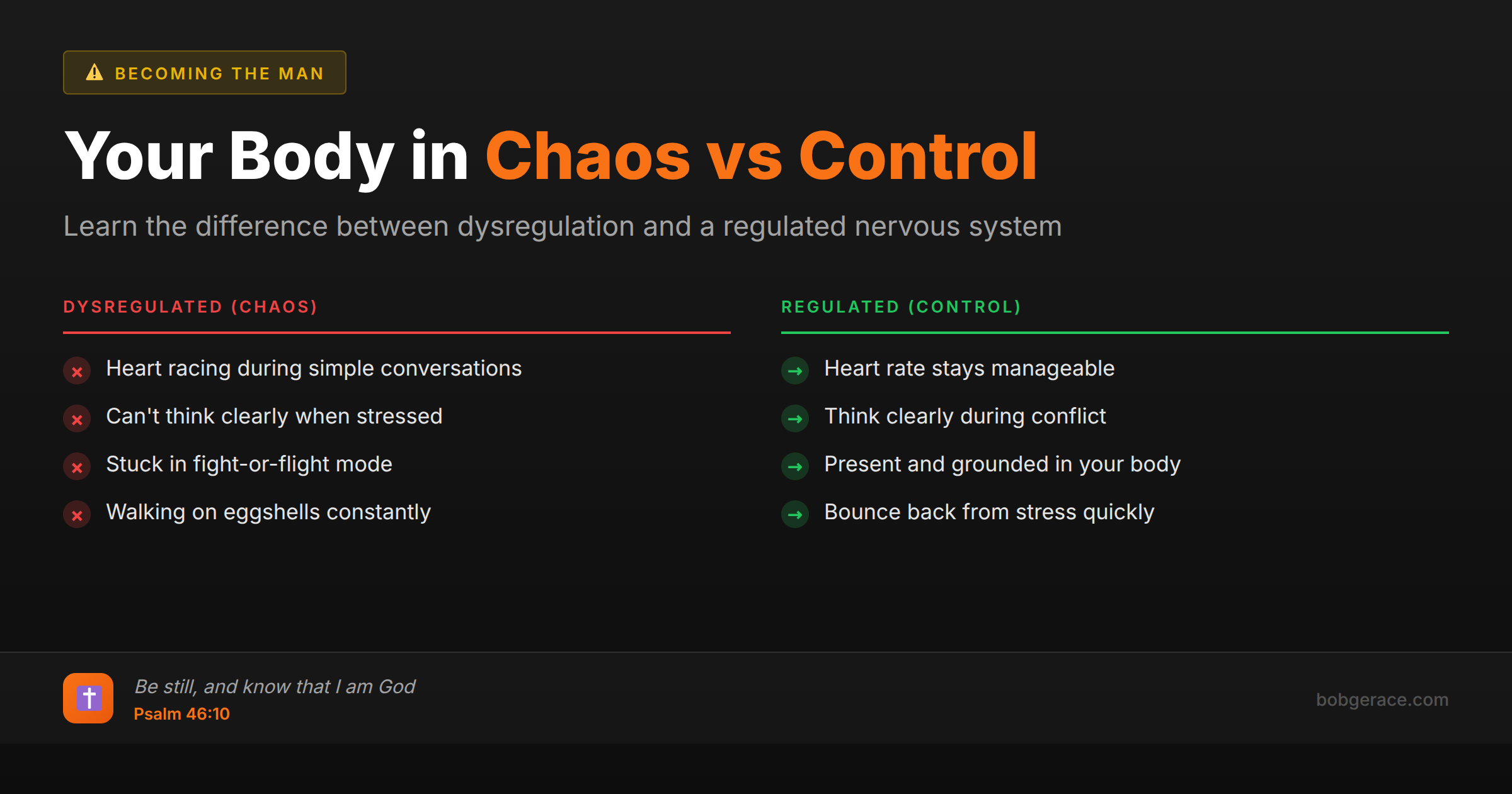
Nervous system regulation is when your body and mind can respond to stress appropriately and then return to a calm, balanced state. It means you're not stuck in fight-or-flight mode or shut down completely. When regulated, you can think clearly during conflict, your heart rate stays manageable, and you can access your emotions without being overwhelmed by them. A regulated nervous system looks like being able to have difficult conversations without losing yourself, feeling grounded in your body, and bouncing back from stress relatively quickly. You're not walking on eggshells or constantly braced for impact. Instead, you feel present, connected, and capable of making thoughtful decisions even when things get tough.
The Full Picture
Your nervous system is like your body's alarm system - it's constantly scanning for danger and deciding how to respond. When it's working well, it can tell the difference between a real threat and everyday stress. But trauma, chronic stress, and unhealthy relationships can throw this system out of whack.
When your nervous system is dysregulated, you might experience: - Getting triggered by small things that shouldn't be a big deal - Feeling like you're constantly on edge or completely numb - Having explosive reactions or shutting down completely - Physical symptoms like headaches, stomach issues, or chronic fatigue - Difficulty sleeping or concentrating - Feeling disconnected from yourself and others
A regulated nervous system, on the other hand, shows up as: - Flexibility in responses - You can adapt to different situations without getting stuck in one emotional state - Quick recovery - When something does upset you, you can return to baseline relatively quickly - Body awareness - You notice physical sensations and can use them as information - Emotional availability - You can be present with others and access empathy - Clear thinking - You can problem-solve even under pressure - Healthy boundaries - You know when to say yes and when to say no
Regulation isn't about being calm all the time or never getting upset. It's about having the capacity to move through different emotional states fluidly and appropriately. Think of it like being a skilled driver - you can navigate different road conditions, speed up when it's safe, slow down when necessary, and always know where you're going.
What's Really Happening
From a clinical perspective, nervous system regulation involves the complex interplay between your sympathetic nervous system (which activates fight-or-flight) and your parasympathetic nervous system (which promotes rest and recovery). Trauma disrupts this natural rhythm, often leaving people stuck in hypervigilance or collapse.
What's fascinating is that regulation happens in relationship. Our nervous systems co-regulate with others, meaning we literally calm each other down through presence, tone of voice, and attunement. This is why some people feel immediately safe with certain individuals while others trigger their alarm bells.
Polyvagal theory, developed by Dr. Stephen Porges, explains that we have three main nervous system states: social engagement (safe and connected), mobilization (fight-or-flight), and immobilization (freeze/collapse). A regulated person can move between these states as needed and return to social engagement as their home base.
In my practice, I see many women who've learned to override their nervous system signals to keep peace or avoid conflict. They've become experts at pushing through stress, but they've lost touch with their body's wisdom. Healing involves learning to listen to these signals again and respond with compassion rather than judgment.
Regulation skills can be developed at any age. Through practices like breathwork, mindfulness, movement, and healthy relationships, we can literally rewire our nervous system responses. The brain's neuroplasticity means that even long-standing patterns can change with consistent, gentle practice.
What Scripture Says
God designed our bodies as intricate, interconnected systems that reflect His wisdom and care. Scripture speaks extensively about the connection between our physical, emotional, and spiritual well-being.
"Be still, and know that I am God." (Psalm 46:10) This isn't just spiritual advice - it's nervous system regulation. Stillness allows our bodies to downshift from stress mode and remember who's really in control.
"Come to me, all you who are weary and burdened, and I will give you rest." (Matthew 11:28) Jesus understands that we need both spiritual and physical rest. A regulated nervous system is part of the rest He offers.
"Do not be anxious about anything, but in every situation, by prayer and petition, with thanksgiving, present your requests to God. And the peace of God, which transcends all understanding, will guard your hearts and your minds in Christ Jesus." (Philippians 4:6-7) This passage describes a regulated response to stress - acknowledging our concerns, bringing them to God, and allowing His peace to guard our hearts and minds.
"Above all else, guard your heart, for everything you do flows from it." (Proverbs 4:23) Guarding your heart includes protecting your nervous system from chronic dysregulation. It's stewardship of the body God gave you.
"She is clothed with strength and dignity; she can laugh at the days to come." (Proverbs 31:25) This describes a woman with a regulated nervous system - she's not anxious about the future because she's grounded in God's faithfulness.
"My flesh and my heart may fail, but God is the strength of my heart and my portion forever." (Psalm 73:26) Even when our bodies struggle with regulation, God remains our ultimate source of stability and strength.
What To Do Right Now
-
1
Practice the 4-7-8 breathing technique: inhale for 4 counts, hold for 7, exhale for 8. This activates your parasympathetic nervous system.
-
2
Notice your body throughout the day. Are your shoulders tense? Is your jaw clenched? Gentle awareness is the first step to regulation.
-
3
Create a daily grounding practice like walking barefoot, holding a warm cup, or naming 5 things you can see, 4 you can hear, 3 you can touch.
-
4
Establish boundaries around stress triggers when possible. You don't have to say yes to every demand or engage in every conflict.
-
5
Move your body daily in ways that feel good - dancing, walking, stretching. Movement helps process stored stress and trauma.
-
6
Seek out relationships with people who help you feel calm and grounded. Your nervous system heals in connection with safe others.
Related Questions
- What is 'window of tolerance' and how do I widen mine?
- How do I regulate my own system?
- What does emotional co-regulation look like?
- How do I self-regulate before I connect?
- What is 'amygdala hijack' and how do I interrupt it?
- How do I stay connected when my body wants to fight?
- What's happening to my nervous system right now?
- How do I function when my body won't calm down?
- What does 'dorsal vagal shutdown' look like in marriage?
- How do I regulate when my body is in fight-or-flight?
Also find Bob on
Subscribe for weekly videos on Christian marriage.
You Don't Have to Regulate Alone
Regulation isn't just theory—it's practice under real stress in your actual marriage. A coach sees where you get stuck and helps you build capacity for the moments that matter.
Talk to Bob →