What does trauma recovery look like?
6 min read
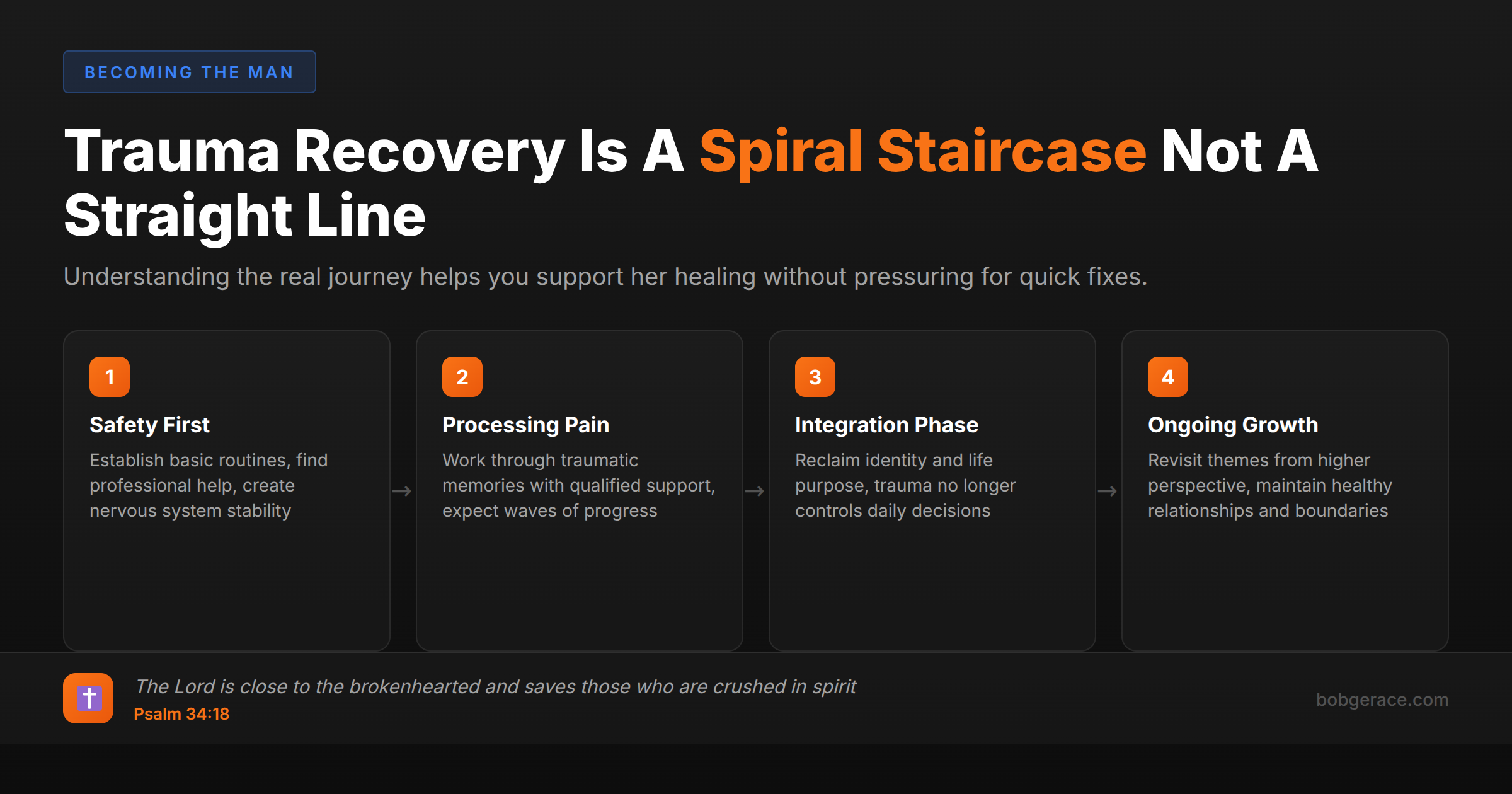
Trauma recovery isn't a straight line—it's more like a spiral staircase where you revisit similar themes but from a higher, healthier perspective each time. Recovery looks different for every woman, but there are common patterns: initial safety and stabilization, processing the traumatic memories, and finally integration where you reclaim your life and identity. The journey typically involves waves of progress followed by temporary setbacks, increased emotional regulation over time, growing capacity for healthy relationships, and a gradual return of joy and hope. Most importantly, recovery doesn't mean forgetting what happened or pretending it didn't affect you—it means the trauma no longer controls your daily life, relationships, or future.
The Full Picture
Trauma recovery happens in phases, not perfect progression. The widely recognized model includes three main stages: safety and stabilization, remembrance and mourning, and reconnection. But here's what they don't always tell you—these phases overlap, repeat, and sometimes happen out of order.
Early recovery often feels chaotic. You might experience intense emotions, sleep disruption, hypervigilance, or feeling disconnected from yourself and others. This isn't regression—it's your nervous system beginning to thaw and process what it couldn't handle during the traumatic experience.
The middle phase involves making sense of your story. This doesn't mean rehashing every detail endlessly, but rather understanding how the trauma affected your beliefs about yourself, others, and the world. You'll start recognizing trauma responses versus your authentic reactions.
Later recovery focuses on reclaiming your life. You'll notice increased emotional capacity, better boundaries, improved relationships, and a sense of personal agency returning. The trauma becomes part of your story without defining your entire narrative.
Physical healing accompanies emotional healing. Your body literally rewires itself during recovery. Sleep improves, chronic pain may decrease, and you'll notice your nervous system becoming more regulated. Some women describe feeling like they're "coming back into their body" after years of disconnection.
Setbacks are normal and necessary. They're not failures—they're opportunities for deeper healing. Each time you navigate a trigger or difficult anniversary with new tools, you're strengthening your recovery.
What's Really Happening
From a neurobiological perspective, trauma recovery is literally your brain restructuring itself. The areas responsible for memory processing, emotional regulation, and threat detection are reorganizing and healing.
During trauma, your brain prioritizes survival over integration. Memories get stored in fragments—sounds, images, body sensations—rather than coherent narratives. Recovery involves helping these fragments integrate into your broader life story.
The timeline varies dramatically. Simple traumas with good support systems might process within months, while complex developmental trauma often requires years of patient work. This isn't about being "strong enough"—it's about the nature of how our brains store and process overwhelming experiences.
Post-traumatic growth is real and measurable. Many women report increased empathy, stronger relationships, clearer life priorities, and deeper spiritual connection after recovery. This doesn't minimize the pain of trauma, but it acknowledges the remarkable resilience of the human spirit.
Your nervous system learns safety through repeated positive experiences. This is why recovery requires both processing past wounds and creating new, healthy patterns in the present. Therapy, supportive relationships, and spiritual practices all contribute to this rewiring process.
What Scripture Says
God's heart for trauma survivors is woven throughout Scripture. He doesn't minimize suffering but promises His presence in it and His power to bring healing and restoration.
Psalm 34:18 reminds us, "The Lord is close to the brokenhearted and saves those who are crushed in spirit." God doesn't distance Himself from our pain—He draws near to it.
Isaiah 61:1-3 speaks of God's mission to "bind up the brokenhearted" and give "beauty for ashes, the oil of joy for mourning, the garment of praise for the spirit of heaviness." This is God's heart for your recovery—transformation, not just survival.
2 Corinthians 1:3-4 describes God as the "Father of compassion and the God of all comfort, who comforts us in all our troubles so that we can comfort those who are in any trouble." Your healing has purpose beyond yourself.
Romans 8:28 doesn't promise that trauma is good, but that God works in all things—even terrible things—for the good of those who love Him. Your recovery can become part of His redemptive work.
Jeremiah 29:11 declares God's plans to "prosper you and not to harm you, to give you hope and a future." Trauma may have stolen your past sense of safety, but it cannot steal God's good plans for your future.
Psalm 147:3 simply states, "He heals the brokenhearted and binds up their wounds." This is both promise and process—God is actively working in your healing journey.
What To Do Right Now
-
1
Establish basic safety routines—consistent sleep, nutrition, and calming practices that help regulate your nervous system daily
-
2
Find qualified trauma-informed professional help—not all therapists are trained in trauma, so specifically seek those with trauma specialization
-
3
Create a support network of safe people who understand trauma recovery and won't pressure you to "get over it" quickly
-
4
Practice grounding techniques when triggered—5-4-3-2-1 sensory grounding, deep breathing, or other tools that bring you back to the present
-
5
Journal your progress and patterns—track triggers, victories, and insights to see your growth over time
-
6
Engage in trauma-informed spiritual practices—gentle prayer, scripture meditation, and worship that feel safe and nourishing
Related Questions
You Don't Have to Heal Alone
Trauma recovery is possible, but it's not meant to be done in isolation. Let's create a personalized plan for your healing journey.
Start Healing →