What is 'post-traumatic growth'?
6 min read
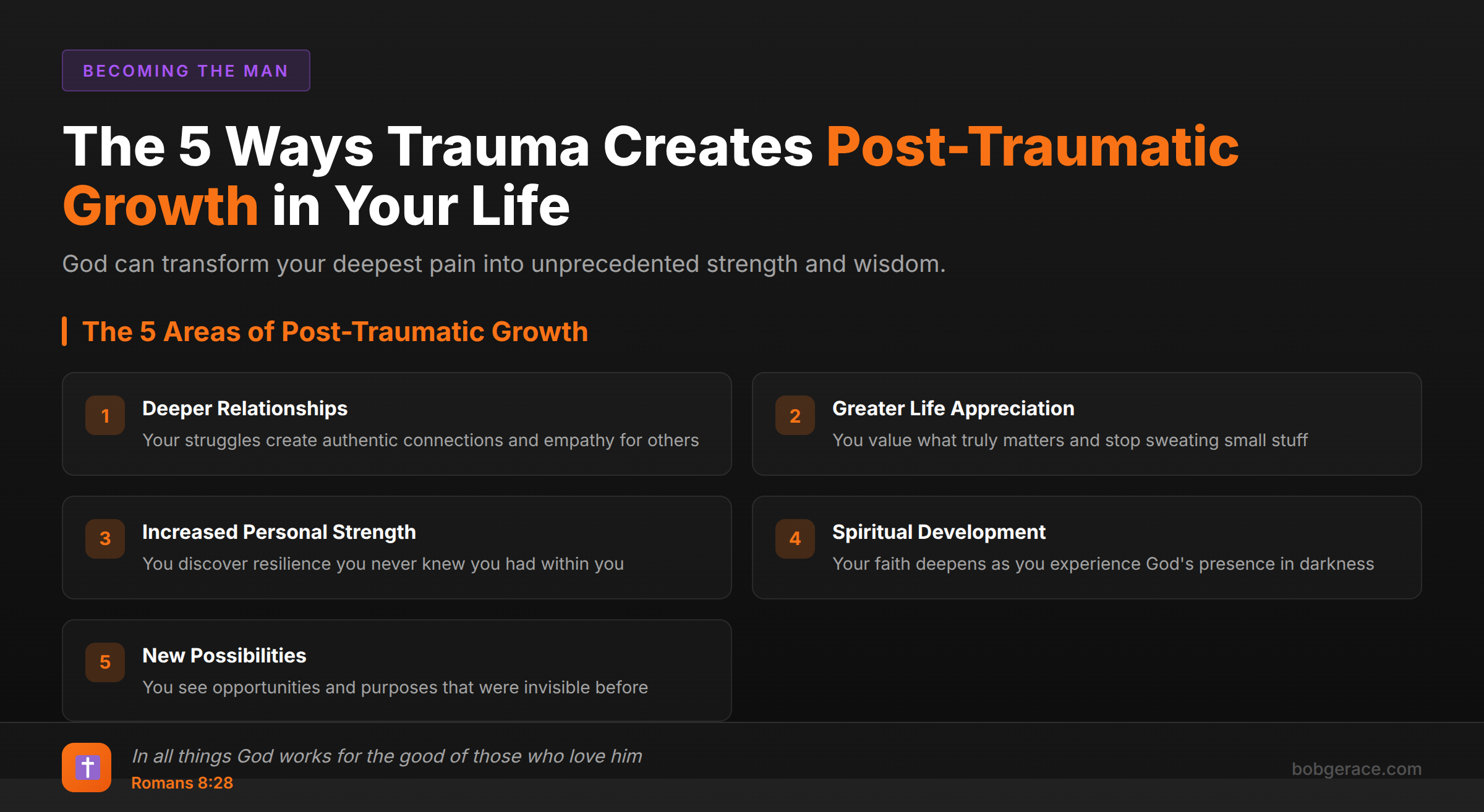
Post-traumatic growth is the positive psychological change that can emerge from struggling with highly challenging circumstances. It's not just bouncing back to where you were—it's actually becoming stronger, wiser, and more resilient than before the trauma occurred. This growth happens in five key areas: deeper relationships, greater appreciation for life, increased personal strength, spiritual development, and new possibilities you never saw before. While trauma is never something we'd choose, God can use even our deepest pain to transform us in ways that wouldn't have been possible otherwise. This isn't about minimizing your pain or rushing the healing process—it's about recognizing that your story isn't over and that breakthrough can come from breakdown.
The Full Picture
Post-traumatic growth isn't therapy speak—it's a real phenomenon that researchers have documented for decades. When you face something that shatters your understanding of how life works, you're forced to rebuild. And sometimes, what you build is actually stronger than what was there before.
Here's what makes this different from just "getting over it" or "moving on": Growth happens in five specific areas. First, your relationships deepen because you stop wasting time on surface-level connections. Second, you develop a profound appreciation for things you used to take for granted. Third, you discover inner strength you never knew existed. Fourth, your spiritual life takes on new meaning and depth. Fifth, you see possibilities and opportunities that were invisible before.
This isn't automatic, and it's not immediate. Post-traumatic growth requires you to actively wrestle with what happened rather than just survive it. It means asking hard questions, facing difficult emotions, and often rebuilding your entire worldview from the ground up. The trauma doesn't become "worth it"—that's not what this is about. Instead, you refuse to let the trauma have the final word in your story.
The process looks different for everyone. Some women experience growth after betrayal in marriage, others after loss, abuse, or health crises. What matters isn't the specific trauma but how you choose to engage with the rebuilding process. Growth happens when you move from asking "Why me?" to asking "Now what?" and "How can I use this?"
What's Really Happening
From a clinical perspective, post-traumatic growth represents a fundamental shift in how the brain processes meaning and identity. When trauma occurs, it creates what we call "cognitive dissonance"—a clash between your existing beliefs about safety, fairness, and how the world works, and the harsh reality of what actually happened. This dissonance is painful, but it's also the catalyst for growth.
Neurologically, trauma initially dysregulates the nervous system, particularly the amygdala and prefrontal cortex. However, as healing progresses, we see increased neural plasticity—the brain's ability to form new pathways. This isn't just psychological recovery; it's actual structural change that can result in enhanced emotional regulation, improved stress tolerance, and greater cognitive flexibility.
The key factor in whether someone experiences growth versus remaining stuck is what psychologists call "meaning-making." Those who actively engage in constructing a coherent narrative about their experience, rather than avoiding or minimizing it, are more likely to experience post-traumatic growth. This process typically involves three phases: initial disruption and distress, active coping and meaning-making, and finally, integration of new perspectives and strengths.
It's crucial to understand that growth doesn't negate the reality of trauma or suggest that suffering is beneficial. Rather, it demonstrates the remarkable capacity of the human psyche to transform adversity into wisdom, pain into purpose, and brokenness into a different kind of wholeness.
What Scripture Says
Scripture is filled with examples of God bringing beauty from ashes and strength from suffering. Romans 8:28 reminds us that "in all things God works for the good of those who love him, who have been called according to his purpose." This doesn't mean everything that happens is good, but that God can work good even through terrible circumstances.
2 Corinthians 1:3-4 shows us the purpose behind our pain: "Praise be to the God and Father of our Lord Jesus Christ, the Father of compassion and the God of all comfort, who comforts us in all our troubles, so that we can comfort those in any trouble with the comfort we ourselves receive from God." Your healing becomes a source of healing for others.
James 1:2-4 gives us the framework for growth through trials: "Consider it pure joy, my brothers and sisters, whenever you face trials of many kinds, because you know that the testing of your faith produces perseverance. Let perseverance finish its work so that you may be mature and complete, not lacking anything." This isn't about being happy when bad things happen—it's about recognizing the growth potential in every struggle.
Isaiah 61:3 promises that God will "provide for those who grieve in Zion—to bestow on them a crown of beauty instead of ashes, the oil of joy instead of mourning, and a garment of praise instead of a spirit of despair." Psalm 34:18 assures us that "The Lord is close to the brokenhearted and saves those who are crushed in spirit." 2 Corinthians 12:9 reveals that God's "power is made perfect in weakness." Your scars can become your strengths when surrendered to God's transforming work.
What To Do Right Now
-
1
Acknowledge your trauma honestly—don't minimize what you've been through or rush to "get over it"
-
2
Start a growth journal documenting small changes in perspective, strength, or relationships you're noticing
-
3
Identify one relationship that has deepened through your struggle and invest more intentionally in it
-
4
Ask yourself daily: "How is this experience changing me for the better?" even if the answer is small
-
5
Connect with others who've experienced similar trauma and are further along in their healing journey
-
6
Pray specifically for God to reveal the purposes He wants to accomplish through your pain
Related Questions
Ready to Transform Your Pain Into Purpose?
You don't have to navigate post-traumatic growth alone. Let's work together to help you discover the strength and wisdom emerging from your story.
Start Healing →