What can I learn from this crisis?
6 min read
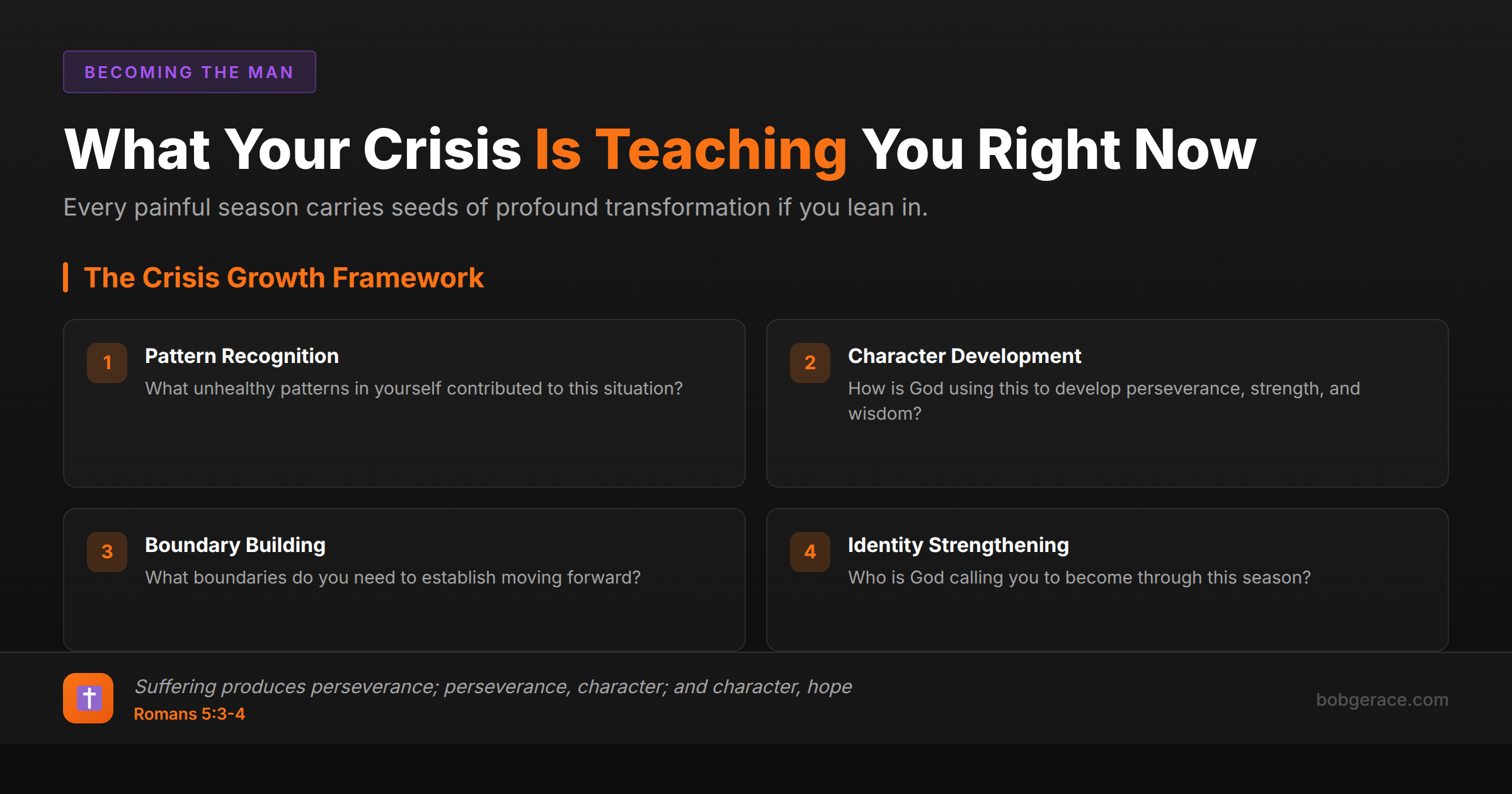
Every marriage crisis, no matter how painful, carries within it seeds of profound personal growth and transformation. While it's natural to want the pain to simply go away, the women who emerge strongest are those who lean into the difficult questions: What patterns in myself contributed to this? How can I become the woman God designed me to be? What boundaries do I need to establish? Your crisis is revealing truths that were always there but perhaps hidden beneath the surface of daily life. This is your opportunity to develop emotional intelligence, deepen your faith, strengthen your identity, and build resilience that will serve you for life. The goal isn't just to survive this season - it's to be transformed by it.
The Full Picture
Marriage crises don't happen in a vacuum - they're often the culmination of patterns, unmet needs, and unresolved issues that have been building over time. While this reality can feel overwhelming, it also presents an unprecedented opportunity for growth and transformation.
The Crisis as a Revealer
Your current situation is like a spotlight illuminating areas of your life that may have been operating in shadows. Perhaps you're discovering that you've been people-pleasing at the expense of your own well-being, or that you've been avoiding difficult conversations that needed to happen years ago. Maybe you're realizing that your identity became so wrapped up in being a wife that you lost touch with who you are as an individual.
Beyond Survival Mode
Most women in crisis spend their energy trying to get back to "normal," but normal might have been part of the problem. This crisis is asking you to envision something better than what was - both for yourself and potentially for your marriage. It's pushing you to develop skills you didn't know you needed: setting boundaries, communicating your needs clearly, managing your emotions, and standing firm in your values.
The Growth Opportunity
Every woman who has walked through a marriage crisis successfully will tell you the same thing: "I wouldn't choose to go through it again, but I'm grateful for who I became because of it." This season is developing your emotional muscles, deepening your faith, clarifying your values, and teaching you to rely on God in ways you never have before. The question isn't whether you'll learn something - it's whether you'll be intentional about what you learn.
What's Really Happening
From a therapeutic perspective, crisis represents what we call a "critical period" - a time when the brain is primed for accelerated learning and change. The heightened emotional state you're experiencing, while uncomfortable, actually creates neuroplasticity that makes lasting transformation possible.
Post-Traumatic Growth
Research shows that individuals who experience significant life crises often emerge with what psychologists call "post-traumatic growth." This includes increased appreciation for life, deeper relationships, enhanced personal strength, greater spiritual development, and new life priorities. The key factor determining whether someone experiences this growth is their willingness to actively process and learn from their experience rather than simply enduring it.
Identity Reconstruction
Marriage crises often trigger what we call "identity reconstruction." Many women discover that their sense of self became enmeshed with their role as a wife, leaving them feeling lost when that role is threatened. This crisis is an opportunity to develop a more integrated, authentic identity that isn't dependent on external circumstances or relationships.
Developing Emotional Intelligence
Crisis accelerates emotional intelligence development. You're learning to identify, understand, and regulate complex emotions while also developing greater empathy and social awareness. These skills will benefit every relationship in your life moving forward.
The women who emerge strongest from marriage crises are those who approach this season with curiosity rather than just survival instincts. They ask, "What is this teaching me?" rather than just "When will this end?" This mindset shift is crucial for transformation.
What Scripture Says
Scripture is filled with examples of God using difficult seasons to develop character, deepen faith, and prepare His people for greater purposes. Your crisis isn't outside of God's awareness or care - it's an opportunity for Him to work in ways that might not be possible in easier seasons.
Romans 5:3-4 reminds us that "suffering produces perseverance; perseverance, character; and character, hope." This isn't a platitude - it's a promise that your current struggle is developing something valuable within you. The perseverance you're building now will serve you for life.
James 1:2-4 instructs us to "consider it pure joy when you face trials of many kinds, because you know that the testing of your faith produces perseverance." Joy doesn't mean happiness about the circumstances - it means confidence that God is using this season for your good and His glory.
2 Corinthians 1:3-4 reveals that God "comforts us in all our troubles, so that we can comfort those who are in any trouble with the comfort we ourselves receive from God." Your current pain is preparing you to minister to others who will face similar struggles.
Isaiah 43:19 promises that God is "doing a new thing" - and sometimes the new thing requires the ending or transformation of old things. This crisis may be clearing space for something better than you can imagine.
Jeremiah 29:11 assures us that God's plans are "to prosper you and not to harm you, to give you hope and a future." Even when circumstances feel destructive, God's ultimate plan is constructive.
1 Peter 5:10 promises that "after you have suffered a little while, [God] will himself restore you and make you strong, firm and steadfast." This season is temporary, but the strength you're gaining is permanent.
What To Do Right Now
-
1
Start a learning journal - write daily about what you're discovering about yourself, your patterns, and your relationship with God
-
2
Identify one unhealthy pattern in yourself that this crisis has revealed and commit to changing it, regardless of what happens in your marriage
-
3
Ask three trusted friends what strengths they've seen you develop or display during this difficult season
-
4
Read one book on personal growth, emotional health, or spiritual development that addresses an area where you want to grow
-
5
Schedule regular time with a counselor, coach, or mentor who can help you process what you're learning and guide your growth
-
6
Create a vision statement for who you want to be on the other side of this crisis, independent of your marriage outcome
Related Questions
- What is 'post-traumatic growth'?
- How do I grow regardless of outcome?
- What might I discover through this pain?
- What is my vision for my life?
- How do I recover my identity?
- What does finding myself look like?
- Is my suffering redemptive?
- What is the purpose of pain in God's economy?
- What role does crisis play in transformation?
- Is this suffering formative or just painful?
Also find Bob on
Subscribe for weekly videos on Christian marriage.
You Don't Have to Figure This Out Alone
A coach who knows your marriage can see what you can't see yet — the patterns, the blind spots, the specific work that matters for you right now.
Talk to Bob →