What predicts successful change vs. relapse?
6 min read
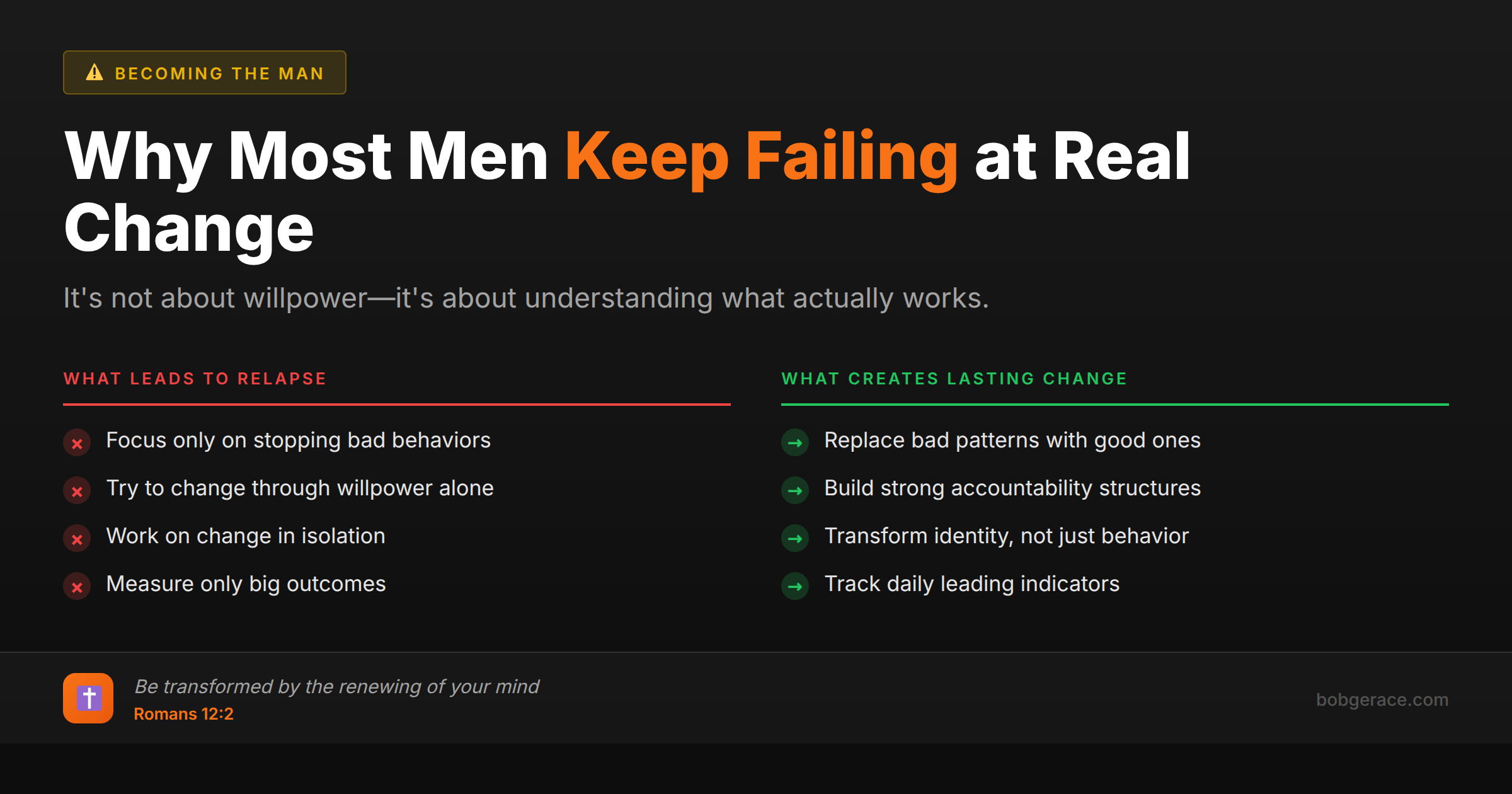
The biggest predictor of successful change versus relapse isn't willpower or motivation—it's having the right support systems and understanding the difference between behavior change and identity change. Couples who succeed long-term don't just modify actions; they transform how they see themselves and their relationship. They build accountability structures, practice new patterns consistently, and address the underlying beliefs driving destructive behaviors. Relapse happens when couples focus only on stopping bad behaviors without replacing them with good ones, or when they try to change in isolation without support. The couples who make it understand that lasting change is a process, not an event, and they're willing to do the hard work of rewiring both their brains and their hearts.
The Full Picture
Here's what I've learned after years of watching couples either breakthrough or break down: successful change has nothing to do with being perfect and everything to do with being persistent.
The couples who succeed understand five critical factors that separate lasting transformation from temporary fixes:
First, they focus on replacement, not removal. Instead of just trying to stop fighting, they learn how to communicate. Instead of just avoiding triggers, they develop healthy responses. You can't create a vacuum in your relationship—you have to fill the space with something better.
Second, they change their environment. They remove temptations, create new routines, and surround themselves with people who support their growth. If your environment stays the same, you'll default back to old patterns when stress hits.
Third, they track leading indicators, not just outcomes. Instead of only measuring "days without fighting," they track "times I paused before responding" or "moments I chose curiosity over criticism." They celebrate small wins that build toward big changes.
Fourth, they have skin in the game. They invest time, money, and energy into their transformation. They join coaching programs, attend counseling, read books together. When you invest in change, you're more likely to protect that investment.
Finally, they understand that relapse isn't failure—it's information. When they slip back into old patterns, they don't give up. They analyze what happened, adjust their approach, and get back on track faster each time.
The couples who relapse make the opposite choices. They rely on willpower alone, try to change everything at once, avoid accountability, and quit after the first setback. They treat change like a light switch instead of a dimmer that gradually brightens over time.
What's Really Happening
From a clinical perspective, successful change versus relapse comes down to neuroplasticity and attachment security. Our brains are literally wired by our repeated experiences, especially in close relationships. When couples engage in destructive patterns for years, they've carved deep neural pathways that automatically activate under stress.
The couples who succeed understand that rewiring takes time and intentional practice. Research shows it takes approximately 66 days to form a new habit, but changing deep relational patterns can take 6-12 months of consistent practice. The key is understanding the difference between conscious competence and unconscious competence.
Successful couples also address their attachment wounds alongside their behavioral changes. Many destructive patterns stem from unresolved trauma or insecure attachment styles. If you only change behaviors without healing the underlying wounds, you're treating symptoms, not causes.
I also see that couples who succeed have what we call "change readiness"—they're not just willing to do something different, they're ready to be someone different. They've reached a point where the pain of staying the same exceeds the pain of changing.
Relapse typically occurs when couples underestimate the power of their old patterns or overestimate their ability to change without support. The brain defaults to familiar neural pathways under stress, which is why having external accountability and structured support systems isn't optional—it's essential for lasting transformation.
What Scripture Says
Scripture is clear about both the possibility and the process of lasting change. God doesn't just call us to transformation—He provides the roadmap for how it happens.
Romans 12:2 gives us the foundation: *"Do not conform to the pattern of this world, but be transformed by the renewing of your mind. Then you will be able to test and approve what God's will is—his good, pleasing and perfect will."* Real change starts in our minds, with new ways of thinking that lead to new ways of living.
Galatians 6:1-2 addresses the relapse factor: *"Brothers and sisters, if someone is caught in a sin, you who live by the Spirit should restore that person gently. But watch yourselves, or you also may be tempted. Carry each other's burdens, and in this way you will fulfill the law of Christ."* Notice that restoration happens in community, not isolation. We need others to help us stay on track.
James 1:14-15 explains why some changes stick and others don't: *"But each person is tempted when they are dragged away by their own evil desire and enticed. Then, after desire has conceived, it gives birth to sin; and sin, when it is full-grown, gives birth to death."* Lasting change requires addressing the desires and beliefs underneath our behaviors.
1 Corinthians 10:13 provides hope for those who keep relapsing: *"No temptation has overtaken you except what is common to mankind. And God is faithful; he will not let you be tempted beyond what you can bear. But when you are tempted, he will also provide a way out so that you can endure it."*
God's pattern is clear: transformation happens through renewed thinking, community support, addressing root causes, and depending on His strength rather than our willpower alone.
What To Do Right Now
-
1
Identify one specific pattern you want to change and write down what you'll replace it with, not just what you'll stop doing
-
2
Create environmental changes that make success easier—remove triggers and add supports to your daily routines
-
3
Find at least one person who will check in with you weekly about your progress and hold you accountable with love
-
4
Track daily leading indicators (small actions) rather than just measuring big outcomes or failures
-
5
Invest something meaningful (time, money, or energy) into your change process to increase your commitment level
-
6
Plan your relapse response now—decide how you'll get back on track when (not if) you slip into old patterns
Related Questions
Ready to Make Changes That Actually Stick?
Stop the cycle of trying and failing. Get the support and strategy you need to create lasting transformation in your marriage.
Get Support →