What is 'implementation intention' and why does it help?
6 min read
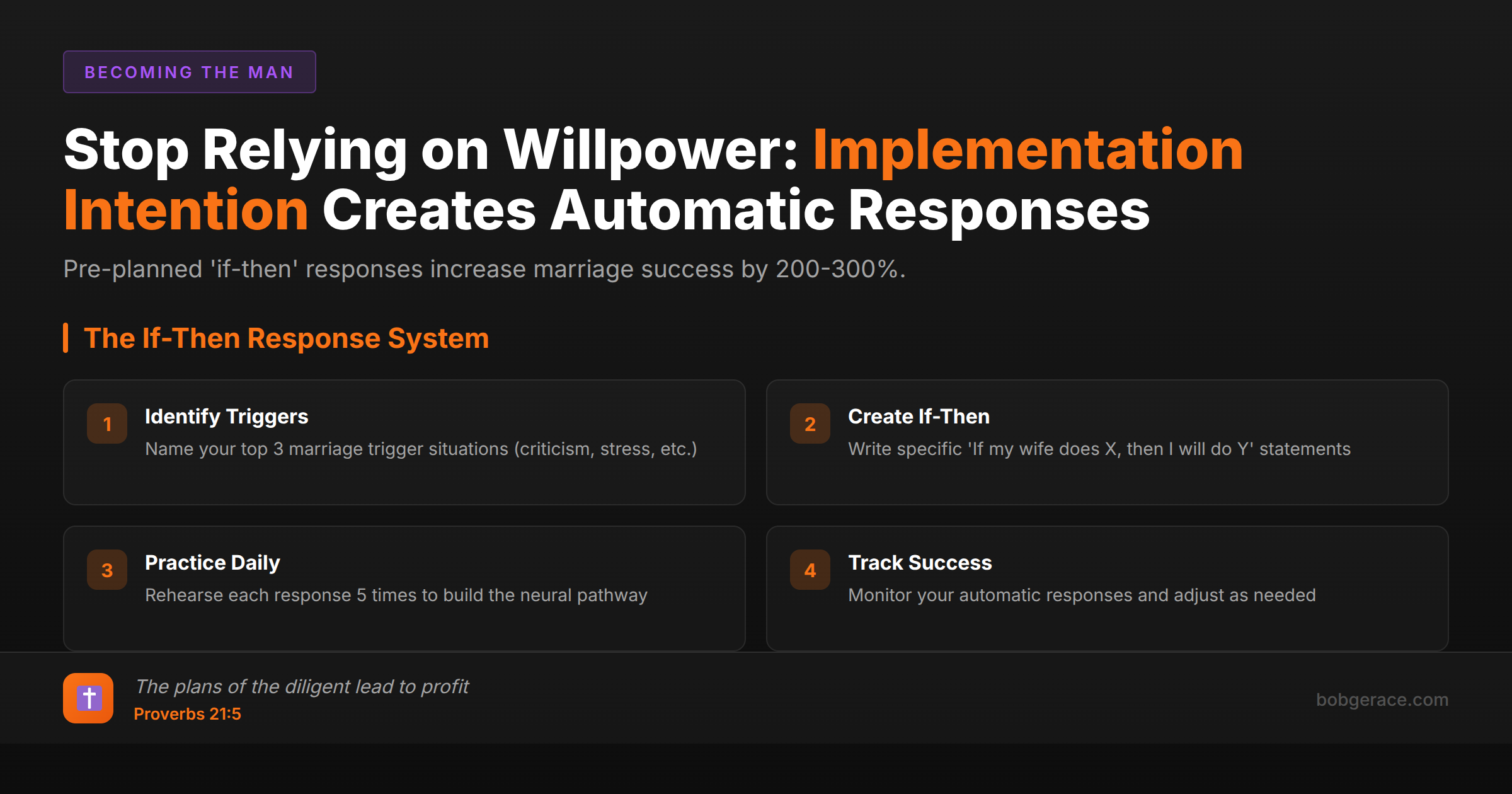
Implementation intention is a specific form of planning that creates automatic behavioral responses using "if-then" statements. Instead of vague goals like "I'll be more patient," you create specific triggers: "If my wife starts talking about her day when I walk in the door, then I'll put down my phone, make eye contact, and listen for at least two minutes before responding." This works because it bypasses your brain's decision-making fatigue. When the trigger situation occurs, your pre-planned response kicks in automatically. Research shows implementation intentions increase success rates by 200-300% compared to general goal-setting. In marriage, this means you stop relying on willpower in heated moments and start operating from pre-established, intentional responses that align with your values.
The Full Picture
Here's what most guys get wrong about change: they think wanting it badly enough is sufficient. They promise their wives they'll do better, they feel genuine remorse, they have every intention of changing—and then they blow it again within days or weeks.
The problem isn't your heart or your intentions. The problem is you're trying to make split-second decisions in emotionally charged moments using the same brain patterns that got you in trouble in the first place.
Implementation intention solves this by creating pre-decisions. You're essentially programming better responses ahead of time, when your brain is clear and your emotions are stable. Instead of hoping you'll respond well in the moment, you've already decided exactly how you'll respond.
Here's how it works in practice: - Traditional approach: "I won't get defensive when she brings up problems" - Implementation intention: "If she starts a conversation with 'We need to talk,' then I'll take a deep breath, sit down facing her, and say 'I'm listening' before she finishes speaking"
The difference is specificity and automaticity. Your brain doesn't have to generate a response in the heat of the moment—it already knows what to do.
This isn't about becoming robotic. It's about training yourself to respond from your values instead of your impulses. Every professional—from athletes to surgeons—relies on pre-planned responses in high-pressure situations. Your marriage deserves the same level of intentionality.
The beauty of implementation intention is that it works even when you don't feel like it. Emotions are temporary, but pre-established neural pathways are durable.
What's Really Happening
Implementation intention leverages what we call "strategic automaticity"—the ability to make conscious behaviors automatic through specific environmental cues. This bypasses the prefrontal cortex's executive function, which becomes compromised during emotional activation.
When couples fight, they're operating from their limbic system—the emotional brain that prioritizes survival over connection. Traditional behavior change relies on accessing higher-order thinking in these moments, which is neurologically unrealistic. Implementation intention creates what researchers call "instant habits"—predetermined responses that activate automatically when specific triggers occur.
The key is specificity. Vague intentions like "communicate better" don't create neural pathways. But "If my voice starts to rise, then I'll lower it and speak slower" creates a specific cue-response pattern that the brain can automate.
I see the most success when couples identify their top three trigger situations and create implementation intentions for each. The husband who always gets defensive might plan: "If I feel my jaw tightening when she brings up an issue, then I'll unclench it and ask 'Help me understand what you need.'" The wife who withdraws might decide: "If I want to shut down during conflict, then I'll say 'I need to stay present with you right now' out loud."
This works because it transforms reactive patterns into proactive choices. You're not fighting your impulses in the moment—you're redirecting them through pre-established channels that serve your marriage.
What Scripture Says
Scripture consistently emphasizes the power of predetermined responses and intentional planning. This isn't about human willpower—it's about stewarding the mind God gave you.
Proverbs 21:5 reminds us that "The plans of the diligent lead to profit as surely as haste leads to poverty." Implementation intention is diligent planning applied to your character. Instead of hasty emotional reactions, you're creating profitable responses that build your marriage.
Luke 14:28 asks, "Suppose one of you wants to build a tower. Won't you first sit down and estimate the cost to see if you have enough money to complete it?" Jesus advocates for strategic planning. Your marriage transformation requires the same intentional preparation—counting the cost and planning your responses.
1 Corinthians 9:24-25 teaches that successful runners "go into strict training." Paul isn't talking about spontaneous effort—he's describing disciplined, repetitive preparation. Implementation intention is strict training for your character, creating automatic responses that honor God and serve your wife.
Ephesians 4:29 provides a perfect implementation intention framework: "Do not let any unwholesome talk come out of your mouths, but only what is helpful for building others up according to their needs." This becomes: "If I'm about to respond defensively, then I'll pause and ask 'What does she need to hear right now?'"
Proverbs 27:14 warns about thoughtless responses, while James 1:19 calls us to be "quick to listen, slow to speak, slow to become angry." These aren't just nice ideas—they're implementation intentions waiting to be activated through specific if-then planning.
What To Do Right Now
-
1
Identify your top three marriage trigger situations (criticism, stress, disagreements, etc.)
-
2
Write each trigger as a specific 'if' statement ('If my wife uses that tone...')
-
3
Create a specific 'then' response that reflects your values ('then I'll take two deep breaths and ask what she needs')
-
4
Practice each if-then statement out loud 5 times to create the neural pathway
-
5
Post your implementation intentions somewhere visible and review them daily for two weeks
-
6
Track your success rate and adjust the specificity of your triggers and responses as needed
Related Questions
- What are the 'stages of change'?
- Why does 'trying harder' often backfire?
- What structures support sustainable change?
- What is 'habit loop' and how do I interrupt it?
- How long until new patterns become default?
- What role does environment play in triggering patterns?
- What makes change sustainable vs. temporary?
- How long does real transformation take?
- What daily practices indicate commitment?
- What does good homework look like?
Also find Bob on
Subscribe for weekly videos on Christian marriage.
Build Your Playbook With a Coach
Implementation intentions work when they're built for your actual marriage. A coach helps you identify the triggers you're missing and the responses that fit your wife, not a template.
Talk to Bob →