What are the 'stages of change'?
6 min read
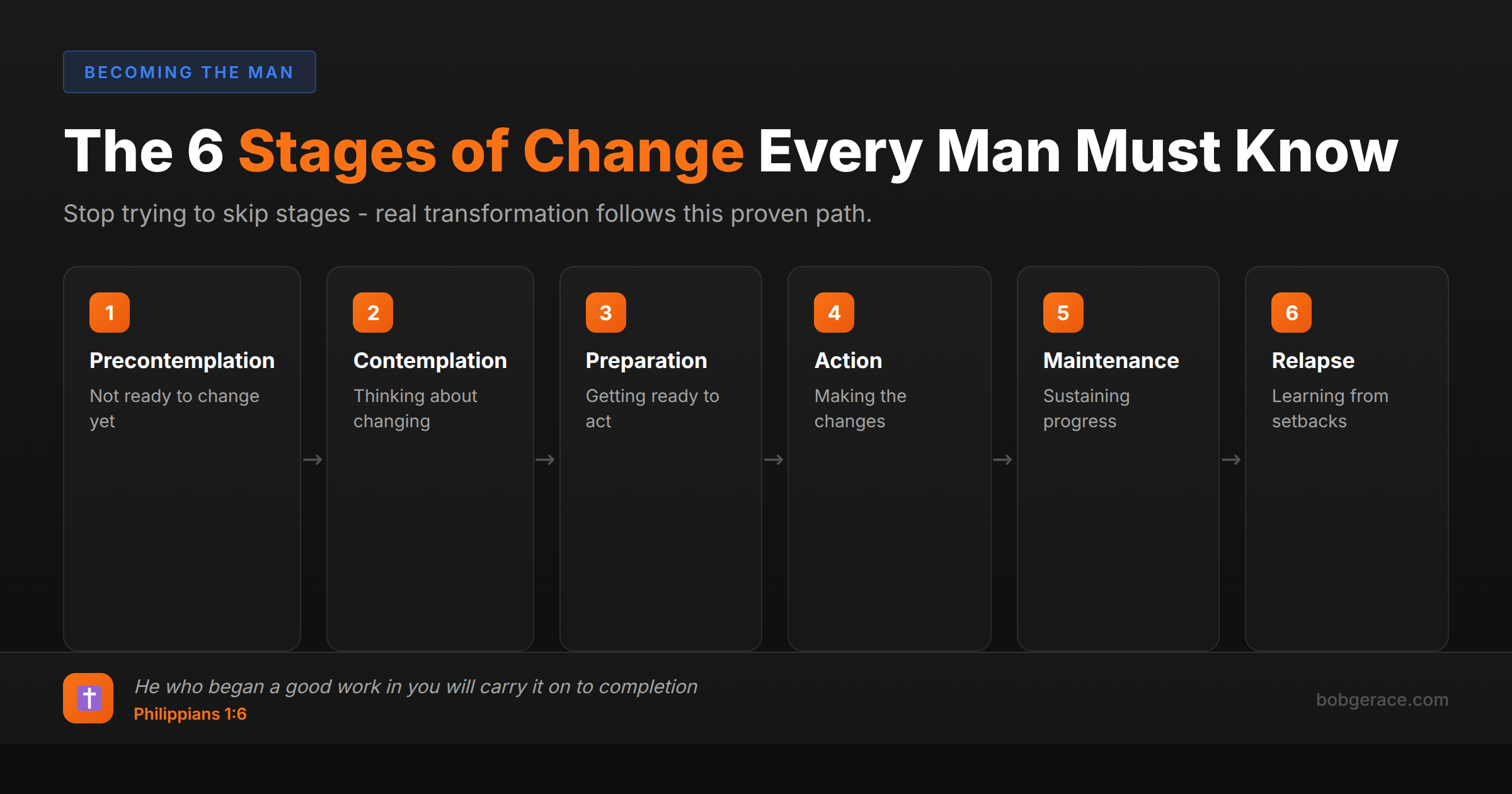
The stages of change is a proven psychological model that maps out how people actually change behavior - and it's crucial for marriage transformation. The six stages are: Precontemplation (not ready), Contemplation (thinking about it), Preparation (getting ready), Action (making changes), Maintenance (sustaining progress), and sometimes Relapse (temporary setbacks). Understanding these stages is game-changing because most people expect to jump straight from recognizing a problem to permanent change. That's not how it works. Real change is a process, and knowing which stage you're in helps you take the right next step instead of beating yourself up for not being further along. This isn't just theory - it's a roadmap for actual transformation in your marriage.
The Full Picture
Let me break down each stage because knowing where you are changes everything about how you approach your marriage problems.
Precontemplation is where you don't see the problem yet. Maybe your spouse is frustrated, but you think they're overreacting. You're not ready to change because you don't think you need to.
Contemplation hits when you start thinking "Maybe I do have a problem." You're aware something needs to change, but you're not committed yet. You might spend months or even years here, weighing pros and cons.
Preparation is when you decide "I'm going to do something about this." You start making small changes, buying books, researching counselors, or having serious conversations with your spouse.
Action is the stage everyone thinks of as "change" - you're actively doing things differently. Going to counseling, practicing new communication skills, changing your behavior patterns.
Maintenance is the hardest stage nobody talks about. You've made changes, but now you have to keep them going when motivation fades and old patterns try to resurface.
Relapse isn't failure - it's part of the process. Most people cycle through these stages multiple times before lasting change sticks.
Here's what most couples miss: you and your spouse might be in completely different stages about the same issue. That's why you feel like you're speaking different languages.
What's Really Happening
The Transtheoretical Model, developed by Prochaska and DiClemente, revolutionized how we understand behavior change. In marriage counseling, I see couples struggling because they don't recognize that change is a process, not an event.
Neurologically, each stage involves different brain processes. Precontemplation often involves denial mechanisms protecting the ego. Contemplation activates the prefrontal cortex as we weigh options. Action stages show increased dopamine activity as we pursue goals.
What's crucial for couples is understanding that pressuring someone to skip stages backfires. If your spouse is in Precontemplation and you're demanding Action-stage behaviors, you'll create resistance and resentment. The brain literally isn't ready.
I've observed that successful couples learn to meet each other where they are. If your partner is in Contemplation about their anger issues, asking curious questions is more effective than demanding immediate behavior change. If they're in Preparation, offering support and resources helps them move forward.
The maintenance stage is where most marriage changes fail. The initial motivation fades, stress increases, and old neural pathways reassert themselves. This is why ongoing support systems, regular check-ins, and realistic expectations about setbacks are essential. Relapse isn't moral failure - it's information about what additional support or strategies are needed.
What Scripture Says
God understands the process of change better than any psychologist. Scripture is full of examples showing that transformation happens in stages, not instantly.
"Being confident of this, that he who began a good work in you will carry it on to completion until the day of Christ Jesus." - Philippians 1:6. Notice it says God *began* a work and will *carry it on* - it's a process with stages.
"Do not despise these small beginnings, for the Lord rejoices to see the work begin." - Zechariah 4:10. God celebrates the start of change, not just the finish. Every stage matters to Him.
"The heart of man plans his way, but the Lord establishes his steps." - Proverbs 16:9. Even our planning stage (Preparation) is part of God's design for how change happens.
"If we confess our sins, he is faithful and just to forgive us our sins and to cleanse us from all unrighteousness." - 1 John 1:9. Confession often happens in the Contemplation stage - acknowledging we have a problem.
"Therefore, if anyone is in Christ, the new creation has come: The old has gone, the new is here!" - 2 Corinthians 5:17. This describes the Action stage - actively becoming new.
"Let us hold unswervingly to the hope we profess, for he who promised is faithful." - Hebrews 10:23. This is Maintenance - holding fast when change gets hard.
God doesn't shame us for being in process. He meets us wherever we are and helps us take the next step.
What To Do Right Now
-
1
Identify which stage you're in for your main marriage issue - be brutally honest about where you actually are, not where you think you should be
-
2
Figure out which stage your spouse is in for the same issue - they might be several stages behind or ahead of you
-
3
Stop pressuring yourself or your spouse to skip stages - work with where you actually are instead of fighting reality
-
4
Take one appropriate action for your current stage - if you're in Contemplation, research or reflect; if you're in Action, practice one specific skill
-
5
Plan for the Maintenance stage now - identify what support, accountability, or reminders you'll need when motivation fades
-
6
Normalize setbacks and relapse as part of the process - create a plan for how you'll respond when old patterns resurface
Related Questions
- What is 'transformational learning'?
- What makes change sustainable vs. temporary?
- What does neuroplasticity mean for adult change?
- How long does it take to rewire the brain?
- Why do people cycle through stages multiple times?
- What predicts successful change vs. relapse?
- How long does recovery take?
- What is the typical betrayal trauma recovery timeline?
- How long does real change actually take?
- What is the 'trust timeline' post-affair?
Also find Bob on
Subscribe for weekly videos on Christian marriage.
Ready to apply this to your marriage?
Knowing the stages doesn't tell you which one you're in or what to do next. A coach who knows your specific situation can.
Talk to Bob →