What does 'the work' actually mean?
6 min read
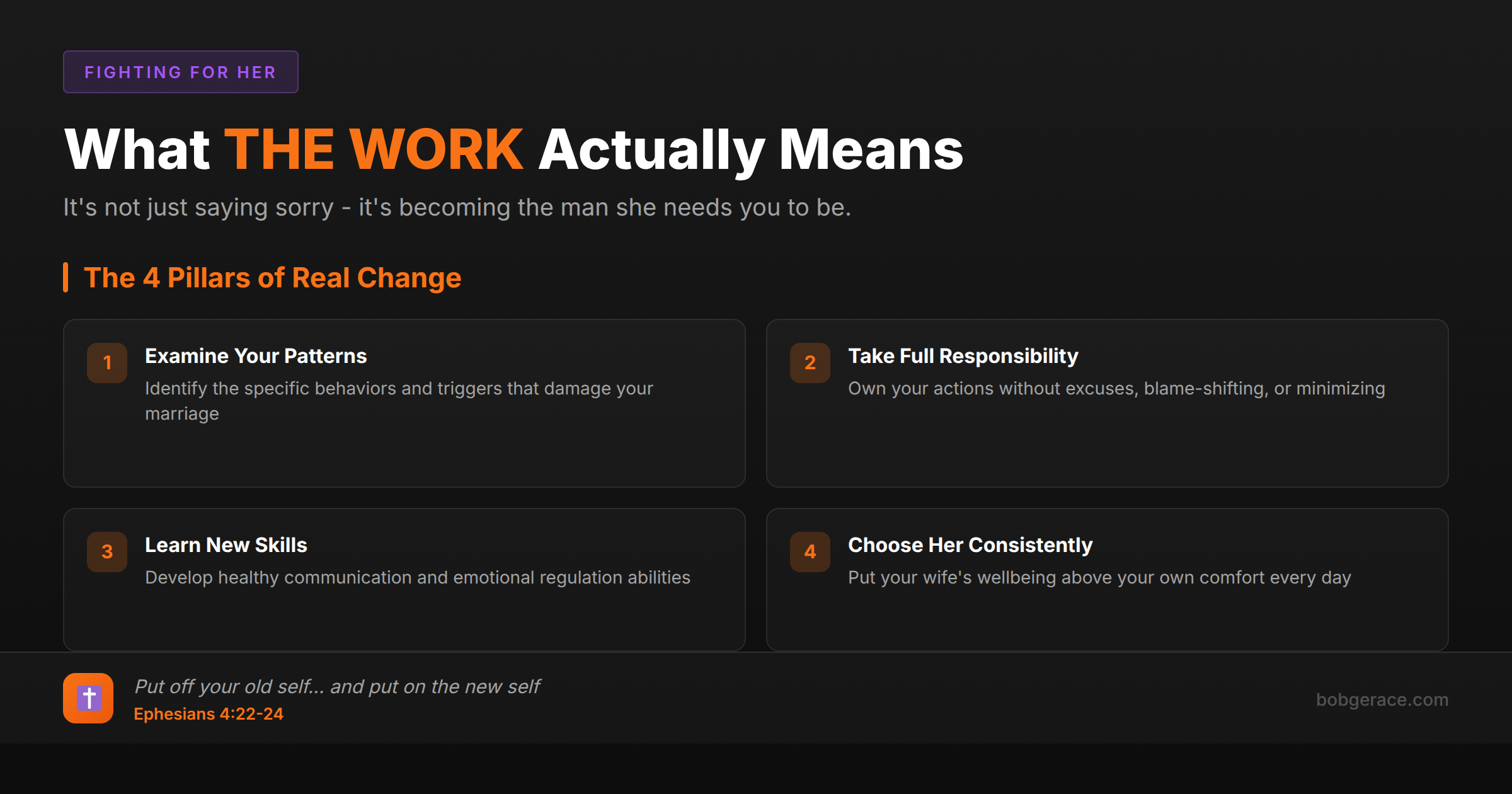
When we talk about 'the work' in marriage, we mean the intentional, ongoing effort to examine your patterns, take responsibility for your actions, and actively change destructive behaviors. It's not just saying sorry - it's digging into why you do what you do and making real changes. The work includes understanding your triggers, learning healthy communication skills, addressing past wounds that affect your marriage, and consistently choosing your wife's wellbeing over your own comfort. It's about becoming the man and husband God designed you to be, not just trying harder at the same old patterns.
The Full Picture
Let's be crystal clear about what 'the work' actually entails, because too many men think it means buying flowers and saying 'I'll try harder.' That's not work - that's wishful thinking.
Real work starts with brutal self-honesty. You need to identify your specific patterns that damage your marriage. Maybe you shut down during conflict. Maybe you make promises you don't keep. Maybe you prioritize work, friends, or hobbies over your wife consistently. The work means naming these patterns specifically, not hiding behind vague statements like 'I know I mess up sometimes.'
Next comes understanding the why behind your behavior. This isn't about making excuses - it's about getting to the root. Did you grow up in a home where conflict was avoided at all costs? Were you taught that men don't show emotions? Do you have unhealed wounds from past relationships or childhood experiences that make vulnerability feel dangerous? Understanding your triggers helps you catch them before they derail your marriage.
Then comes the hardest part: consistent change over time. This means developing new skills, practicing them when it's inconvenient, and staying committed to growth even when your wife isn't immediately responding positively. It means going to counseling, reading books that challenge you, having difficult conversations, and choosing your wife's needs over your comfort zone repeatedly.
The work also includes spiritual and emotional maturity. You're learning to lead your marriage with wisdom, not control. You're developing empathy, learning to truly listen, and taking responsibility without deflecting blame. You're becoming someone your wife can trust with her heart because your actions consistently match your words.
What's Really Happening
From a clinical perspective, 'the work' represents what we call intentional behavior change and emotional regulation development. Many men come to therapy thinking they just need better communication techniques, but real transformation requires addressing three core areas: self-awareness, emotional intelligence, and behavioral consistency.
Self-awareness means developing what psychologists call 'metacognition' - thinking about your thinking. You're learning to observe your emotional reactions, identify your defense mechanisms, and recognize your patterns before they play out. This isn't natural for most people; it requires deliberate practice.
Emotional intelligence involves understanding both your emotions and your spouse's, learning to regulate your responses, and developing empathy. Research shows that men who do this work see significant improvements not just in their marriages, but in their overall life satisfaction and stress levels.
The behavioral consistency piece is crucial because lasting change happens through repeated actions over time, not dramatic gestures. Neuroscience tells us it takes consistent practice to create new neural pathways. Your wife has learned not to trust based on past experience, so rebuilding that trust requires demonstrating reliability in small, daily choices over months and years.
What makes this particularly challenging for men is that our culture often teaches emotional avoidance and self-reliance. The work requires vulnerability and interdependence, which can feel foreign and uncomfortable initially.
What Scripture Says
Scripture is clear about the kind of men and husbands we're called to be, and it requires intentional effort and transformation.
Ephesians 4:22-24 tells us to 'put off your old self, which belongs to your former manner of life and is corrupt through deceitful desires, and to be renewed in the spirit of your minds, and to put on the new self, created after the likeness of God in true righteousness and holiness.' This is the work - actively putting off destructive patterns and putting on godly character.
1 Corinthians 13:11 reminds us that 'when I became a man, I gave up childish ways.' Part of the work is growing out of selfish, immature responses and developing mature love that seeks your wife's good above your own comfort.
Ephesians 5:25-28 commands husbands to 'love your wives as Christ loved the church and gave himself up for her... husbands should love their wives as their own bodies.' This sacrificial love isn't a feeling - it's a choice that requires daily dying to self and choosing your wife's wellbeing.
James 1:22 warns us to 'be doers of the word, and not hearers only, deceiving yourselves.' The work means actually implementing what you learn, not just accumulating knowledge.
Proverbs 27:5-6 teaches that 'better is open rebuke than hidden love. Faithful are the wounds of a friend.' Sometimes the work includes receiving difficult feedback and correction from your wife, counselors, or trusted friends.
2 Corinthians 5:17 promises that 'if anyone is in Christ, he is a new creation. The old has passed away; behold, the new has come.' This transformation is possible, but it requires partnership with God's Spirit and consistent effort on your part.
What To Do Right Now
-
1
Write down 3 specific patterns or behaviors that consistently hurt your marriage - be brutally honest, not vague
-
2
Identify the triggers or situations that lead to these patterns - when, where, and what typically sets them off
-
3
Choose one pattern to focus on first and research the skills needed to change it (books, counseling, mentorship)
-
4
Create a daily practice for self-reflection - journaling, prayer, or meditation to increase self-awareness
-
5
Schedule regular check-ins with your wife to ask how you're doing and listen without defending
-
6
Find an accountability partner or counselor who will challenge you and track your progress over time
Related Questions
- What is he doing with his coach?
- Is his program legitimate?
- What should he be learning?
- How long does real transformation take?
- What does quality coaching/therapy include?
- What are the stages of change work?
- What does real transformation look like?
- How do I change from the inside out?
- Can I actually become a different man?
- What does sustainable change require?
Also find Bob on
Subscribe for weekly videos on Christian marriage.
Get a Coach Who Knows Your Marriage
The work looks different in every marriage. A coach calibrates to your specific patterns, your wife's actual needs, where you're stuck right now.
Talk to Bob →