Is his program legitimate?
6 min read
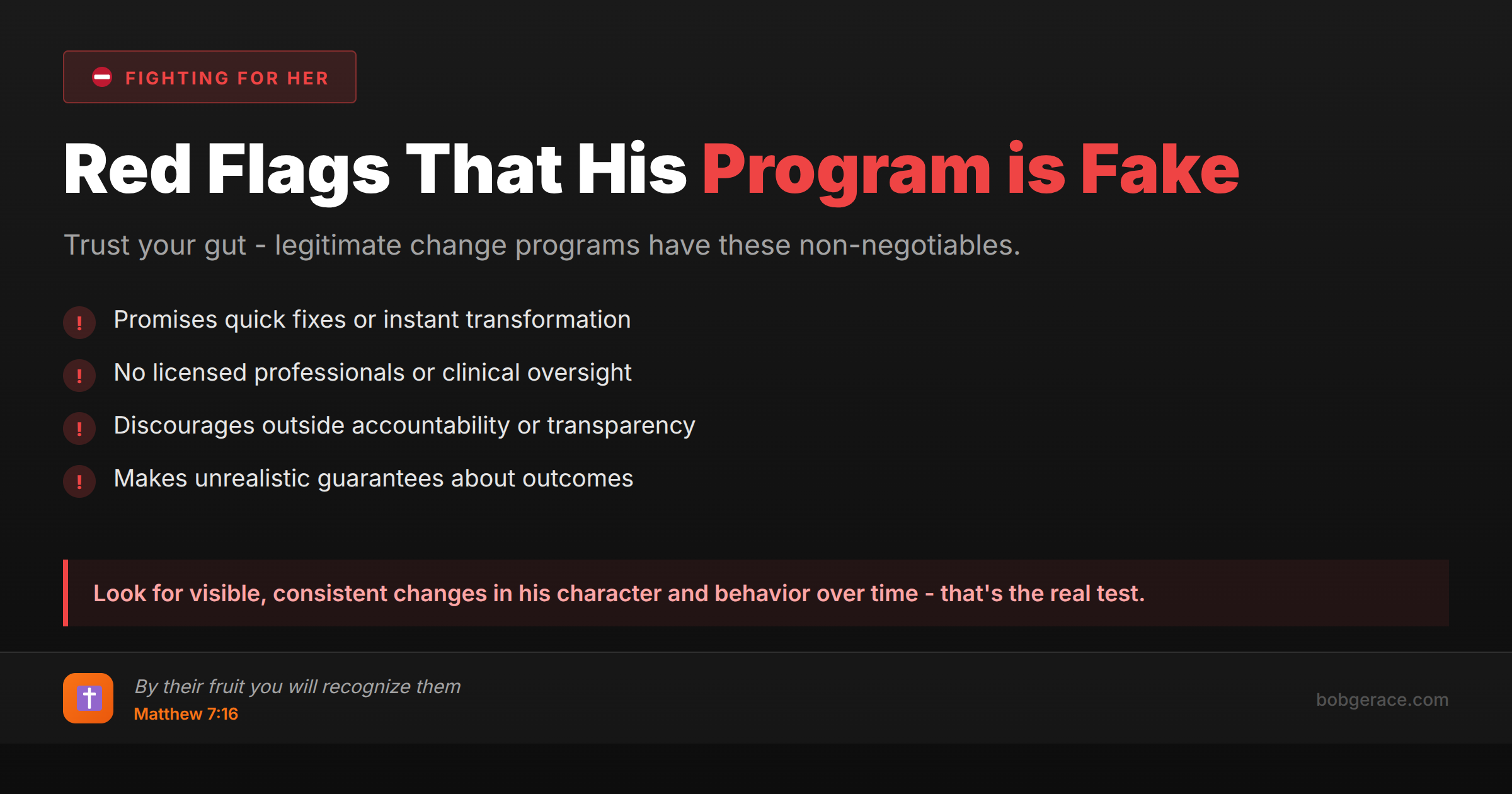
The legitimacy of your husband's program depends on several key factors: clinical credentials, evidence-based approaches, accountability structures, and measurable outcomes. Legitimate programs have licensed professionals, clear treatment protocols, regular progress assessments, and transparent communication with spouses when appropriate. Red flags include programs that promise quick fixes, lack professional oversight, discourage outside accountability, or make unrealistic guarantees. Your intuition matters here. If something feels off about his program or his participation in it, trust that instinct while gathering facts. Look for programs that address root causes, not just symptoms, and that integrate spiritual, emotional, and behavioral components. Most importantly, legitimate programs produce visible, consistent changes in behavior and character over time.
The Full Picture
When your husband enters any kind of recovery or self-improvement program, you have every right to understand what you're dealing with. This isn't about being controlling—it's about protecting yourself and making informed decisions about your marriage.
Legitimate programs share common characteristics:
- Professional oversight by licensed therapists, counselors, or medical professionals - Evidence-based methodologies with proven track records - Structured accountability including regular check-ins and progress assessments - Transparency about methods, expectations, and timelines - Integration of multiple approaches (psychological, spiritual, behavioral) - Spouse involvement or at least communication when appropriate
Warning signs of questionable programs:
- Promises of quick fixes or guaranteed results - Discouragement of outside accountability or therapy - Excessive secrecy about methods or progress - Focus only on symptoms rather than root causes - Lack of professional credentials or oversight - High-pressure tactics or excessive costs - Isolation from family and existing support systems
The program itself is only part of the equation. How your husband engages with it matters enormously. Is he fully participating? Being honest about his struggles? Following through on commitments? These behavioral indicators often tell you more than program credentials alone.
Remember, even the best program won't work if he's not genuinely committed to change. Conversely, a motivated person can benefit from a good program even if it's not perfect. Your job isn't to police his recovery, but you absolutely have the right to observe, ask questions, and make decisions based on what you see.
What's Really Happening
From a clinical perspective, program legitimacy involves several measurable factors. Effective programs utilize evidence-based treatments like Cognitive Behavioral Therapy, EMDR, or specialized addiction protocols that have been researched and validated. They also maintain proper licensing and adhere to ethical standards set by professional organizations.
What concerns me clinically is when wives become so focused on program legitimacy that they neglect their own healing process. While it's important to evaluate his program, this focus can become a form of hypervigilance—a trauma response where you're constantly monitoring and analyzing his recovery instead of addressing your own needs.
Legitimate programs should produce observable changes in behavior patterns, emotional regulation, and relationship dynamics within 3-6 months. If you're seeing no meaningful change after this timeframe, either the program isn't effective or he's not fully engaging with it.
I also want to address the elephant in the room: sometimes wives hope that questioning program legitimacy will provide a reason to dismiss the process entirely. If you find yourself hoping his program isn't legitimate, that's valuable information about your own readiness for the recovery journey. Both individual and couples therapy can help you navigate these complex feelings while maintaining appropriate boundaries and expectations.
What Scripture Says
Scripture calls us to wisdom and discernment, especially when evaluating whether someone's path toward change is genuine and effective.
"By their fruit you will recognize them. Do people pick grapes from thornbushes, or figs from thistles?" (Matthew 7:16) - The ultimate test of any program's legitimacy is the fruit it produces in your husband's life. Look for evidence of genuine transformation in his character, behavior, and relationships.
"Plans fail for lack of counsel, but with many advisers they succeed." (Proverbs 15:22) - Legitimate programs involve multiple perspectives and professional guidance, not isolated approaches or secretive methods.
"The simple believe anything, but the prudent give thought to their steps." (Proverbs 14:15) - God calls you to be wise and discerning, not naive. It's both biblical and loving to evaluate the legitimacy of programs that affect your family.
"Above all else, guard your heart, for everything you do flows from it." (Proverbs 4:23) - While supporting his recovery, you must also protect yourself from false hope or manipulation.
"If any of you lacks wisdom, you should ask God, who gives generously to all without finding fault, and it will be given to you." (James 1:5) - When you're unsure about program legitimacy, seek God's wisdom through prayer, Scripture, and godly counsel.
"Test everything. Hold on to what is good." (1 Thessalonians 5:21) - This verse perfectly captures your responsibility to evaluate his program while remaining open to genuine positive change.
What To Do Right Now
-
1
Research the program's credentials, leadership, and methodology through their website and independent reviews
-
2
Ask your husband specific questions about the program structure, expectations, and his experience so far
-
3
Look for measurable changes in his behavior, communication, and character over the past 30-60 days
-
4
Consult with your own therapist or trusted counselor about red flags or concerns you've identified
-
5
Set clear boundaries about what transparency you need regarding his program participation
-
6
Focus on your own healing journey regardless of his program's legitimacy or effectiveness
Related Questions
- What does 'the work' actually mean?
- What is he doing with his coach?
- What should he be learning?
- How long does real transformation take?
- What does quality coaching/therapy include?
- What are red flags in coaching/therapy?
- How do I know if he's really changing?
- Is he manipulating me or actually different?
- What are the markers of genuine behavior change?
- What does real transformation look like?
Also find Bob on
Subscribe for weekly videos on Christian marriage.
You Don't Have to Evaluate This Alone
A coach who knows your specific situation can help you see what's real, what's noise, and what you actually need from him right now.
Talk to Bob →