What is he doing with his coach?
6 min read
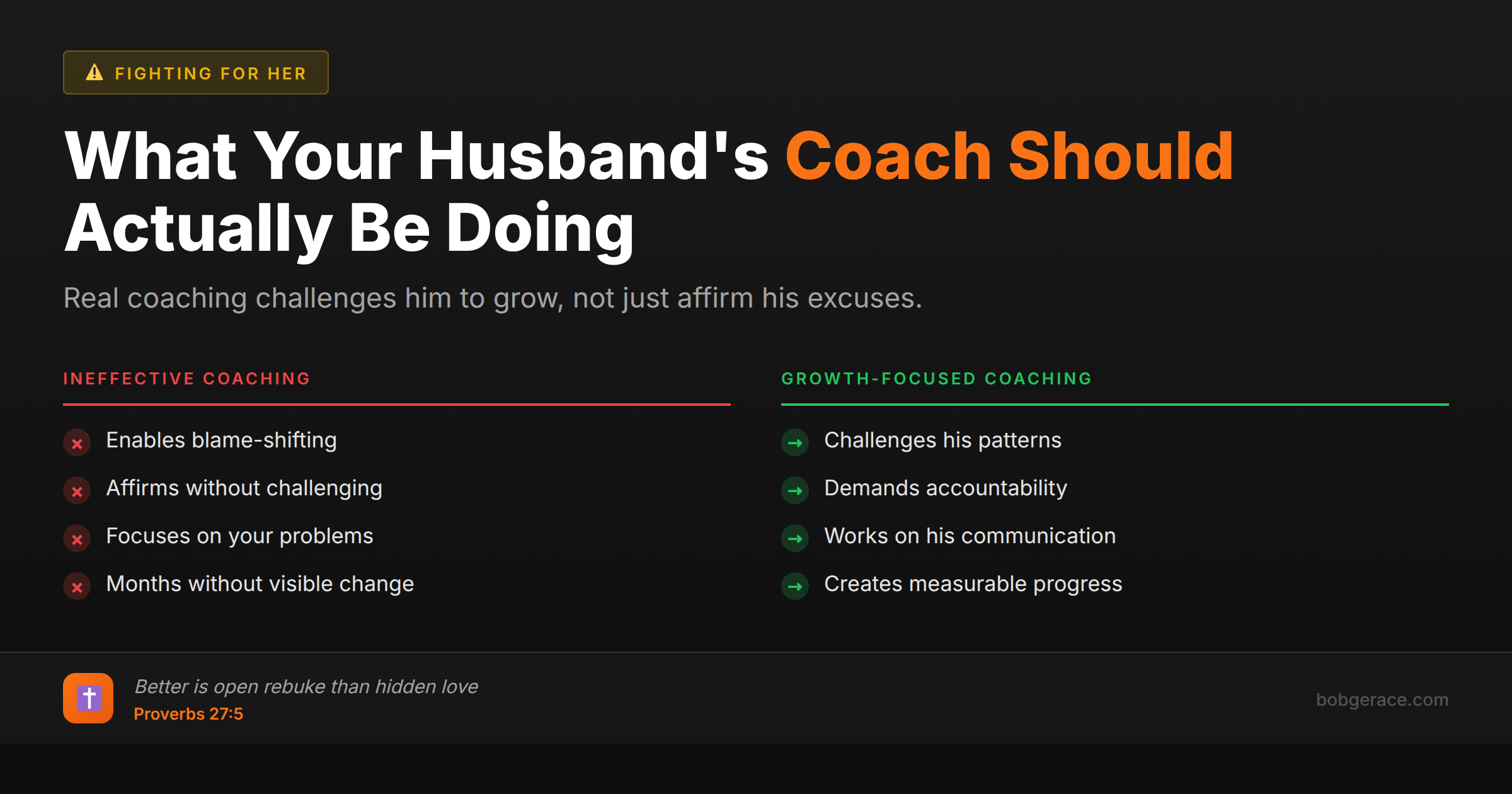
When your husband works with a marriage coach, he's likely focusing on understanding his own patterns, taking responsibility for his part in marriage struggles, and learning practical skills to become a better husband. A good coach will challenge him to examine his communication style, emotional availability, and leadership in the marriage. The process involves honest self-reflection, accountability, and developing new habits that serve your relationship. The coaching relationship should be pushing him toward growth, not enabling excuses or blame-shifting. You should notice gradual changes in how he responds to conflict, initiates conversations, and shows up emotionally. If months pass without any visible progress or if he seems more defensive than before, it might be time to question whether the coaching dynamic is actually helping your marriage.
The Full Picture
Understanding the Coaching Process
When your husband commits to working with a marriage coach, you're likely feeling a mix of hope and skepticism. You want to believe things will change, but you've probably been disappointed before. The truth is, effective coaching should produce visible results relatively quickly - not overnight transformation, but clear signs that he's taking the work seriously.
What Healthy Coaching Looks Like
A competent marriage coach will focus on several key areas with your husband. First, they'll help him understand his communication patterns and how they affect you. This means examining how he handles conflict, whether he truly listens, and if he validates your feelings. Second, they'll work on emotional intelligence - helping him recognize his own emotions and respond to yours appropriately.
The coach should also address his role as a leader in the marriage, not in a domineering sense, but as someone who takes initiative in healing and growth. This includes owning his mistakes without defensiveness, making concrete changes in behavior, and following through on commitments.
Red Flags to Watch For
Be cautious if your husband comes home from coaching sessions with more excuses for his behavior or seems to have new ammunition to use against you. A good coach won't enable blame-shifting or provide justification for harmful patterns. If he's learning new psychological terms but using them to avoid responsibility, that's a problem.
Similarly, if months pass and you see no practical changes in how he treats you day-to-day, the coaching may not be effective. Real growth shows up in how he responds when you're upset, how he prioritizes your relationship, and whether he follows through on what he says he'll do.
What's Really Happening
From a therapeutic perspective, effective coaching for husbands typically follows a predictable pattern of growth. In the initial phase, we focus on awareness - helping men recognize behaviors they've been blind to and understand their impact on their wives. This can be uncomfortable because it requires admitting fault without becoming defensive.
The middle phase involves skill-building and practice. This is where husbands learn practical tools for better communication, conflict resolution, and emotional regulation. They practice these skills between sessions and report back on what worked and what didn't. The coach provides feedback and adjustments.
The final phase emphasizes integration and maintenance. The husband should be able to implement these new patterns consistently without constant coaching support. He should show initiative in applying what he's learned and continuing to grow.
What concerns me is when I see husbands using therapy or coaching as a shield - telling their wives they can't discuss certain issues because they're 'working on it with their coach.' This misses the point entirely. The goal is better connection with you, not more barriers. A husband who's truly benefiting from coaching will be more open to feedback from his wife, not less.
What Scripture Says
Scripture gives us clear guidance on what growth and accountability should look like in a Christian man's life. Proverbs 27:5-6 tells us, 'Better is open rebuke than hidden love. Wounds from a friend can be trusted, but an enemy multiplies kisses.' A good coach should be willing to lovingly confront and challenge your husband, not just affirm him.
James 1:22-24 warns against being 'hearers of the word' who deceive themselves rather than doers who act on what they learn. Your husband should be applying biblical principles at home, not just discussing them in coaching sessions. Ephesians 4:22-24 calls us to 'put off your old self' and 'put on the new self, created to be like God in true righteousness and holiness.'
The coaching process should align with Galatians 5:22-23, producing fruit of the Spirit in your husband's life - love, joy, peace, patience, kindness, goodness, faithfulness, gentleness, and self-control. These qualities should become increasingly evident in how he treats you.
1 Corinthians 13:4-7 provides the ultimate test for whether coaching is working. Is your husband becoming more patient and kind? Is he less prone to anger and keeping a record of wrongs? Is he protecting and trusting more? These verses describe what love looks like in action, and effective coaching should move him closer to this //blog.bobgerace.com/christian-marriage-covenant-masculinity-unbreakable-standard/:standard.
Matthew 7:16 reminds us that 'by their fruit you will recognize them.' The proof of good coaching isn't in what your husband says he's learning, but in the tangible changes you experience in your relationship with him.
What To Do Right Now
-
1
Ask your husband to explain what specific areas he's working on with his coach and what changes you should expect to see
-
2
Set up regular check-ins to discuss how the coaching is affecting your relationship and what progress you're noticing
-
3
Request that your coach occasionally includes you in sessions to ensure you're both aligned on goals and progress
-
4
Keep a journal of positive changes you notice, no matter how small, to track real progress over time
-
5
Don't hesitate to express concerns if you're not seeing improvement after 2-3 months of consistent coaching
-
6
Consider couples coaching sessions if individual coaching alone isn't translating into relationship improvement
Related Questions
- What does 'the work' actually mean?
- Is his program legitimate?
- What should he be learning?
- How long does real transformation take?
- What does quality coaching/therapy include?
- What are the stages of change work?
- How do I become the husband she needs?
- What does real transformation look like?
- Can I actually become a different man?
- What does sustainable change require?
Also find Bob on
Subscribe for weekly videos on Christian marriage.
Want a Coach Who Knows Your Marriage?
Bob works with husbands and wives separately—hearing your side of the story, calibrating to where you actually are, not generic advice.
Talk to Bob →