What does Scripture say about self-control?
6 min read
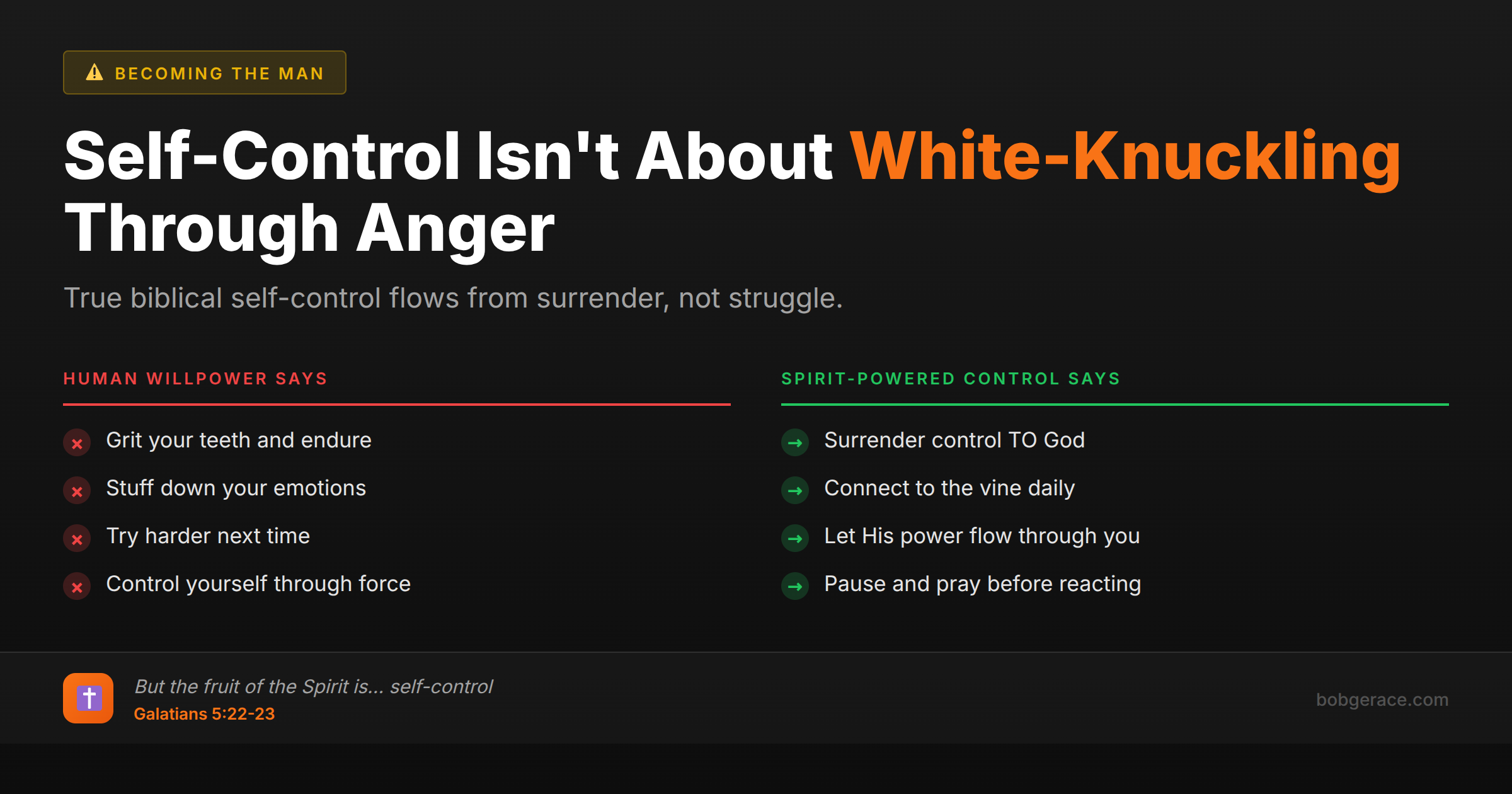
Scripture presents self-control as both a divine gift and a spiritual discipline that transforms marriages from the inside out. It's listed as a fruit of the Spirit in Galatians 5:22-23, meaning it flows from our connection to God, not just willpower. The Bible doesn't sugarcoat how hard this is—it acknowledges our human weakness while pointing to God's power working through us. But here's what many miss: biblical self-control isn't about white-knuckling through anger or stuffing emotions. It's about surrendering control TO God so He can work through you. When you're connected to the vine (Jesus), self-control becomes a natural outflow, not a constant struggle. Your marriage needs this kind of Spirit-empowered restraint, especially in heated moments.
The Full Picture
Let's get something straight: the Bible doesn't present self-control as optional for followers of Christ. It's woven throughout Scripture as both a command and a promise—God requires it AND provides the power to live it out.
Self-control appears in the New Testament Greek as *enkrateia*, which literally means "having power over oneself." But here's the paradox: true self-control comes from giving up control to God. It's not about becoming a robot or suppressing every emotion. It's about stewarding your responses in a way that honors God and serves your spouse.
The Bible connects self-control directly to spiritual maturity. Peter links it to faith, goodness, knowledge, and godliness (2 Peter 1:5-6). Paul calls it essential for anyone in leadership (1 Timothy 3:2). Why? Because how you handle yourself under pressure reveals your character.
In marriage, this becomes crucial. Your spouse sees you when you're tired, stressed, disappointed, and triggered. They witness your self-control—or lack thereof—more than anyone else. Scripture doesn't minimize this challenge; it acknowledges that "whoever is slow to anger is better than the mighty, and he who rules his spirit than he who takes a city" (Proverbs 16:32).
But here's the hope: God doesn't leave you to figure this out alone. The same Spirit that raised Christ from the dead lives in you (Romans 8:11). That's resurrection power available for your marriage conflicts, your parenting struggles, your work stress. Self-control isn't about trying harder; it's about connecting deeper to the source of all strength.
What's Really Happening
From a clinical perspective, what Scripture describes as self-control aligns remarkably with what we know about emotional regulation and impulse control. The biblical emphasis on the "heart" and "mind" reflects our understanding of how emotions and cognition interact in the brain.
When the Bible talks about self-control as a "fruit of the Spirit," it's describing what psychologists call top-down regulation—where higher-order thinking (prefrontal cortex) manages emotional responses (limbic system). But Scripture adds a crucial element: divine empowerment. Research shows that people with strong spiritual practices often demonstrate better emotional regulation, not just through willpower but through what appears to be genuine neuroplastic change.
The biblical concept of "taking every thought captive" (2 Corinthians 10:5) mirrors cognitive-behavioral techniques where we examine and challenge automatic thoughts. However, Scripture goes deeper by addressing the heart level—our core beliefs, values, and identity in Christ. This creates what I call "identity-based self-control" rather than just behavior modification.
In marriage therapy, I often see couples stuck in reactive cycles. One partner's behavior triggers the other's emotional flooding, leading to poor choices. Biblical self-control offers both immediate tools (pause, pray, breathe) and long-term transformation (renewed mind, Spirit-filled living). The key is understanding that self-control isn't about perfection—it's about progression in the right direction, with grace for the journey.
What Scripture Says
Scripture doesn't dance around the importance of self-control. It's presented as both a gift from God and a discipline to develop:
"But the fruit of the Spirit is love, joy, peace, patience, kindness, goodness, faithfulness, gentleness, self-control; against such things there is no law." (Galatians 5:22-23) - Self-control flows from walking in the Spirit, not from human effort alone.
"Whoever is slow to anger is better than the mighty, and he who rules his spirit than he who takes a city." (Proverbs 16:32) - Controlling your reactions takes more strength than physical conquest.
"A man without self-control is like a city broken into and left without walls." (Proverbs 25:28) - Lack of self-control leaves you vulnerable and defenseless.
"Be angry and do not sin; do not let the sun go down on your anger." (Ephesians 4:26) - You can feel anger without sinning, but self-control determines your response.
"For this very reason, make every effort to supplement your faith with virtue, and virtue with knowledge, and knowledge with self-control." (2 Peter 1:5-6) - Self-control is something you actively develop, not just pray for.
"All things are lawful for me, but not all things are helpful. All things are lawful for me, but I will not be dominated by anything." (1 Corinthians 6:12) - True freedom comes through self-discipline, not self-indulgence.
Notice the pattern: Scripture acknowledges self-control is difficult but absolutely necessary. It's both a supernatural gift AND something you must intentionally cultivate.
What To Do Right Now
-
1
Start your day connected to the vine - Spend time in prayer and Scripture before the chaos begins, asking God for His Spirit's power to control your reactions today.
-
2
Identify your trigger patterns - Write down what situations, words, or behaviors consistently cause you to lose self-control in your marriage.
-
3
Create a biblical pause strategy - When triggered, immediately pray "Lord, help me respond like Jesus would" before saying or doing anything else.
-
4
Memorize one self-control verse - Choose one passage from the biblical framework above and commit it to memory for real-time spiritual warfare.
-
5
Practice the 24-hour rule - For non-urgent conflicts, wait 24 hours before responding to difficult conversations or decisions in your marriage.
-
6
Confess and reconnect quickly - When you blow it (and you will), immediately confess to God and your spouse, then reconnect to His grace and power.
Related Questions
Ready to Build Biblical Self-Control in Your Marriage?
Don't keep struggling with the same destructive patterns. Get the biblical framework and practical tools you need to walk in Spirit-empowered self-control.
Get Help Now →