What does 'be angry and sin not' mean?
6 min read
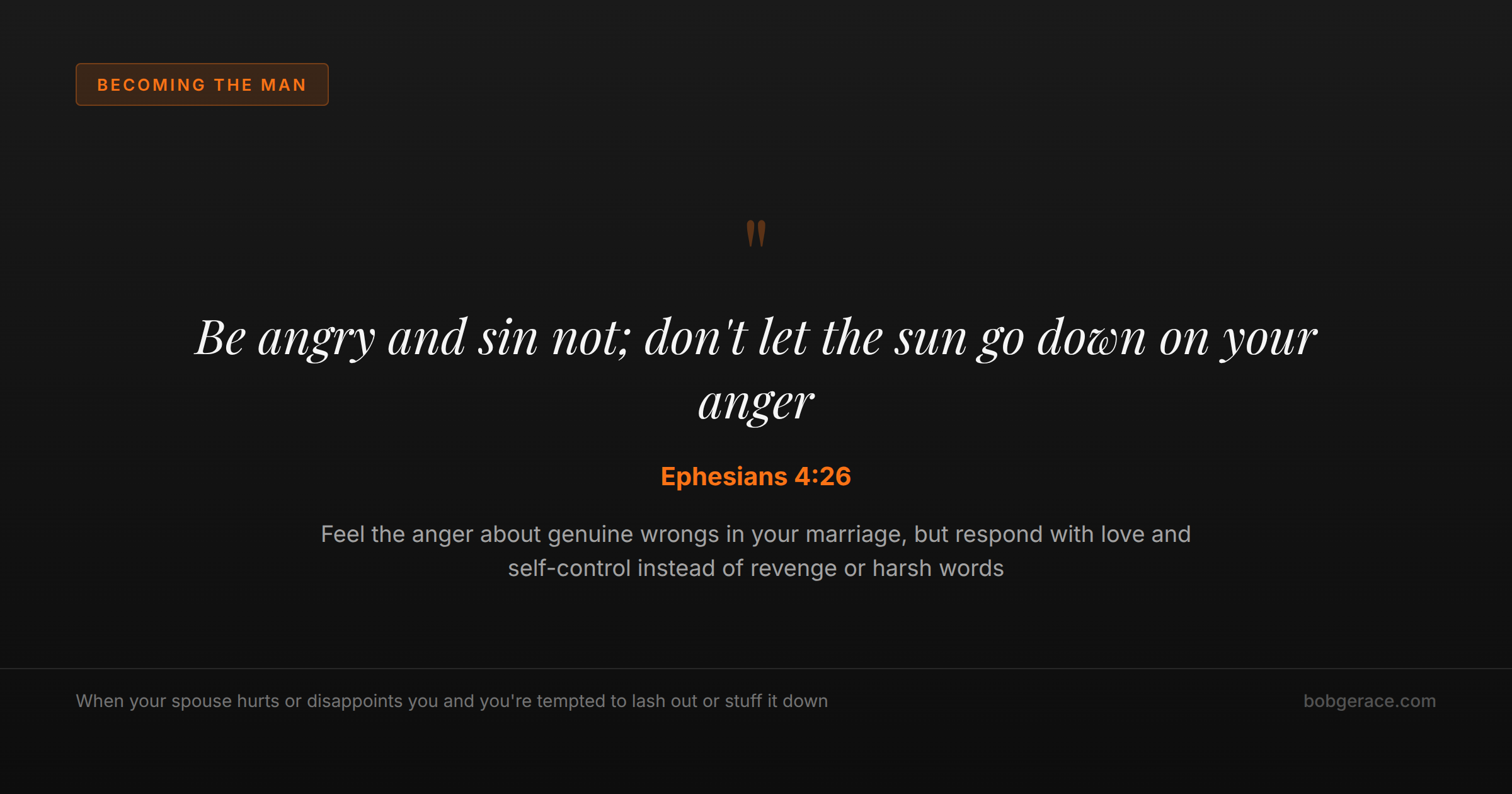
Ephesians 4:26 says 'be angry and sin not,' which means anger itself isn't sinful - it's a God-given emotion that can serve righteous purposes. The command acknowledges that anger will happen, but warns us not to let it lead us into sin through revenge, harsh words, or destructive actions. This verse teaches us that we can experience anger without sinning, but it requires intentionality and self-control. The key is addressing anger quickly ('don't let the sun go down on your anger') and using it constructively rather than destructively. In marriage, this means feeling angry about genuine wrongs while still choosing love, respect, and godly responses toward your spouse.
The Full Picture
The phrase 'be angry and sin not' comes from Ephesians 4:26, but it's often misunderstood. Many Christians think all anger is sinful, while others use this verse to justify explosive outbursts. Both miss the point entirely.
Anger is a God-designed emotion that alerts us to injustice, boundary violations, and threats to what we value. Even Jesus expressed anger when He cleansed the temple. The emotion itself isn't the problem - it's what we do with it that determines whether we sin.
The distinction is crucial in marriage. You might feel angry when your spouse breaks a promise, disrespects you, or acts selfishly. That initial anger isn't sin - it's information. It tells you something important happened that needs addressing. But if you use that anger to attack, manipulate, withdraw vindictively, or seek revenge, then you've crossed into sin.
Paul's instruction is both permission and warning. He's saying, 'Yes, you'll get angry - that's normal and sometimes even right. But don't let that anger drive you to sin against others or give the devil a foothold in your relationships.' The goal isn't to eliminate anger but to steward it wisely.
The time element matters too. 'Don't let the sun go down on your anger' means deal with it quickly. Anger that festers becomes bitterness, resentment, and eventually destroys relationships. In marriage, this means having difficult conversations promptly rather than letting issues build up into explosive conflicts.
What's Really Happening
From a clinical perspective, anger is a secondary emotion that typically masks hurt, fear, or frustration. When couples understand this, they can address the root issue rather than just managing the surface anger. The biblical command to 'be angry and sin not' aligns perfectly with healthy emotional regulation.
Anger triggers our fight-or-flight response, flooding our system with stress hormones that make wise decision-making difficult. This is why the scripture emphasizes not letting anger linger - prolonged activation of this stress response damages both our physical health and our relationships. The brain literally cannot access higher-order thinking when flooded with anger hormones.
In marriage therapy, I see couples who either suppress all anger (thinking it's unChristian) or who explode regularly (justifying it with 'righteous anger'). Both patterns are destructive. Healthy couples learn to recognize anger as information, express it appropriately, and use it as a catalyst for positive change in their relationship.
The key is developing what we call 'emotional granularity' - the ability to identify and articulate specific emotions rather than just feeling 'mad.' When a husband can say, 'I felt dismissed when you interrupted me' rather than exploding in general anger, real communication becomes possible. This aligns with the biblical principle of speaking truth in love while managing anger constructively.
What Scripture Says
Scripture provides clear guidance on managing anger righteously. Ephesians 4:26-27 establishes the foundation: 'Be angry and sin not; don't let the sun go down on your anger, nor give place to the devil.' This shows anger can be righteous but must be handled quickly and carefully.
James 1:19-20 adds crucial wisdom: 'Let every man be swift to hear, slow to speak, slow to anger; for the anger of man does not produce the righteousness of God.' This teaches us to be slow to anger and quick to listen - essential skills for marriage conflicts.
Proverbs 15:1 gives practical application: 'A soft answer turns away wrath, but a harsh word stirs up anger.' Even when we're angry, our response can either escalate or de-escalate conflict. We're called to respond with gentleness even when we feel provoked.
Colossians 3:8 commands us to 'put off anger, wrath, malice, blasphemy, filthy language out of your mouth.' While initial anger might be justified, we must not let it transform into these destructive expressions that damage our spouse and marriage.
1 Corinthians 13:5 reminds us that love 'is not easily provoked and keeps no record of wrongs.' This doesn't mean never getting angry, but it means not being easily triggered and not using anger as a weapon against our spouse.
Matthew 5:22 warns against calling others 'fool' in anger, showing that even our words during angry moments have spiritual significance and consequences.
What To Do Right Now
-
1
Pause and pray immediately when you feel anger rising - ask God for wisdom before responding to your spouse
-
2
Identify what's beneath the anger (hurt, fear, disappointment) and address the root emotion with your spouse
-
3
Use 'I' statements to express your feelings without attacking your spouse's character or motives
-
4
Set a 24-hour rule - discuss the issue within a day rather than letting resentment build up over time
-
5
Take a brief timeout if you're too heated to speak respectfully, but commit to returning to the conversation soon
-
6
Focus on the specific behavior or situation rather than making global accusations about your spouse's character
Related Questions
- What's the difference between righteous anger and unrighteous?
- What does James say about human anger?
- Is my anger a fruit problem or root problem?
- What does Scripture say about self-control?
- What spiritual disciplines address anger?
- How do I put off the old man when he keeps showing up?
- I can't control my anger
- How do I stop exploding?
- What does 'godly sorrow' look like in practice?
- How do I handle righteous anger without sin?
Also find Bob on
Subscribe for weekly videos on Christian marriage.
Can't Apply This in Your Marriage?
Knowing the theology doesn't mean you can execute it when your wife triggers you. A coach who knows your specific marriage helps you close that gap.
Talk to Bob →