What does 'speaking truth in love' look like?
6 min read
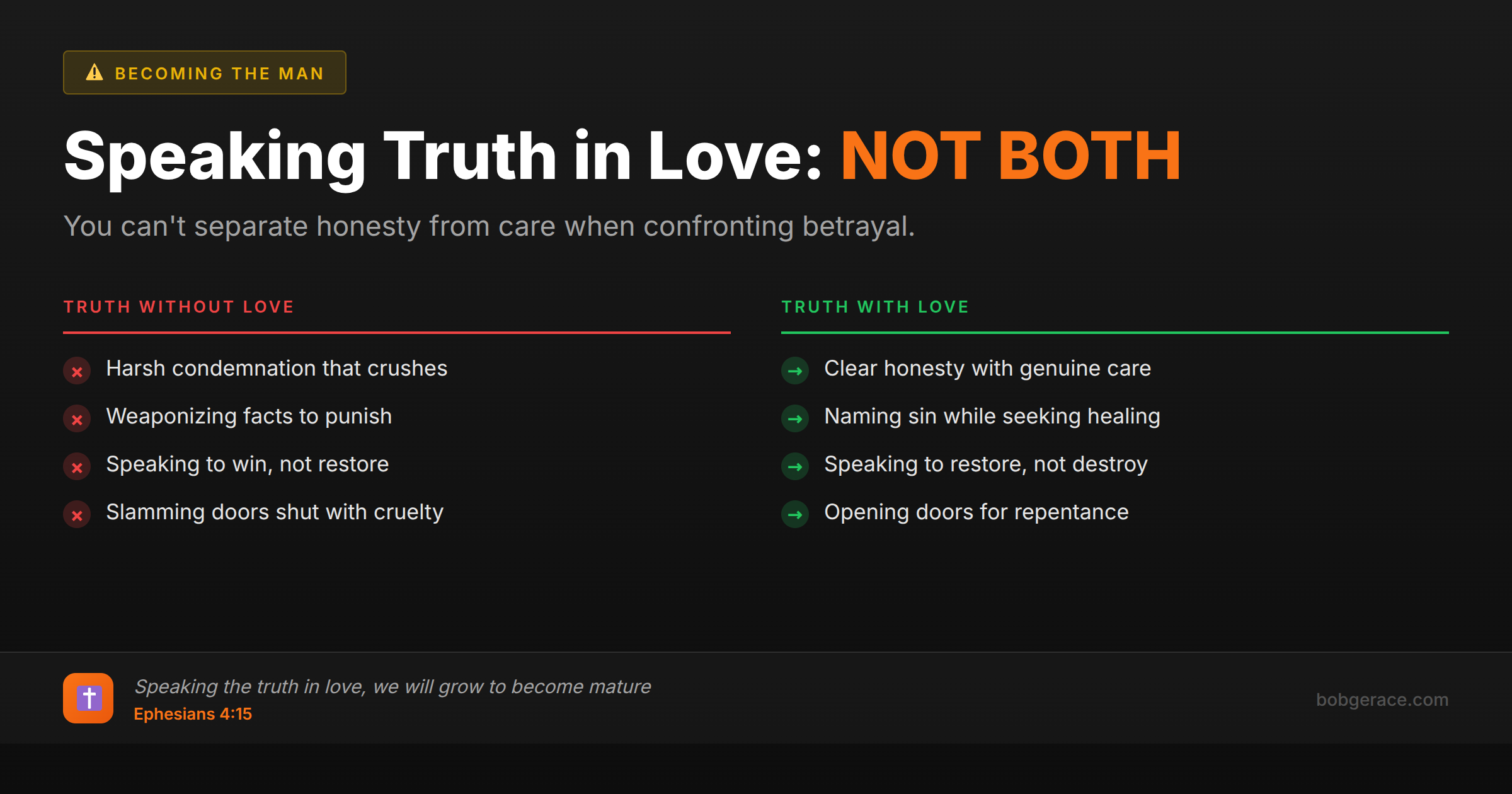
Speaking truth in love means confronting sin and betrayal with both unwavering honesty and genuine care for the person's wellbeing. It's not choosing between truth OR love—it's refusing to separate them. When your spouse has been unfaithful, speaking truth in love looks like clearly naming the adultery without minimizing it, while also expressing your heart's desire for restoration and healing. This means avoiding both harsh condemnation and enabling silence. You speak directly about the betrayal's impact, set clear boundaries for moving forward, and communicate your commitment to the marriage—if genuine repentance occurs. It requires courage to say hard things and wisdom to say them in a way that opens doors rather than slamming them shut.
The Full Picture
Speaking truth in love is one of the most challenging biblical principles to live out, especially when dealing with adultery. Most people default to one extreme or the other—either brutal honesty without compassion, or loving silence that enables continued sin.
The truth side means refusing to minimize, excuse, or sugarcoat what happened. Adultery is adultery. Emotional affairs are affairs. Betrayal is betrayal. You don't soften these realities to make anyone more comfortable. You name the behavior clearly and acknowledge its devastating impact on you, your children, and your marriage.
The love side means your motivation isn't revenge or punishment—it's restoration and righteousness. You're not trying to destroy your spouse; you're trying to save them from destroying themselves and your family. Love means wanting what's genuinely best for them, even when they're actively hurting you.
This combination creates a unique approach that's neither doormat nor destroyer. You set firm boundaries because you love your marriage. You demand honesty because you love your spouse too much to let them live in deception. You insist on consequences because you love your family too much to let destructive patterns continue.
The goal isn't to win an argument—it's to win back a marriage. Truth in love creates the conditions where genuine repentance can flourish and real healing can begin.
What's Really Happening
When marriages face infidelity, I observe couples struggling with what psychologists call the 'confrontation dilemma'—how to address betrayal without causing further damage. Research shows that both aggressive confrontation and passive avoidance lead to poor outcomes. The most effective approach mirrors the biblical concept of truth in love.
Neurologically, betrayed spouses often experience trauma responses that push them toward fight-or-flight reactions. The 'fight' response leads to attacking, shaming, and verbal aggression. The 'flight' response leads to avoiding difficult conversations altogether. Neither creates the psychological safety needed for authentic dialogue and healing.
Speaking truth in love activates what we call the 'calm-connect system'—remaining grounded enough to think clearly while staying emotionally present. This approach validates your legitimate pain while maintaining dignity for both parties. It communicates that the relationship matters enough to fight for, not just fight about.
From a therapeutic standpoint, this balanced approach increases the likelihood of genuine accountability from the unfaithful spouse. When people feel attacked, they defend. When they feel abandoned, they withdraw. But when they encounter firm boundaries wrapped in genuine care, they're more likely to engage in the vulnerable work of owning their choices and pursuing real change.
What Scripture Says
Ephesians 4:15 gives us the foundational command: *"Speaking the truth in love, we will grow to become in every respect the mature body of him who is the head, that is, Christ."* This isn't just about being nice—it's about spiritual maturity and growth.
Galatians 6:1 shows us the heart behind confrontation: *"Brothers and sisters, if someone is caught in a sin, you who live by the Spirit should restore that person gently. But watch yourselves, or you also may be tempted."* The goal is always restoration, not destruction.
Matthew 18:15 provides the practical approach: *"If your brother or sister sins, go and point out their fault, just between the two of you. If they listen to you, you have won them over."* Jesus expects us to directly address sin, but with the goal of winning the person back.
Proverbs 27:5-6 explains why love sometimes looks harsh: *"Better is open rebuke than hidden love. Wounds from a friend can be trusted, but an enemy multiplies kisses."* Sometimes loving confrontation feels like wounding, but it's the path to healing.
1 Corinthians 13:6 reminds us that love *"does not delight in evil but rejoices with the truth."* True love cannot celebrate or ignore sin—it must address it. But verse 7 adds that love *"always protects, always trusts, always hopes, always perseveres."*
Scripture never asks us to choose between truth and love—it commands us to hold them together, even when it's difficult.
What To Do Right Now
-
1
Examine your heart first - Ask God to show you if you're motivated by love and restoration or by hurt and revenge
-
2
Choose the right time and place - Have this conversation when you're calm and in private, not during emotional peaks
-
3
Name the behavior clearly - Use specific language about what happened without minimizing or exaggerating
-
4
Express the impact honestly - Share how the betrayal has affected you, your family, and your marriage
-
5
Set clear boundaries - Communicate what needs to change and what the consequences will be if it doesn't
-
6
Affirm your desire for restoration - Express that your goal is healing the marriage, not ending it, if genuine repentance occurs
Related Questions
- What does loving confrontation look like biblically?
- When does grace become enabling sin?
- How do I pursue reconciliation while refusing to participate in sin?
- How do I hold boundaries without hardening my heart?
- What is redemptive discipline vs. punitive discipline?
- What does humble leadership look like?
- What boundaries should I set?
- What's the difference between boundary and ultimatum?
- What does biblical forgiveness require of me?
- What's the difference between forgiveness and reconciliation?
Also find Bob on
Subscribe for weekly videos on Christian marriage.
Need a Coach in Your Corner for This?
Speaking truth in love to your wife—about her affair, your boundaries, what restoration actually requires—is harder than knowing the concept. A coach who knows your specific marriage can help you say the hard things without torching the ground.
Talk to Bob →