What does loving confrontation look like biblically?
6 min read
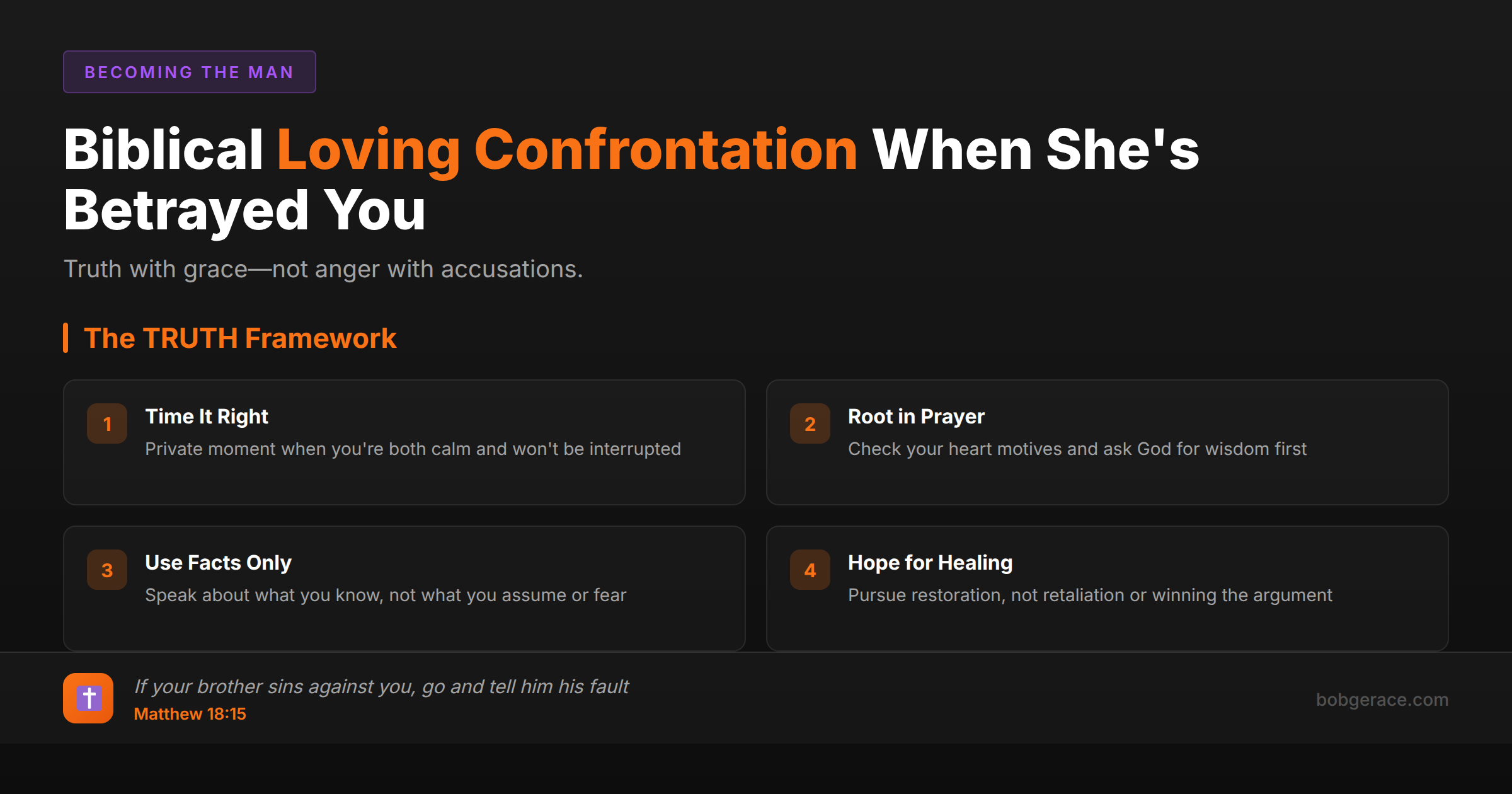
Biblical loving confrontation combines unwavering truth with genuine care for the person's soul. It's not about winning an argument or venting anger—it's about pursuing restoration through honest accountability. When there's another man in the picture, loving confrontation means directly addressing the sin while maintaining hope for repentance and healing. This looks like speaking the truth clearly without minimizing the betrayal, setting firm boundaries to protect yourself and the marriage, and maintaining a heart posture that desires restoration over retaliation. It requires courage to name sin as sin while extending grace that points toward genuine repentance and change.
The Full Picture
When you discover there's another man, your world gets turned upside down. Everything you thought you knew about your marriage feels like a lie. In that moment of devastation, you face a crucial choice: how will you respond? Will you explode in rage? Retreat into silence? Or will you choose the harder path of biblical loving confrontation?
Loving confrontation isn't passive-aggressive hints or emotional manipulation. It's not screaming matches or ultimatums delivered in anger. Instead, it's the courageous act of speaking truth directly while maintaining a heart that genuinely desires the best for your spouse, even when they've deeply wounded you.
This biblical approach recognizes that sin destroys relationships, and restoration requires facing that sin head-on. You can't love someone into holiness by enabling their destructive choices. True love sometimes means creating discomfort that leads to conviction and change.
The goal of loving confrontation is always restoration, not punishment. You're not trying to make your spouse pay for their betrayal—you're trying to wake them up to the reality of what they're doing to themselves, to you, and to your marriage. This requires incredible strength and wisdom, because you must hold two truths simultaneously: what they've done is absolutely wrong, and they are still created in God's image with potential for redemption.
Biblical confrontation also means you can't control the outcome. You can speak truth, set boundaries, and create consequences, but you can't force repentance. Your responsibility is faithfulness to God's way of addressing sin—their responsibility is how they respond to that truth.
What's Really Happening
From a therapeutic standpoint, loving confrontation serves multiple critical functions in trauma recovery and relationship repair. When betrayal occurs, the betrayed spouse often experiences symptoms similar to PTSD—intrusive thoughts, hypervigilance, and emotional dysregulation. In this vulnerable state, many counselors unfortunately recommend 'soft' approaches that actually perpetuate the trauma cycle.
Effective confrontation provides what trauma specialists call 'reality testing.' The betrayed spouse needs confirmation that their perceptions are accurate and their pain is justified. Loving confrontation validates these realities while establishing clear behavioral expectations moving forward. This isn't about punishment—it's about creating safety through transparency and accountability.
The unfaithful spouse often exists in what we call a 'fog of fantasy.' They've compartmentalized their behavior, minimized consequences, and rationalized choices through cognitive distortions. Loving confrontation pierces through these distortions by introducing objective reality. It forces them to confront the full impact of their choices on their spouse, children, and themselves.
Neurobiologically, confrontation activates the unfaithful spouse's anterior cingulate cortex—the brain region responsible for conflict monitoring and decision-making. This can create the cognitive dissonance necessary for genuine change. However, this process requires consistency and follow-through. One conversation won't create lasting change—it requires sustained accountability over time.
Most importantly, loving confrontation models healthy boundaries and self-respect. It demonstrates that love doesn't mean accepting destructive behavior, and it creates space for authentic remorse to develop rather than shallow apologies motivated by fear of consequences.
What Scripture Says
Scripture provides clear guidance on how to confront sin while maintaining love. Matthew 18:15 establishes the foundation: 'If your brother sins against you, go and tell him his fault, between you and him alone.' This isn't a suggestion—it's a command. God expects us to address sin directly, not ignore it or hope it goes away.
Galatians 6:1 adds the heart posture: 'Brothers, if anyone is caught in any transgression, you who are spiritual should restore him in a spirit of gentleness. Keep watch on yourself, lest you too be tempted.' Notice the goal is restoration, not destruction. The approach is gentle, but the action is still direct engagement with the sin.
Ephesians 4:15 calls us to 'speak the truth in love.' This phrase captures the essence of biblical confrontation—truth without compromise, but delivered with genuine care for the person's wellbeing. Love doesn't mean avoiding difficult conversations; it means having them in ways that promote healing and growth.
Proverbs 27:6 reminds us that 'faithful are the wounds of a friend; profuse are the kisses of an enemy.' Sometimes the most loving thing you can do is cause someone discomfort by confronting their sin. Enabling destructive behavior through silence or accommodation is actually unloving—it allows them to continue down a path of destruction.
1 Corinthians 5:11-13 establishes that persistent, unrepentant sin may require stronger boundaries, even separation. Love doesn't mean tolerating ongoing betrayal. Sometimes restoration requires creating consequences that help someone understand the severity of their choices.
2 Timothy 2:24-25 provides the attitude: 'The Lord's servant must not be quarrelsome but kind to everyone, able to teach, patiently enduring evil, correcting his opponents with gentleness.' Even in confrontation, we maintain kindness and patience while still addressing the wrong clearly and directly.
What To Do Right Now
-
1
Prepare your heart through prayer and Scripture before confronting—check your motives and ask God for wisdom and strength
-
2
Choose the right time and place for a private conversation when both of you are calm and won't be interrupted
-
3
Speak directly about what you know without accusations about things you can't prove—stick to facts and observable behaviors
-
4
Express how their choices have affected you personally without attacking their character or making global statements about who they are
-
5
Clearly state your boundaries and expectations moving forward—what will and won't be acceptable in your marriage
-
6
Give them opportunity to respond honestly, but don't negotiate about basic moral standards or enable continued deception through compromise
Related Questions
- When does grace become enabling sin?
- What did Jesus mean about removing the plank first?
- What does 'speaking truth in love' look like?
- How do I hold boundaries without hardening my heart?
- What is redemptive discipline vs. punitive discipline?
- How do I pursue reconciliation while refusing to participate in sin?
- What boundaries should I set?
- What's the difference between boundary and ultimatum?
- What does biblical forgiveness require of me?
- What's the difference between forgiveness and reconciliation?
Also find Bob on
Subscribe for weekly videos on Christian marriage.
Bring Your Actual Marriage to a Coach
Confronting her requires knowing what to say in your specific situation—not just principles. A coach who knows your story can help you prepare for the conversation that's coming.
Talk to Bob →