What is 'marital debt' and how do I pay it down?
6 min read
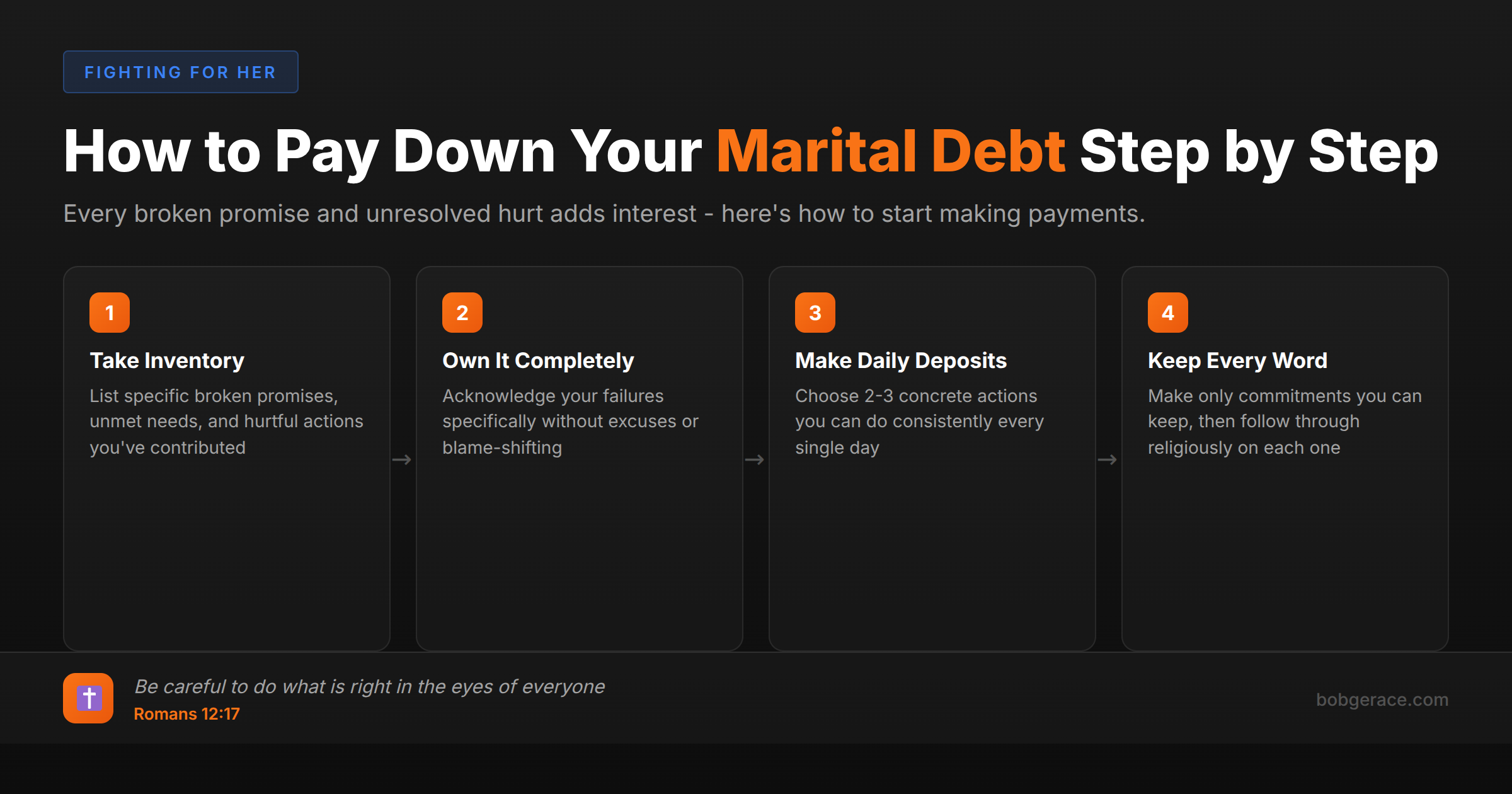
Marital debt is the accumulated emotional, relational, and trust deficits that build up when spouses consistently fail to meet each other's needs, break promises, or cause hurt without proper repair. Think of it like financial debt - every unresolved conflict, broken commitment, or emotional injury adds to the balance. Paying down marital debt requires consistent, intentional deposits of positive actions, genuine apologies, and changed behavior over time. You can't eliminate years of debt overnight, but you can start making regular payments through acts of service, quality time, physical affection, words of affirmation, and most importantly, keeping your word. The key is understanding that trust is rebuilt through consistency, not grand gestures.
The Full Picture
Marital debt accumulates gradually, often without either spouse fully realizing what's happening. Every time you promise to change but don't follow through, every harsh word left unrepaired, every need dismissed or minimized - it all goes on the ledger.
How Marital Debt Builds: - Broken promises and commitments - Emotional neglect or dismissiveness - Unresolved conflicts that get buried - Patterns of criticism, contempt, or stonewalling - Failure to prioritize the marriage - Taking your spouse for granted
The dangerous thing about marital debt is compound interest. Just like financial debt, the longer it goes unaddressed, the harder it becomes to pay down. Your spouse stops believing your words because your actions haven't matched. They build protective walls. They emotionally withdraw.
The Withdrawal Process: When marital debt gets high enough, spouses start making withdrawals from their emotional investment. They stop trying as hard. They protect themselves. They might even start looking elsewhere for what they're not getting at home. This is often when wives "check out" - they've simply decided the debt is too high and the payments too inconsistent to keep extending credit.
Understanding marital debt helps explain why quick fixes don't work. You can't solve years of accumulated hurt with a weekend getaway or a bouquet of flowers. Real repair requires sustained, consistent deposits over time.
What's Really Happening
From a clinical perspective, marital debt represents the neurobiological impact of repeated relational injuries. When trust is repeatedly broken, the brain's threat detection system becomes hypervigilant to signs of betrayal or abandonment.
The Neuroscience of Trust: Trust operates through neural pathways that strengthen with positive experiences and weaken with negative ones. When marital debt is high, the injured spouse's brain literally rewires to expect disappointment. This isn't stubbornness - it's survival adaptation.
Attachment Security and Debt: Marital debt directly impacts attachment security. Secure attachment requires predictability, emotional availability, and responsiveness. High debt levels trigger insecure attachment patterns - the pursuing-distancing dynamic, emotional shutdown, or anxious hypervigilance.
The Recovery Process: Neuroplasticity gives us hope. Brains can rewire, but it requires approximately 200-300 positive interactions to offset one significantly negative experience. This explains why paying down marital debt takes time and consistency.
Clinical Markers of Progress: - Decreased emotional reactivity during discussions - Increased willingness to be vulnerable - Restoration of benefit-of-the-doubt thinking - Return of physical affection and intimacy - Renewed future-focused conversations
The key clinical insight is that marital debt isn't just emotional - it's physiological. Your spouse's nervous system needs to be retrained to feel safe with you again.
What Scripture Says
Scripture provides profound wisdom about debt, forgiveness, and restoration in relationships. The biblical concept of debt encompasses not just financial obligations but relational ones.
The Reality of Relational Debt: *"Be careful to do what is right in the eyes of everyone. If it is possible, as far as it depends on you, live at peace with everyone."* - Romans 12:17-18
We have obligations to each other, especially in marriage. When we fail to love as we should, we create debt.
The Call to Pay What We Owe: *"Let no debt remain outstanding, except the continuing debt to love one another, for whoever loves others has fulfilled the law."* - Romans 13:8
*"Husbands, love your wives as Christ loved the church and gave himself up for her."* - Ephesians 5:25
God calls us to pay our relational debts through sacrificial love and service.
The Process of Restoration: *"Therefore, if you are offering your gift at the altar and there remember that your brother or sister has something against you, leave your gift there in front of the altar. First go and be reconciled to them; then come and offer your gift."* - Matthew 5:23-24
Restoration requires initiative from the one who caused the debt.
The Power of Consistent Faithfulness: *"Whoever can be trusted with very little can also be trusted with much, and whoever is dishonest with very little will also be dishonest with much."* - Luke 16:10
Trust is rebuilt through faithfulness in small, daily choices.
What To Do Right Now
-
1
Take inventory: List specific ways you've contributed to marital debt - broken promises, unmet needs, hurtful words or actions
-
2
Start with genuine repentance: Acknowledge your failures specifically without excuses or blame-shifting
-
3
Make small, daily deposits: Choose 2-3 concrete actions you can do consistently (quality time, acts of service, affirming words)
-
4
Keep your word completely: Make only commitments you can keep, then follow through religiously on every single one
-
5
Address your spouse's love language: Focus your debt payments on what matters most to them emotionally
-
6
Be patient with the process: Understand that trust rebuilding takes 6-24 months of consistent behavior, not weeks
Related Questions
- What is 'accumulated resentment'?
- How does unaddressed hurt compound?
- What are 'attachment injuries' and how many did I cause?
- What does genuine repair look like for old wounds?
- What is an 'apology' vs. 'repair' vs. 'attunement'?
- How do I make amends for years of failure?
- Why does she remember everything differently than I do?
- What does 'taking responsibility' actually look like?
- How do I address years of built-up hurt?
- What does repentance look like for accumulated sin?
Also find Bob on
Subscribe for weekly videos on Christian marriage.
You Can't Pay This Down Alone
Marital debt is specific to your marriage—what you owe, what she's carrying, where the interest compounds. A coach who knows your story can tell you what actually moves the needle.
Talk to Bob →