What is the Ephesians 5 framework?
6 min read
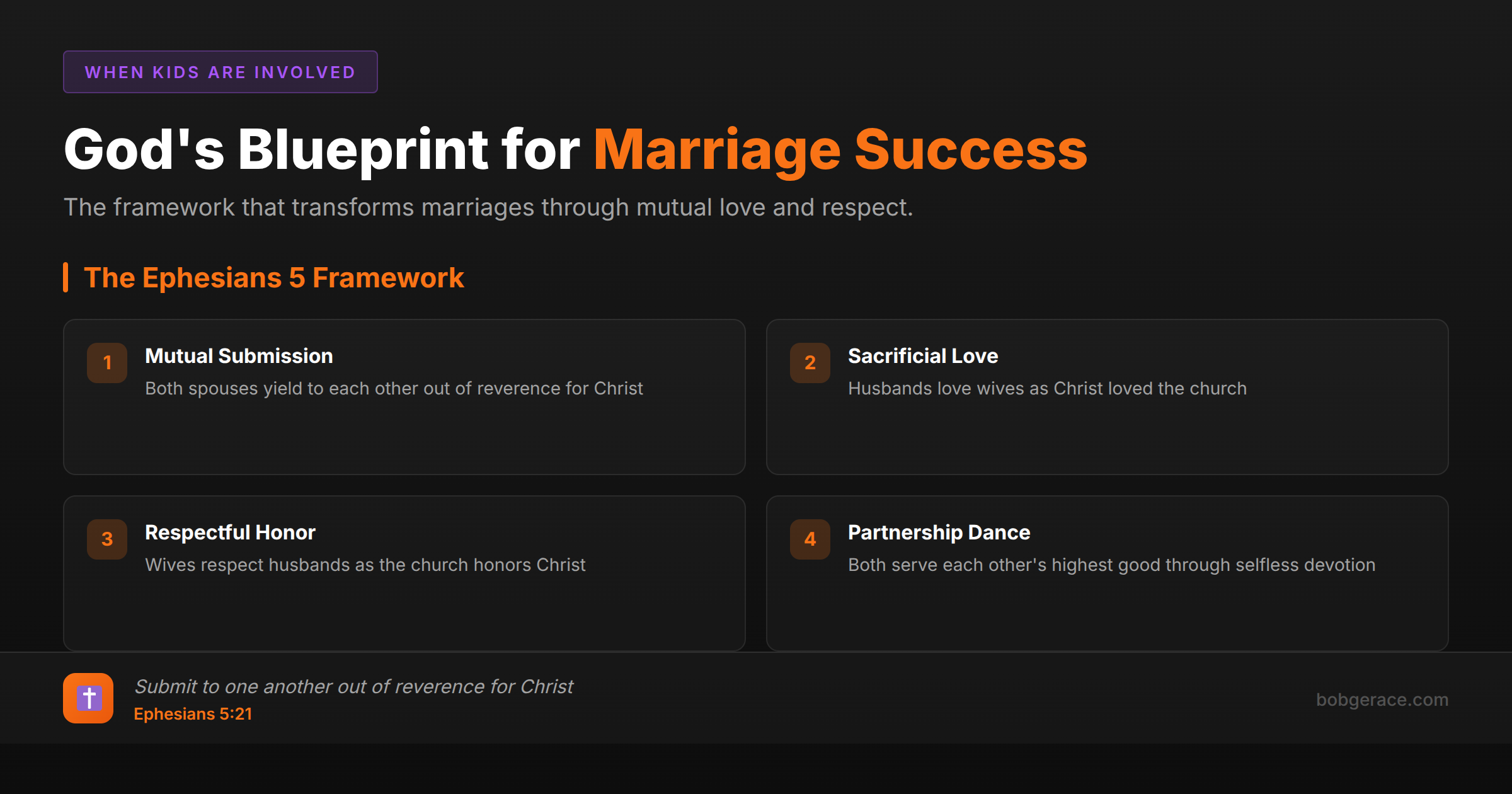
The Ephesians 5 framework is God's blueprint for marriage based on mutual submission, sacrificial love, and honor. It starts with both spouses submitting to one another out of reverence for Christ (verse 21), then outlines specific roles: husbands loving their wives as Christ loved the church, and wives respecting their husbands as the church honors Christ. This isn't about hierarchy or power - it's about partnership where both spouses serve each other's highest good. The framework creates a beautiful dance of love and respect that reflects Christ's relationship with His people, building marriages that thrive through selfless devotion rather than selfish demands.
The Full Picture
The Ephesians 5 framework gets more misunderstanding than almost any biblical teaching on marriage. Here's what it actually says: it starts with mutual submission - both partners yielding to each other out of love for Jesus. This is the foundation everything else builds on.
From there, Paul gives specific instructions that mirror Christ's relationship with the church. Husbands are called to sacrificial love - the kind that puts their wife's needs, growth, and wellbeing above their own comfort. This isn't passive affection; it's active, costly, transformative love that serves her highest good even when it's hard.
Wives are called to honor and respect their husbands as they would Christ. This doesn't mean blind obedience or becoming a doormat. It means choosing to honor his leadership and affirm his efforts to love and serve the family well.
This framework works because it's complementary, not competitive. When a husband loves sacrificially, it's easy for a wife to respect and honor him. When a wife respects and honors her husband, it motivates him to love even more sacrificially. It creates an upward spiral of blessing.
The key insight most people miss? This passage is more about character than control. It's not giving husbands permission to be demanding or wives permission to be passive. It's calling both partners to reflect Christ's character - His love, His service, His sacrifice, His honor. When both spouses focus on their own calling rather than policing their partner's, marriages transform.
What's Really Happening
From a therapeutic standpoint, the Ephesians 5 framework addresses core psychological needs that research consistently shows are vital for marital satisfaction. When properly understood and applied, this framework creates what we call a 'secure attachment cycle' between spouses.
The husband's call to sacrificial love directly addresses a woman's need for emotional safety and security. Studies show that women's stress hormones decrease significantly when they feel truly cherished and protected by their partner. This isn't about dependency - it's about the deep human need to know someone has your back completely.
The wife's call to respect and honor addresses a man's core psychological need for significance and competence. Research indicates that men's motivation and emotional wellbeing are strongly tied to feeling respected and valued by those closest to them, particularly their spouse.
The genius of this framework is that it creates positive feedback loops. When a husband demonstrates consistent, sacrificial love, it naturally evokes appreciation and respect from his wife. When a wife expresses genuine respect and admiration, it motivates her husband toward even greater acts of love and service.
I've seen couples transform when they stop focusing on what they're not getting and start focusing on what they're called to give. The framework breaks the destructive cycles of criticism and defensiveness that destroy marriages, replacing them with cycles of love and honor that build intimate connection. It's not about gender stereotypes - it's about creating the conditions where both partners can thrive.
What Scripture Says
The Ephesians 5 framework is built on clear biblical principles that reveal God's heart for marriage:
"Submit to one another out of reverence for Christ." (Ephesians 5:21) - This is the foundation. Before any specific roles are mentioned, both spouses are called to mutual submission. This means both partners yield their own preferences for the good of their spouse and the marriage.
"Husbands, love your wives, just as Christ loved the church and gave himself up for her." (Ephesians 5:25) - This calls husbands to the highest possible standard of love - the kind that sacrifices everything for the beloved's wellbeing and growth.
"Wives, submit yourselves to your own husbands as you do to the Lord." (Ephesians 5:22) - This calls wives to honor their husband's leadership role with the same heart of reverence they show Christ.
"However, each one of you also must love his wife as he loves himself, and the wife must respect her husband." (Ephesians 5:33) - Paul summarizes the framework: love and respect working together.
"Be completely humble and gentle; be patient, bearing with one another in love." (Ephesians 4:2) - The character that makes this framework work in real life.
"And whatever you do, whether in word or deed, do it all in the name of the Lord Jesus." (Colossians 3:17) - The motivation that transforms duty into joy.
This framework isn't about power or control - it's about reflecting Christ's love in marriage through complementary roles that serve each other's flourishing.
What To Do Right Now
-
1
Study Ephesians 5:21-33 together, focusing on the mutual submission foundation before discussing specific roles
-
2
Husbands: Identify three specific ways you can love your wife more sacrificially this week, putting her needs before your comfort
-
3
Wives: Choose three specific ways to express respect and appreciation for your husband's efforts to love and lead your family
-
4
Pray together daily, asking God to help you both focus on your own calling rather than critiquing your spouse's performance
-
5
Discuss what sacrificial love looks like practically in your marriage - what makes each of you feel most loved and valued
-
6
Commit to a 30-day experiment: focus entirely on giving what you're called to give without keeping score of what you receive
Related Questions
- What does 'love your wife as Christ loves the church' mean?
- What is biblical headship?
- What does submission mean?
- What does 'head' mean in Greek?
- What is 'sacrificial headship'?
- What does masculine leadership look like?
- How do I lead without controlling?
- What's the difference between leading and dominating?
- What does humble leadership look like?
Also find Bob on
Subscribe for weekly videos on Christian marriage.
Ready to Apply This to Your Marriage?
Understanding the framework is one thing. Living it in your specific marriage—with your wife, your history, your stuck points—is another. Bob works with men who want to stop guessing and start building.
Talk to Bob →