How does parental conflict affect child attachment?
6 min read
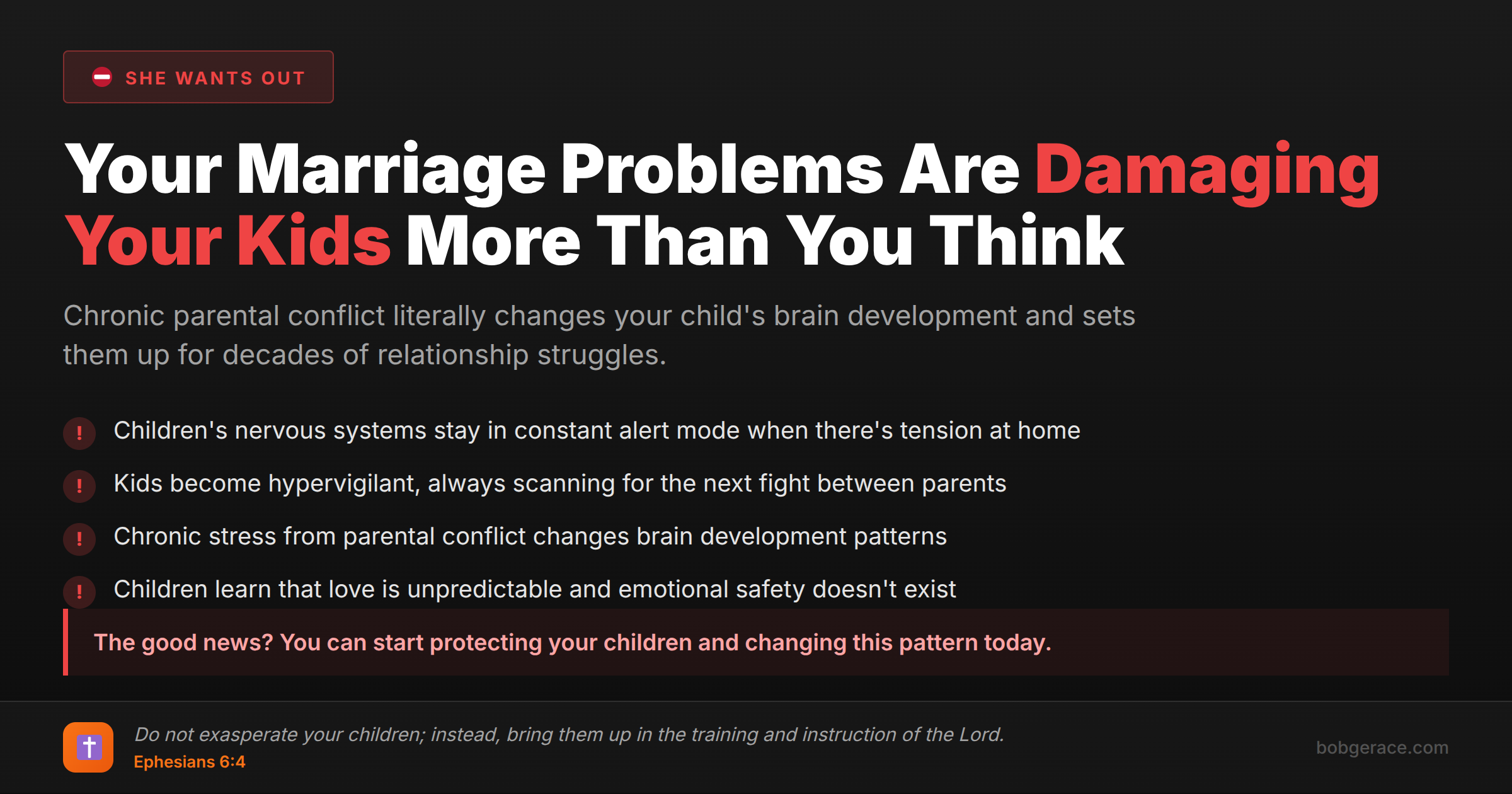
Your marriage problems are doing more damage to your kids than you realize. When children witness ongoing conflict between parents, it fundamentally disrupts their ability to form secure attachments - not just with you and your wife, but in all their future relationships. They learn that love is unpredictable, that the people who should protect them might hurt each other, and that emotional safety doesn't exist. Here's what's happening: your child's nervous system stays in a constant state of alert when there's tension in the house. They become hypervigilant, always scanning for the next fight. This chronic stress literally changes their brain development and sets them up for anxiety, depression, and relationship struggles that can last decades. The good news? You can start changing this pattern today.
The Full Picture
Most men don't understand that children are emotional sponges who absorb every bit of tension in the home, even when you think you're hiding it well. That "discussion" you had with your wife after the kids went to bed? They heard it. The cold silence at breakfast? They felt it. The way you both tense up when you're in the same room? They're watching.
Secure attachment develops when children experience consistent, responsive, and emotionally safe relationships with their primary caregivers. But when parents are locked in ongoing conflict, children learn that:
• Relationships are dangerous - the people who love you also hurt you • Emotions are overwhelming - there's no safe space to process feelings • They're responsible - many children blame themselves for parental conflict • Love is conditional - affection depends on circumstances and mood
The most damaging pattern isn't the big blowout fights - it's the chronic low-level hostility that never resolves. Children living in homes with ongoing marital tension show increased cortisol levels, disrupted sleep patterns, and difficulty regulating their own emotions. They often become either overly compliant (trying to keep peace) or act out dramatically (demanding attention from distracted parents).
Common mistakes parents make: • Thinking kids don't notice if you keep fights "private" • Using children as messengers or confidants • Competing for the children's loyalty • Assuming that staying together "for the kids" automatically protects them
The reality is that children would rather have two peaceful homes than one chaotic one. But the best scenario is parents who do the hard work of healing their marriage and creating genuine emotional safety for the entire family.
What's Really Happening
From a clinical perspective, we're looking at how Bowlby's attachment theory plays out in real time. Children develop internal working models of relationships based on their earliest experiences with caregivers. When those primary relationships are characterized by conflict, unpredictability, or emotional unavailability, children develop insecure attachment patterns that become templates for all future relationships.
Research consistently shows that children exposed to high-conflict homes demonstrate measurable changes in brain structure, particularly in areas responsible for emotional regulation and stress response. The hippocampus (memory and learning) and prefrontal cortex (executive function) can be significantly impacted by chronic exposure to interpersonal stress.
Three primary insecure attachment styles emerge:
Anxious attachment develops when children experience inconsistent responses from caregivers. These children become clingy, demanding, and struggle with emotional regulation well into adulthood.
Avoidant attachment forms when children learn that emotional needs won't be met reliably. They become overly self-reliant and struggle to form intimate connections later in life.
Disorganized attachment is the most concerning, developing when caregivers are simultaneously sources of comfort and fear. These children show the most severe long-term effects, including higher rates of dissociation and relationship difficulties.
The intergenerational transmission aspect is crucial - children with insecure attachment styles are more likely to recreate similar patterns in their own marriages and parenting. However, attachment styles can be modified through corrective relationship experiences. When parents commit to creating consistent emotional safety and working through their own conflicts constructively, children can develop earned security even after experiencing early insecure attachment.
What Scripture Says
Scripture is crystal clear about our responsibility to protect children and create homes that reflect God's character. Ephesians 6:4 instructs fathers: "Do not exasperate your children; instead, bring them up in the training and instruction of the Lord." When we allow ongoing conflict in our marriages, we're doing exactly what Paul warns against - we're exasperating our children and making it harder for them to trust God's goodness.
Deuteronomy 6:6-7 commands us: "These commandments that I give you today are to be on your hearts. Impress them on your children. Talk about them when you sit at home and when you walk along the road, when you lie down and when you get up." How can we effectively teach our children about God's love and faithfulness when our own relationships demonstrate chaos and brokenness?
1 Corinthians 13:4-7 describes love as patient, kind, not easily angered, keeping no record of wrongs. This isn't just marital advice - it's the standard for the atmosphere we create for our children. When children witness this kind of love between their parents, they develop a secure foundation for understanding both human relationships and their relationship with God.
Matthew 18:6 contains one of Jesus's strongest warnings: "If anyone causes one of these little ones—those who believe in me—to stumble, it would be better for them to have a large millstone hung around their neck and to be drowned in the depths of the sea." This should soberly remind us that our unresolved marriage conflicts have spiritual consequences for our children's faith development.
The beautiful promise is found in Isaiah 54:13: "All your children will be taught by the Lord, and great will be their peace." When we align our homes with biblical principles of love, forgiveness, and reconciliation, we create space for God to work in our children's hearts and give them the peace that comes from secure attachment - both to us and to Him.
What To Do Right Now
-
1
Stop all conflict discussions when children are present or could overhear - establish a 24-hour cooling off period before addressing any marital issues
-
2
Schedule a family meeting to acknowledge that there's been tension and reassure your children that it's not their fault or responsibility
-
3
Create predictable daily routines that give children a sense of safety and stability regardless of marital tension
-
4
Establish individual connection time with each child where you're fully present and emotionally available without discussing adult problems
-
5
Commit to showing physical affection and verbal affirmation to your spouse in front of the children, even if the relationship feels strained
-
6
Seek professional counseling immediately - both individual therapy to address your own issues and couples counseling to learn healthy conflict resolution
Related Questions
- What do kids understand at different ages?
- What are signs my kids are struggling?
- What is 'parentification' and am I doing it to them?
- How do I give them stability when everything is unstable?
- What do kids need most from dad during divorce?
- How do I tell the kids?
- What attachment style did I develop in childhood?
- How do childhood attachment wounds show up in marriage?
- What is 'internal working model' and how do I change mine?
- What role did my childhood play in my anger patterns?
Also find Bob on
Subscribe for weekly videos on Christian marriage.
Your Kids Need This Fixed Now
A coach who knows your marriage can see what you can't — where the conflict loops are, what your kids are actually absorbing, how to stop the damage this week.
Talk to Bob →