Why do some people seek connection outside when it's available inside?
6 min read
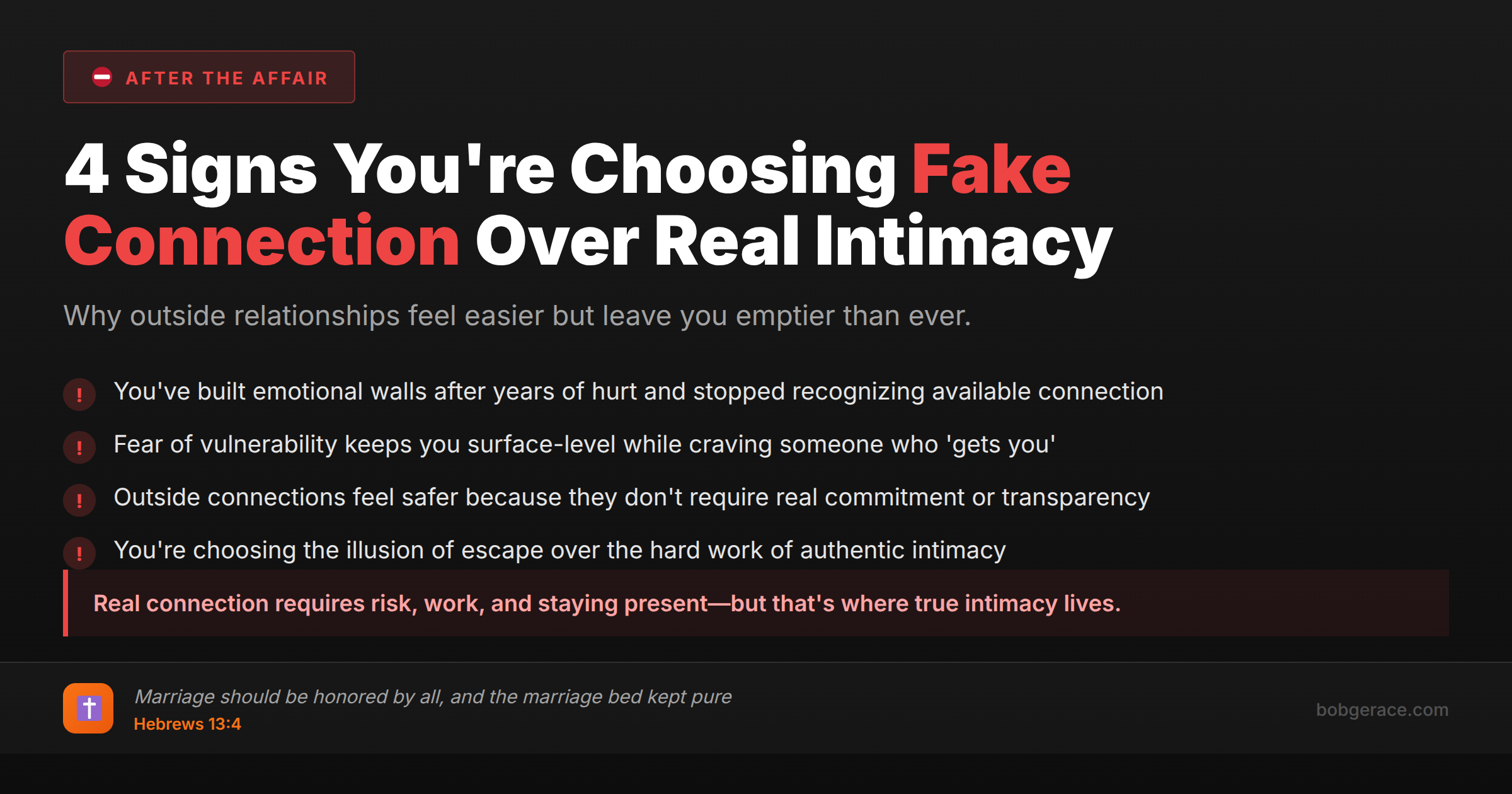
People often seek connection outside their marriage not because connection isn't available at home, but because they've lost the ability to recognize, receive, or engage with it. This happens when emotional walls go up after years of hurt, when fear of vulnerability keeps them surface-level, or when they've developed attachment patterns that make intimacy feel unsafe. Sometimes the connection at home requires work, honesty, and risk—while outside connections feel easier because they don't demand the same level of commitment or transparency. The outside person represents escape from responsibility rather than true intimacy.
The Full Picture
When someone chooses an outside connection over deepening their marriage, they're usually running from something rather than running toward something better. The truth is harsh but necessary: most affairs aren't about the other person being more attractive, understanding, or compatible—they're about avoiding the hard work of real intimacy.
Inside a marriage, connection requires vulnerability. It demands that you show up as your real self, with your flaws, fears, and needs exposed. It requires working through conflict, navigating disappointment, and choosing love even when feelings fluctuate. Outside connections feel intoxicating because they offer the illusion of intimacy without the responsibility.
The person seeking outside connection often tells themselves their spouse "doesn't understand them" or "isn't meeting their needs." But here's what's really happening: they've stopped doing the work of being understood and meeting needs. They've stopped communicating their inner world, stopped being curious about their spouse's inner world, and stopped believing that deep connection is possible in their marriage.
Years of small disconnections create this dynamic. Conversations become surface-level. Physical affection becomes routine or disappears. Emotional intimacy gets replaced by logistics and parenting. The couple becomes roommates managing a household rather than lovers building a life together. In this environment, an outside person who shows interest, curiosity, and excitement feels like a breath of fresh air.
But the comparison is unfair. The outside person isn't dealing with mortgages, parenting stress, health scares, job pressures, and all the weight of real life together. They're getting the highlight reel while the spouse gets the behind-the-scenes reality.
What's Really Happening
From a clinical perspective, seeking outside connection when intimacy is available at home usually indicates attachment avoidance or disorganized attachment patterns. These individuals learned early that intimacy equals vulnerability, and vulnerability equals potential pain. The deeper the relationship, the more they unconsciously sabotage it.
The brain's reward system also plays a crucial role. New connections trigger dopamine and norepinephrine—the same chemicals released during early romantic attraction. Long-term marriages operate more on oxytocin and vasopressin, which create bonding but feel less exciting. The person seeking outside connection is essentially chasing a drug high rather than building sustainable intimacy.
Emotional regulation is another key factor. Many people never learned healthy ways to process difficult emotions within relationship. When marriage brings up feelings of inadequacy, fear of abandonment, or performance anxiety, they flee to relationships that don't trigger these deeper wounds. The outside connection becomes an emotional escape valve rather than addressing the underlying issues.
I often see clients who've created defensive patterns that block intimacy at home. They've built walls to //blog.bobgerace.com/christian-marriage-investment-defense-protect-growth/:protect themselves from disappointment, but those same walls prevent them from receiving love and connection when it's offered. Then they wonder why their marriage feels distant while being completely available to someone new who hasn't triggered their defensive systems yet.
The tragic irony is that the very intimacy they're seeking outside their marriage is most available and sustainable within it—if they're willing to do the inner work necessary to receive it.
What Scripture Says
Scripture is clear about God's design for marriage and the destructive nature of seeking intimate connection outside of it. "Marriage should be honored by all, and the marriage bed kept pure, for God will judge the adulterer and all the sexually immoral" (Hebrews 13:4). This isn't just about physical adultery—it's about the sacred nature of exclusive intimacy within marriage.
The Bible reveals that our tendency to look outside our covenant relationships reflects a deeper spiritual problem. "But each person is tempted when they are dragged away by their own evil desire and enticed" (James 1:14). The issue isn't that connection isn't available at home—it's that our sinful nature seeks the path of least resistance rather than the path of greatest growth.
"Above all else, guard your heart, for everything you do flows from it" (Proverbs 4:23). When we don't guard our hearts within marriage, we become vulnerable to outside attachments that promise what we should be building at home. The heart that isn't actively engaged in loving one's spouse becomes a heart open to loving someone else's.
God calls us to "love your wives as Christ loved the church and gave himself up for her" and wives to "respect your husbands" (Ephesians 5:25, 33). This isn't passive emotion—it's active choice. When we stop actively loving and honoring our spouse, we create the very disconnection we then use to justify seeking connection elsewhere.
"Therefore what God has joined together, let no one separate" (Mark 10:9) includes not separating yourself emotionally from your spouse to join with another. God's design is for the deepest human intimacy to be found within the covenant of marriage, where two people commit to knowing and being known completely.
What To Do Right Now
-
1
Stop all contact with the outside person immediately—no explanations, no gradual fade, complete cutoff today
-
2
Confess to your spouse what's been happening emotionally, even if nothing physical occurred
-
3
Identify what you were seeking outside that you stopped pursuing inside your marriage
-
4
Begin pursuing your spouse with the same energy and attention you gave the other person
-
5
Get professional help from a marriage counselor who understands affair recovery and attachment wounds
-
6
Commit to radical honesty about your fears, needs, and patterns that led to seeking outside connection
Related Questions
Ready to Choose Your Marriage?
If you're caught between outside connection and your marriage, you need immediate help to make the right choice and rebuild what's been damaged.
Get Help Now →