What does affair as 'attachment substitute' mean?
6 min read
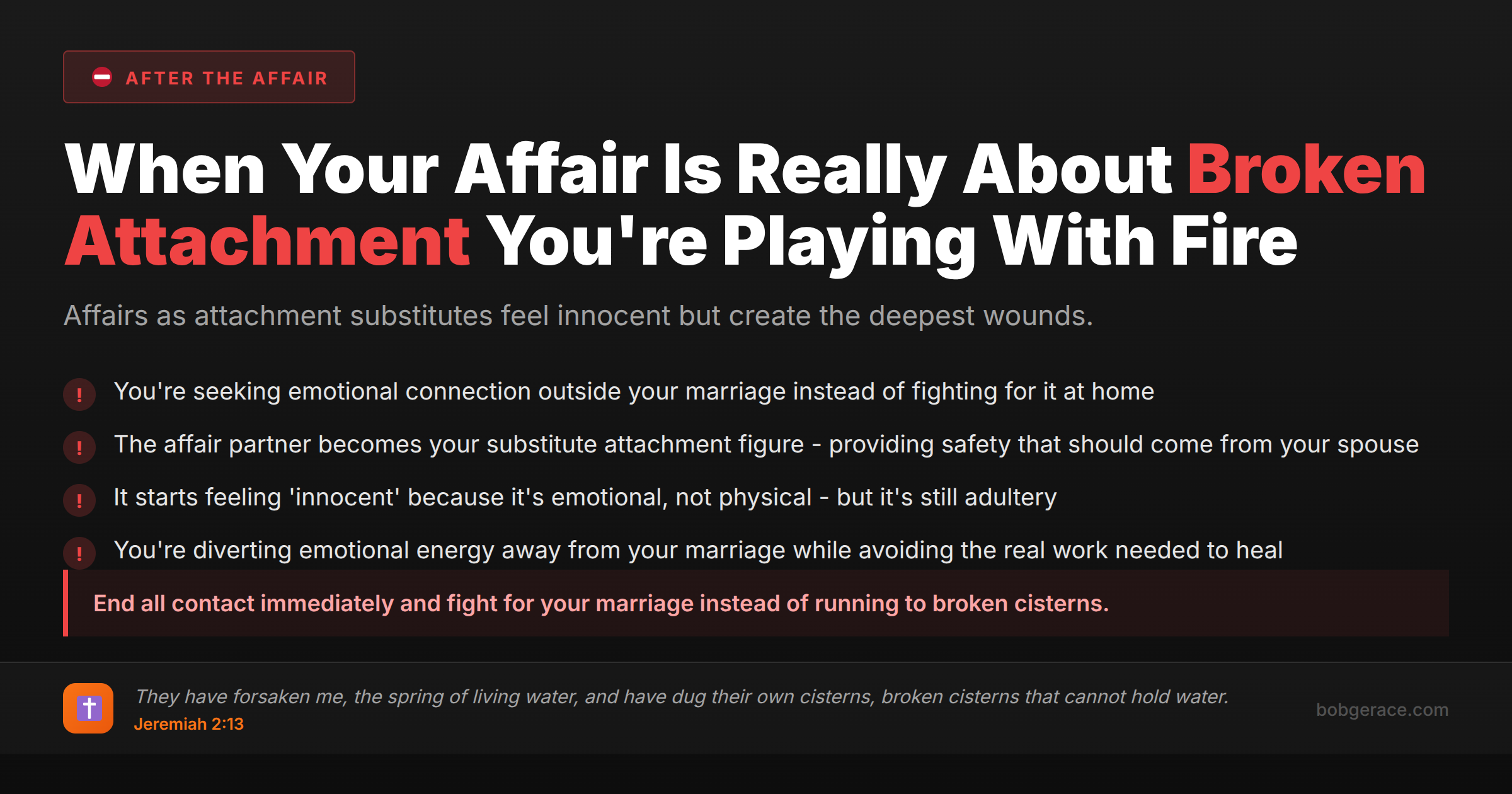
An affair as an 'attachment substitute' occurs when someone seeks emotional connection, validation, and security outside their marriage because these fundamental attachment needs aren't being met at home. Instead of addressing the attachment wounds or communication breakdowns with their spouse, they unconsciously attempt to fill that void through another relationship. This isn't about physical attraction or sexual desire - it's about deeper emotional needs like feeling seen, valued, understood, and secure. The affair partner becomes a substitute attachment figure, providing the emotional safety and connection that should exist within the marriage. This pattern often develops gradually and can feel 'innocent' at first, but it creates profound damage because it diverts emotional energy away from the marriage while avoiding the real work needed to heal the primary relationship.
The Full Picture
When we talk about affairs as attachment substitutes, we're diving into the deepest emotional needs that drive human behavior. Attachment theory shows us that we all have fundamental needs for security, connection, and emotional safety - needs that ideally should be met within our marriage covenant.
Here's what typically happens: Over time, couples can drift apart emotionally. Maybe there's been unresolved conflict, busy seasons that never ended, or simply a gradual erosion of intimacy and connection. One or both spouses begin feeling emotionally neglected, misunderstood, or taken for granted.
The substitute pattern emerges when instead of fighting for their marriage, addressing the issues directly, or seeking help together, one spouse begins unconsciously seeking that attachment security elsewhere. This might start as a 'friendship' with a coworker, an emotional connection through social media, or even through fantasy relationships.
The dangerous progression often follows predictable stages: First, there's the relief of feeling understood and valued by someone new. Then comes the emotional dependency - looking forward to interactions with this person more than with their spouse. Finally, there's the full attachment transfer, where the affair partner becomes the primary source of emotional security and validation.
This is particularly devastating because it's not just about betrayal - it's about the complete redirection of the emotional energy and attachment that belongs within the marriage. The unfaithful spouse often reports feeling 'more themselves' or 'truly understood' with the affair partner, not realizing they've simply transferred their attachment needs rather than addressing the real issues at home.
The cruel irony is that this substitute attachment often feels more intense and satisfying than the marriage because it carries none of the real-life responsibilities, conflicts, or challenges that come with covenant commitment. It's a fantasy attachment that seems perfect because it's not tested by the realities of daily life, child-rearing, financial stress, or the natural seasons of a lifelong commitment.
What's Really Happening
From a clinical perspective, affair attachments reveal profound emotional immaturity and unresolved attachment wounds, often dating back to childhood. When someone seeks an attachment substitute rather than working to repair their primary relationship, they're typically operating from what we call an 'avoidant attachment style' - they want connection but flee from the vulnerability required to create it within their marriage.
The neurochemistry involved is significant. Affairs trigger powerful bonding chemicals - dopamine, oxytocin, and norepinephrine - that create intense feelings of connection and euphoria. This biochemical response can feel like 'true love' or 'soul mate connection,' but it's actually just the //blog.bobgerace.com/marriage-mind-renewal-christian-transform-brain-crisis/:brain's attachment system activating with someone new. The unfaithful spouse often becomes literally addicted to these neurochemical rewards.
What makes this particularly complex is that the attachment substitute often begins meeting needs that were once met in the marriage but have been neglected over time. The affair partner listens without criticism, shows interest without judgment, and provides validation without the complications of shared responsibilities. This creates a false comparison where the marriage looks deficient next to this idealized substitute relationship.
The path to healing requires first understanding that these attachment needs are valid and important - they're just being met in a destructive way that ultimately sabotages the very security being sought. True attachment security can only be built through sustained commitment, vulnerability, and the mutual work of repair within the covenant relationship. The substitute must be eliminated entirely before genuine attachment repair can begin in the marriage.
What Scripture Says
Scripture speaks directly to the heart issues underlying attachment substitutes. Jeremiah 2:13 captures this perfectly: *'My people have committed two sins: They have forsaken me, the spring of living water, and have dug their own cisterns, broken cisterns that cannot hold water.'* This is exactly what happens in affairs - forsaking the covenant relationship to dig broken cisterns that can never truly satisfy.
Genesis 2:24-25 establishes God's design: *'Therefore a man shall leave his father and mother and hold fast to his wife, and they shall become one flesh. And the man and his wife were both naked and were not ashamed.'* The Hebrew word for 'hold fast' (dabaq) implies fierce loyalty and attachment - this is where our deepest emotional needs should be met.
When we seek attachment substitutes, we're essentially committing the spiritual adultery that Hosea 3:1 addresses: *'Go again, love a woman who is loved by another man and is an adulteress, even as the Lord loves the children of Israel, though they turn to other gods.'* God uses the marriage relationship as a picture of covenant faithfulness precisely because exclusive attachment matters so deeply.
1 Corinthians 7:3-4 reminds us of our responsibility: *'The husband should give to his wife her conjugal rights, and likewise the wife to her husband. For the wife does not have authority over her own body, but the husband does. Likewise the husband does not have authority over his own body, but the wife does.'* This isn't just about physical intimacy - it's about belonging fully to each other, including our emotional attachment and security.
The path forward is found in Matthew 19:6: *'What therefore God has joined together, let not man separate.'* This includes not allowing substitute attachments to separate what God has joined. Malachi 2:16 tells us God hates divorce - and He equally hates the emotional divorce that occurs when we transfer our attachment to someone else while remaining married.
What To Do Right Now
-
1
End all contact with the attachment substitute immediately and permanently - no exceptions, no 'closure' conversations, no gradual fade-out
-
2
Confess the emotional adultery to your spouse with full transparency about what needs you were seeking to meet outside the marriage
-
3
Identify the attachment wounds in your marriage - when did you stop feeling secure, seen, or valued by your spouse?
-
4
Take ownership of your choice to seek substitute attachment rather than fighting for your marriage or seeking help together
-
5
Begin intensive attachment repair work with a qualified Christian marriage counselor who understands both attachment theory and covenant commitment
-
6
Establish new boundaries and accountability to prevent future emotional affairs and redirect all attachment energy back into your marriage
Related Questions
- What attachment needs was the affair meeting?
- How do attachment injuries make affairs more likely?
- What is 'attachment affair' vs. 'exit affair'?
- Why do some people seek connection outside when it's available inside?
- What is 'anxious-avoidant trap' and did we have it?
- Did my avoidance push her toward someone else?
- What is 'emotional disengagement'?
- What attachment injuries did I experience?
- What is anxious attachment and am I doing it right now?
- What does sex mean to her attachment system?
Also find Bob on
Subscribe for weekly videos on Christian marriage.
Your Marriage Can't Wait on Guesswork
If she's already found connection elsewhere, the next 30 days matter. Bob works with men in active crisis — he'll hear your specific situation and tell you what to do first.
Talk to Bob →