We haven't had sex in months/years
6 min read
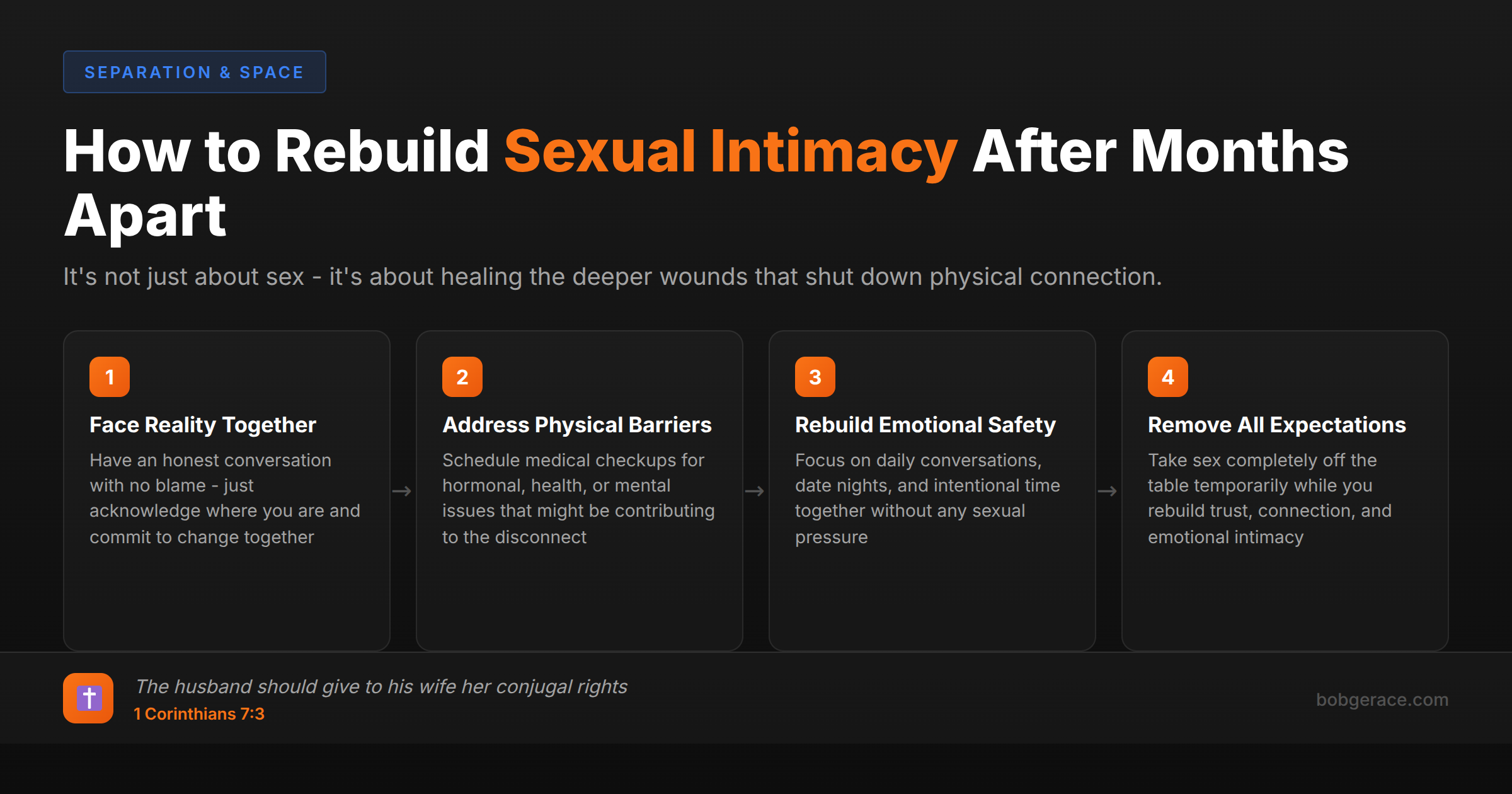
When physical intimacy disappears from your marriage for months or years, you're dealing with a serious symptom of deeper relational breakdown. This isn't just about sex - it's about emotional disconnection, unresolved hurt, and the walls that get built when couples stop truly seeing and valuing each other. The lack of physical intimacy is often the end result of accumulated resentment, feeling unheard, or experiencing repeated rejection. One or both spouses have essentially shut down this part of the relationship as a form of protection. While this feels hopeless, it's absolutely recoverable when you address the root causes with intentionality and commitment.
The Full Picture
A sexless marriage doesn't happen overnight. It's the culmination of hundreds of small disconnections, unresolved conflicts, and unmet needs that compound over time. What started as occasional rejection or lack of interest has now become a pattern that feels impossible to break.
The typical progression looks like this: Initial intimacy issues get swept under the rug instead of addressed. One spouse begins to feel rejected or inadequate, while the other feels pressured or disconnected. Both retreat to their corners. The pursuing spouse eventually stops pursuing to avoid more pain. The distancing spouse feels relief initially, but then may feel unwanted or unattractive when their partner stops trying.
Common underlying causes include: - Accumulated resentment from unresolved conflicts - Feeling emotionally disconnected or unheard - Body image issues or shame - Hormonal changes or medical issues - Stress, exhaustion, or depression - Past trauma or negative sexual experiences - Addiction (pornography, substances, work) - Different libido levels that were never properly navigated
The impact goes far beyond the bedroom. Physical intimacy is designed by God to bond couples together. When it's absent, you lose a primary source of connection, stress relief, and emotional bonding. Many couples report feeling more like roommates than spouses. The pursuing partner often feels rejected and unwanted, while the avoiding partner may feel guilty, defensive, or completely shut down to the topic.
Here's what you need to understand: This situation didn't develop because you're incompatible or because your marriage is doomed. It developed because somewhere along the way, the conditions for intimacy were eroded. The good news is that conditions can be rebuilt when both spouses are willing to do the work.
What's Really Happening
From a clinical perspective, prolonged absence of physical intimacy in marriage typically indicates what we call 'sexual avoidance patterns' combined with 'pursuit-withdrawal cycles.' One partner becomes the pursuer (often feeling rejected and unwanted) while the other becomes the withdrawer (often feeling pressured and defensive).
The brain science here is crucial to understand. When we experience repeated sexual rejection, our brains interpret this as a threat to our attachment bond. The pursuing partner's nervous system becomes hypervigilant to signs of rejection, while the avoiding partner's system becomes hypervigilant to signs of pressure. Both are essentially in protective mode.
Research shows that successful recovery requires addressing three levels: the individual level (personal healing, trauma, shame), the relational level (communication patterns, emotional connection), and the systemic level (lifestyle factors, stressors, external pressures).
What couples don't realize is that the absence of physical intimacy often serves an unconscious protective function. It may be protecting someone from vulnerability, from feeling overwhelmed, or from facing deeper issues in the relationship. This is why simply scheduling sex or trying to force physical connection rarely works long-term.
The path forward requires what we call 'graduated intimacy rebuilding' - slowly recreating safety and connection at emotional and physical levels before addressing sexual intimacy specifically. This process takes time but has high success rates when both partners commit to the work.
What Scripture Says
God's design for marriage includes physical intimacy as a gift and a responsibility. Scripture speaks clearly about the importance of physical connection between husband and wife, not as an optional extra, but as a vital part of the marriage covenant.
1 Corinthians 7:3-5 teaches us: *'The husband should give to his wife her conjugal rights, and likewise the wife to her husband. For the wife does not have authority over her own body, but the husband does. Likewise the husband does not have authority over his own body, but the wife does. Do not deprive one another, except perhaps by agreement for a limited time, that you may devote yourselves to prayer; but then come together again, so that Satan may not tempt you because of your lack of self-control.'*
This passage isn't about obligation or duty in a burdensome sense - it's about mutual care and recognition that physical intimacy serves important purposes in marriage. It bonds you together, provides mutual pleasure and comfort, and protects your relationship from outside temptation.
Song of Songs celebrates physical intimacy between spouses as beautiful and God-ordained. Proverbs 5:18-19 encourages husbands to '*rejoice in the wife of your youth... let her breasts fill you at all times with delight; be intoxicated always in her love.'*
Ephesians 5:25-28 calls husbands to love their wives sacrificially, which includes creating conditions where she can feel safe and cherished. 1 Peter 3:7 instructs husbands to live with their wives in an understanding way, honoring them.
When physical intimacy is absent, both spouses are being deprived of something God intended for their flourishing. The path back requires confession, forgiveness, and a commitment to rebuilding according to God's design - with patience, understanding, and genuine care for each other's needs and hearts.
What To Do Right Now
-
1
Have an honest conversation about where you both are - no blame, just acknowledgment of the current reality and mutual commitment to change
-
2
Address any medical, hormonal, or mental health issues that might be contributing - schedule appointments with appropriate healthcare providers
-
3
Focus on rebuilding emotional intimacy first - daily conversations, date nights, intentional time together without pressure for physical intimacy
-
4
Remove all pressure and expectations around sex temporarily - agree on a moratorium while you work on foundational issues
-
5
Begin graduated physical affection - hand-holding, hugging, cuddling without it leading to sex, rebuilding comfort with non-sexual touch
-
6
Consider professional help - this level of disconnection often requires coaching or counseling to navigate effectively
Related Questions
- She doesn't want to be touched
- She flinches when I reach for her
- Is our marriage sexless forever?
- What is 'sexual aversion' and does she have it?
- What kills female sexual desire in marriage?
- What conditions need to be in place for desire to return?
- She says she's never felt this way before
- Why does she seem like a different person?
- She seems happier when I'm not around
- How do I reclaim our intimacy?
Also find Bob on
Subscribe for weekly videos on Christian marriage.
Your Marriage Isn't a Generic Case
A coach who knows your story can see what you can't — the specific patterns keeping you stuck, the moves that'll work for your wife, the timeline that's realistic for where you actually are.
Talk to Bob →