She flinches when I reach for her
6 min read
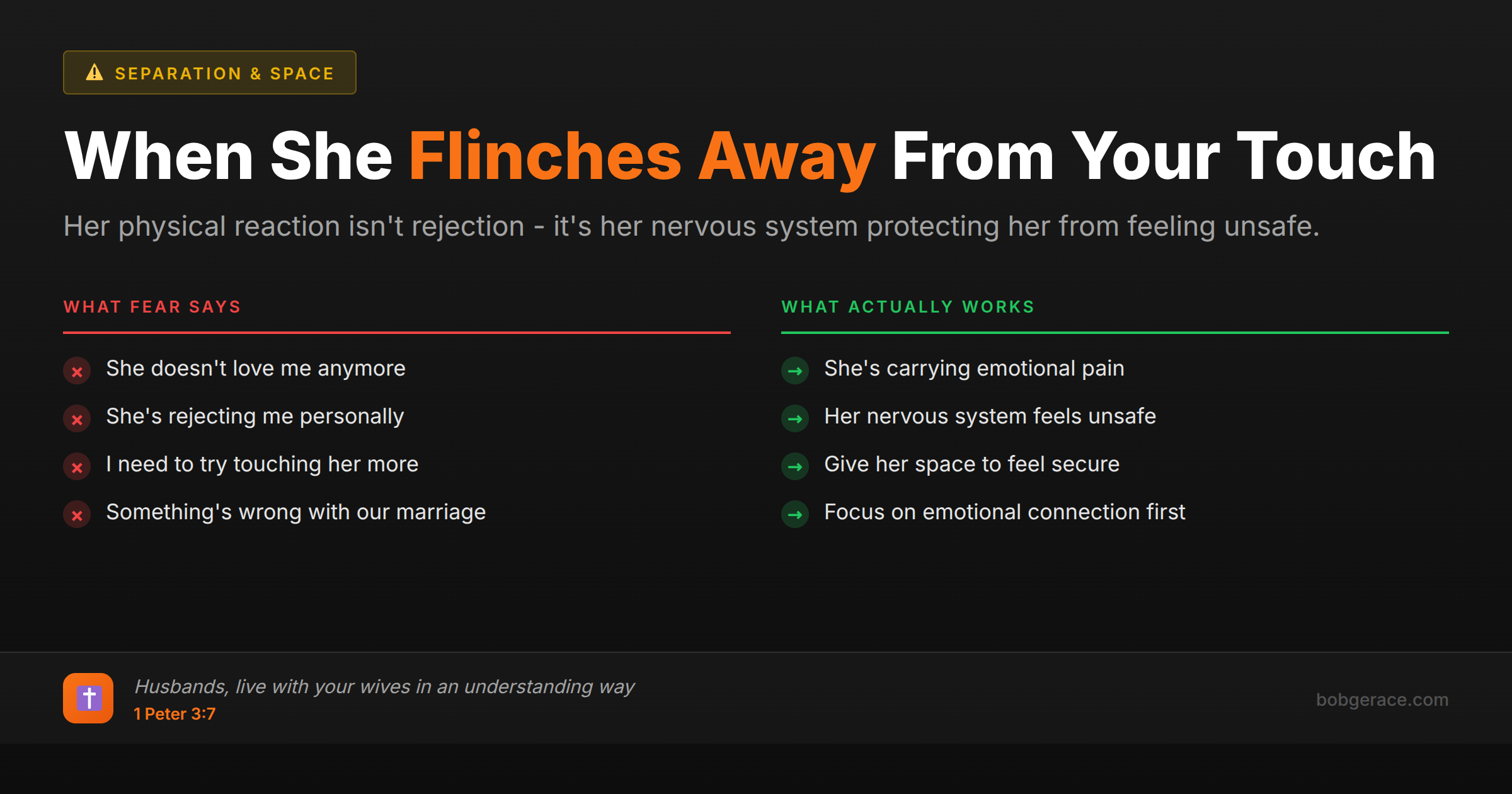
When your wife flinches from your touch, she's communicating something profound - and it's rarely about you personally. This physical reaction usually indicates she's carrying emotional pain, feeling overwhelmed, or has built protective walls around her heart. It could stem from feeling emotionally disconnected, experiencing stress, or having unresolved hurt in your relationship. The flinching isn't rejection of you as a person; it's often her nervous system's way of protecting her when she feels emotionally unsafe or overwhelmed. This happens when trust has been damaged, when she feels unheard, or when physical touch feels like another demand rather than genuine affection. Understanding this helps you respond with compassion rather than taking it as personal rejection.
The Full Picture
When a woman flinches from her husband's touch, it's one of the most heartbreaking signs that something has gone wrong in the marriage's emotional foundation. This isn't about her being dramatic or trying to hurt you - it's an involuntary response that tells us her nervous system has shifted into a protective mode.
What Creates This Response
Physical flinching typically develops over time through a series of experiences that have made her feel emotionally unsafe. This might include:
- Feeling like physical touch always leads to sexual expectations - Experiencing criticism or harsh words that create emotional distance - Carrying unresolved hurt from past conflicts - Feeling emotionally starved for genuine connection and affection - Being overwhelmed by life circumstances with little emotional support
The Protective Mechanism
When someone flinches, their body is essentially saying "I need to protect myself." This isn't a conscious decision - it's an automatic response that happens when someone feels vulnerable or unsafe. In marriage, this often develops when a woman feels like her emotional needs aren't being met, yet physical demands continue.
The Cycle That Develops
Here's what typically happens: She begins to feel emotionally disconnected. Physical touch starts feeling empty or demanding rather than loving. She begins to withdraw physically. You feel rejected and either pursue more or pull back entirely. The emotional distance grows, making physical touch feel even more unsafe for her.
This creates a painful cycle where both spouses feel rejected and unloved, but for different reasons. She's not trying to punish you - she's trying to protect herself from further emotional pain while feeling overwhelmed by physical advances that don't feel emotionally safe.
What's Really Happening
From a clinical perspective, flinching from a spouse's touch indicates that the nervous system has categorized physical contact as potentially threatening or overwhelming. This response is rooted in our body's natural protective mechanisms and isn't under conscious control.
When women report flinching from their husband's touch, it's often because their emotional needs for safety, connection, and understanding aren't being met. The body begins to associate physical touch with emotional vulnerability that feels unsafe. This is particularly common when there's been criticism, emotional neglect, or when physical touch consistently leads to sexual pressure without emotional intimacy.
The flinch response can also develop when someone is in a state of chronic stress or emotional overwhelm. When we're already maxed out emotionally, any additional input - even loving touch - can feel like too much. This is why addressing the underlying emotional dynamics is crucial.
It's important to understand that this isn't manipulation or intentional rejection. The nervous system is doing exactly what it's designed to do - protect us from perceived threats. In marriage, the 'threat' is often emotional overwhelm or the fear of being vulnerable when trust has been damaged.
Recovery requires patience and a focus on rebuilding emotional safety first. Physical intimacy typically returns naturally once the underlying emotional needs are addressed and trust is restored. Pushing for physical connection before addressing these deeper issues usually intensifies the protective response rather than resolving it.
What Scripture Says
Scripture calls us to understand and honor our wives, recognizing that physical intimacy flows from emotional and spiritual connection. When your wife flinches from your touch, God calls you to respond with wisdom, patience, and sacrificial love.
Understanding and Honor
*"Husbands, in the same way be considerate as you live with your wives, and treat them with respect as the weaker partner and as heirs with you of the gracious gift of life, so that nothing will hinder your prayers"* (1 Peter 3:7). The word "considerate" here means to live with understanding - to truly comprehend what she's experiencing and respond accordingly.
Patient, Gentle Love
*"Love is patient, love is kind... it is not self-seeking, it is not easily angered"* (1 Corinthians 13:4-5). When she flinches, your response reveals your character. Patient love doesn't take this personally or respond with anger, but seeks to understand and heal.
Sacrificial Leadership
*"Husbands, love your wives, just as Christ loved the church and gave himself up for her"* (Ephesians 5:25). Christ didn't demand submission - He earned it through sacrificial love. Sometimes loving your wife means sacrificing your desire for physical touch to focus on her emotional healing.
Gentle Restoration
*"Brothers and sisters, if someone is caught in a sin, you who live by the Spirit should restore that person gently"* (Galatians 6:1). While this isn't about sin, the principle applies - restoration happens through gentleness, not force. Your marriage's physical intimacy needs gentle, patient restoration.
God designed marriage to be a safe haven where both spouses flourish. When that safety is compromised, Scripture calls you to be the one who creates safety through understanding, patience, and sacrificial love.
What To Do Right Now
-
1
Stop taking it personally - her flinching is about her emotional state, not rejection of you
-
2
Immediately reduce physical advances and give her space to feel safe
-
3
Have a gentle conversation: 'I've noticed you seem uncomfortable when I touch you. What can I do to help you feel more comfortable?'
-
4
Focus on emotional connection first - ask about her day, her feelings, her needs without any physical expectations
-
5
Examine your recent interactions for criticism, pressure, or emotional disconnect that might have contributed
-
6
Demonstrate consistent emotional safety through your words, actions, and responses before expecting physical intimacy
Related Questions
- She doesn't want to be touched
- We haven't had sex in months/years
- Is our marriage sexless forever?
- What is 'sexual aversion' and does she have it?
- Could her sexual shutdown be trauma-related?
- What if her withdrawal is protection not rejection?
- What is 'betrayal trauma' and do I have it?
- How do I become a safe emotional presence?
- What does 'holding space' actually mean?
Also find Bob on
Subscribe for weekly videos on Christian marriage.
You Don't Have to Decode This Alone
When your wife flinches, there's a story behind it—specific to your marriage, your history, the moments that broke trust. A coach who knows your situation can help you see what you're missing and respond in ways that actually land.
Talk to Bob →