How do attachment injuries make affairs more likely?
6 min read
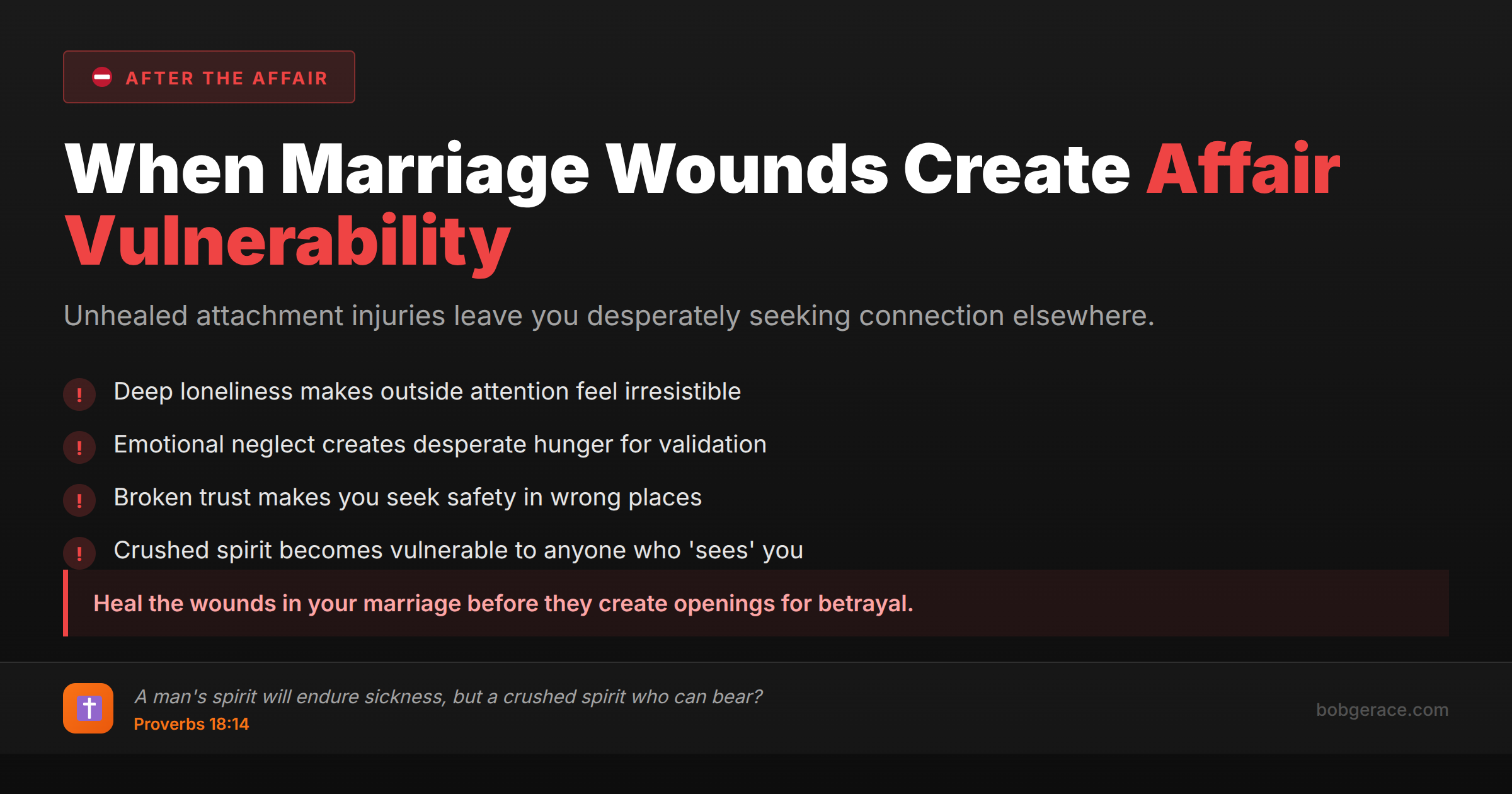
Attachment injuries create deep emotional wounds that make spouses vulnerable to affairs by leaving them desperately seeking connection, validation, and security outside their marriage. When someone experiences betrayal, abandonment, or emotional neglect from their spouse, it damages their ability to trust and feel safe in the relationship. These injuries create what I call "affair vulnerability" - a state where your emotional needs become so overwhelming that you're more likely to accept attention and comfort from someone who isn't your spouse. The injured person often experiences intense loneliness, worthlessness, and a craving for someone to truly "see" and value them. This emotional hunger makes them susceptible to the attention of another person who seems to offer what their marriage lacks.
The Full Picture
Attachment injuries are like emotional fractures in your marriage - they happen when one spouse violates the other's trust, safety, or sense of being valued during moments of high vulnerability. These injuries go far deeper than everyday arguments or disappointments.
Common attachment injuries include: - Emotional or physical abandonment during crisis - Betrayal of trust or confidentiality - Choosing someone else over your spouse repeatedly - Dismissing or minimizing your spouse's pain - Breaking promises during vulnerable moments
When these injuries remain unhealed, they create what researchers call "negative cycles" in marriage. The injured spouse becomes hypervigilant, constantly scanning for signs of rejection or betrayal. They may withdraw emotionally or become clingy and demanding. Meanwhile, the other spouse often feels criticized and pulls away, creating more distance.
This cycle leaves both partners emotionally starved. The injured spouse lives with chronic feelings of unworthiness and disconnection. They begin to believe their spouse will never truly love or prioritize them. Over time, this creates a dangerous vulnerability.
Here's what makes affairs more likely: - Emotional hunger: The injured person craves validation and connection - Lowered defenses: Pain and loneliness make inappropriate relationships seem acceptable - Justification: The injury becomes justification for seeking comfort elsewhere - Availability: The emotional void makes them receptive to outside attention
The affair often isn't about sex or romance initially - it's about finding someone who makes them feel valued, understood, and emotionally safe. The attachment injury has created a hole that the unfaithful spouse tries to fill with another person.
What's Really Happening
From a clinical perspective, attachment injuries activate our deepest survival systems. When someone we depend on for emotional safety hurts us, it triggers what we call "attachment panic" - an overwhelming fear of abandonment that can persist for years if left unaddressed.
Neurologically, these injuries create lasting changes in how the //blog.bobgerace.com/marriage-mind-renewal-christian-transform-brain-crisis/:brain processes relationship threats. The injured person's nervous system remains in a state of hypervigilance, constantly scanning for danger. This chronic stress depletes their emotional resources and impairs their ability to make healthy relationship decisions.
What we see clinically is that unhealed attachment injuries create a perfect storm for infidelity. The injured person often experiences:
Emotional dysregulation: Their feelings become overwhelming and unpredictable Cognitive distortions: They interpret neutral behaviors as rejections Behavioral patterns: They may pursue or withdraw in destructive ways Identity erosion: They begin to question their worth and lovability
The affair partner often appears during this vulnerable state, offering what seems like healing - attention, validation, and emotional soothing. However, this is a trauma response, not genuine healing. The injured person isn't choosing the affair from a place of strength; they're responding from a place of deep woundedness.
The tragedy is that affairs never actually heal attachment injuries - they compound them. The temporary relief the affair provides is followed by even deeper shame, guilt, and disconnection. True healing requires addressing the original injury within the marriage relationship, not escaping from it.
What Scripture Says
Scripture speaks clearly about how unhealed wounds in marriage create vulnerability to sin and destruction. God's design for marriage includes both the warning about wounds and the path to healing.
Proverbs 18:14 reminds us: "A man's spirit will endure sickness, but a crushed spirit who can bear?" Attachment injuries crush the spirit, making us desperate for relief and vulnerable to poor choices.
Ephesians 4:26-27 warns: "Be angry and do not sin; do not let the sun go down on your anger, and give no opportunity to the devil." Unresolved attachment injuries give Satan a foothold in our marriages, creating opportunities for temptation and destruction.
God calls spouses to be sources of healing, not wounding. 1 Peter 3:7 instructs husbands to treat their wives "with understanding... so that your prayers may not be hindered." When we wound our spouse's attachment system, we hinder our entire relationship with God.
Isaiah 61:1 declares God's mission: "to bind up the brokenhearted." This is also our mission in marriage - to be instruments of healing rather than sources of injury.
The path forward requires both repentance and restoration. James 5:16 teaches: "Confess your sins to one another and pray for one another, that you may be healed." Healing attachment injuries requires honest acknowledgment of the wound, genuine repentance from the one who caused it, and committed effort to rebuild trust and safety.
God's grace can heal even the deepest attachment injuries, but it requires both spouses to participate in His healing process rather than seeking counterfeit comfort outside the marriage covenant.
What To Do Right Now
-
1
Identify any attachment injuries in your marriage - moments when trust, safety, or emotional connection was broken during vulnerable times
-
2
Have an honest conversation about these injuries without defensiveness - the injured spouse needs acknowledgment, not explanations or justifications
-
3
Create new boundaries and accountability measures to protect against outside emotional connections while you heal
-
4
Establish daily practices for emotional connection - even 10 minutes of undistracted conversation can begin rebuilding attachment
-
5
Seek professional help from a marriage counselor trained in attachment theory and affair recovery
-
6
Commit to a healing timeline of at least 12-18 months - attachment injuries take time to heal and rushing the process increases affair risk
Related Questions
- What attachment needs was the affair meeting?
- What does affair as 'attachment substitute' mean?
- What is 'attachment affair' vs. 'exit affair'?
- How does attachment style relate to affair risk?
- Was she 'protest behavior' cheating or checked-out cheating?
- Why do some people seek connection outside when it's available inside?
- What is anxious attachment and am I doing it right now?
- What attachment injuries did I experience?
- How do childhood attachment wounds show up in marriage?
- What is 'attachment injury' and did I cause one?
Also find Bob on
Subscribe for weekly videos on Christian marriage.
Your Marriage Can't Wait on Guesswork
If an affair just happened or you're watching the damage spread, you need someone who knows your specific situation and can tell you what to do today. Bob works with men in crisis every day.
Talk to Bob →