Why do I feel like I'm going to die if she leaves?
6 min read
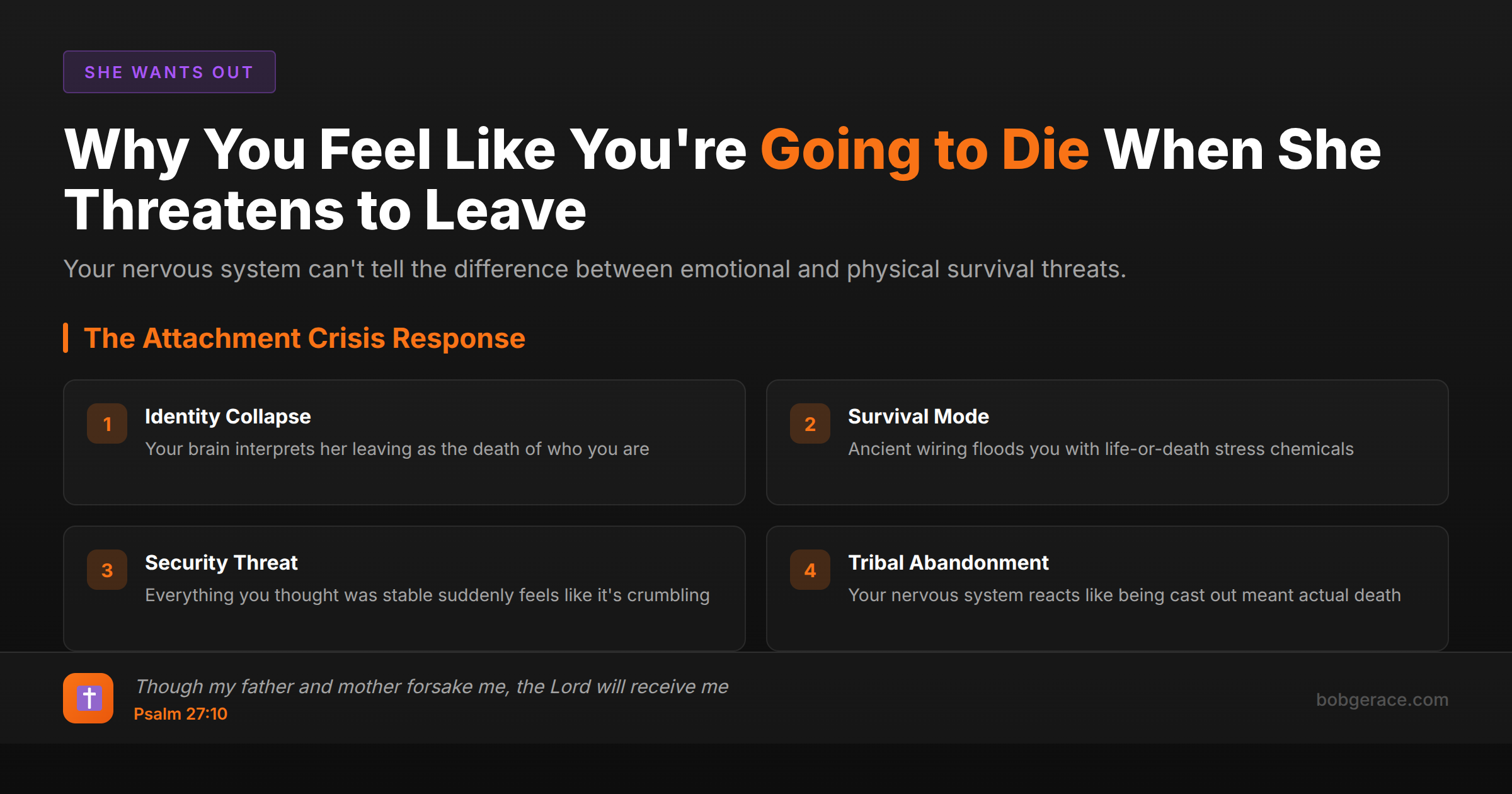
That overwhelming terror you're feeling? It's real, it's primal, and it makes complete sense. When your wife threatens to leave, your nervous system interprets it as a life-or-death situation because, in many ways, it is. You're not just facing the loss of a relationship - you're facing the collapse of your identity, your future, and everything you thought was secure. This isn't weakness or melodrama. It's your attachment system in full crisis mode, flooding you with the same chemicals and responses our ancestors experienced when separated from their tribe meant actual death. Your brain doesn't distinguish between physical and emotional threats to your survival.
The Full Picture
What you're experiencing goes far deeper than just being sad about a potential breakup. Your entire nervous system is in survival mode because attachment relationships are literally wired into our biology as matters of life and death.
Think about it: as infants, separation from our primary caregiver actually could mean death. That wiring doesn't disappear when we become adults - it just transfers to our romantic partner. When she says she's done, every cell in your body screams danger.
Here's what's actually happening in your system:
• Your amygdala floods your body with stress hormones • Your nervous system shifts into hypervigilance mode • Your brain interprets emotional abandonment as physical threat • Fight-or-flight responses kick in at maximum intensity • Sleep, appetite, and rational thinking become nearly impossible
This response is amplified if you have underlying attachment wounds from childhood. Maybe you experienced inconsistent parenting, emotional neglect, or early losses. These create what psychologists call "insecure attachment patterns" that make adult relationship threats feel exponentially more terrifying.
But here's what most men don't realize: this intense reaction often pushes their wife further away. When you're operating from pure panic, you make desperate moves - pleading, bargaining, promising to change everything overnight. These behaviors, while understandable, often confirm her decision that the relationship isn't healthy.
The cruel irony? The very intensity of your fear of losing her can become the thing that ensures you do lose her. Your nervous system's attempt to save the relationship can actually sabotage it.
What's Really Happening
From a clinical perspective, what you're experiencing is called "attachment panic" - a well-documented phenomenon in relationship psychology. Research by Dr. John Bowlby and subsequent attachment theorists shows that our adult romantic relationships activate the same neurobiological systems that kept us alive as children.
When your primary attachment figure (your wife) threatens to leave, your brain literally interprets this as a survival threat. The anterior cingulate cortex, which processes both physical pain and social rejection, lights up identically whether you're experiencing a broken bone or a broken heart. This is why we use phrases like "heartbreak" - the pain is neurologically real.
Your attachment style, formed in your earliest relationships, determines the intensity of this response. If you have anxious attachment (roughly 20% of adults), you're biologically wired to experience separation as more threatening than securely attached individuals. Your nervous system learned early that relationships are unpredictable and require constant vigilance.
The flood of stress hormones - cortisol, adrenaline, norepinephrine - creates what we call "emotional dysregulation." Your prefrontal cortex, responsible for rational thinking and emotional regulation, goes offline. This is why you might find yourself doing or saying things that seem crazy even to you.
Understanding this isn't about excusing problematic behaviors, but recognizing that healing requires addressing the underlying attachment wounds, not just trying harder to control your reactions. Effective intervention focuses on nervous system regulation, building secure attachment patterns, and developing emotional resilience that doesn't depend entirely on your partner's presence or approval.
What Scripture Says
Scripture acknowledges the depth of human attachment and the pain of separation, while pointing us toward ultimate security that transcends any earthly relationship.
Psalm 27:10 reminds us: "Though my father and mother forsake me, the Lord will receive me." Even David, a man after God's own heart, knew the terror of abandonment. Yet he found his security in God's unfailing love.
Isaiah 54:10 declares: "Though the mountains be shaken and the hills be removed, yet my unfailing love for you will not be shaken nor my covenant of peace be removed, says the Lord, who has compassion on you." Your wife's love may feel shaken, but God's love is the bedrock that cannot be moved.
1 John 4:18 tells us: "There is no fear in love. But perfect love drives out fear, because fear has to do with punishment." The terror you feel often stems from believing you deserve abandonment - that you're fundamentally flawed or unlovable. God's perfect love challenges that lie.
Philippians 4:19 promises: "And my God will meet all your needs according to the riches of his glory in Christ Jesus." This includes your deepest need for connection, security, and love - needs that no human relationship, however good, can fully satisfy.
The biblical pattern isn't to minimize the pain of broken relationships, but to recognize that our ultimate identity and security must be rooted in something more stable than another person's feelings toward us. When we find our primary attachment in God, we can love our wives from strength rather than desperation, making us far better husbands in the process.
What To Do Right Now
-
1
Regulate your nervous system through deep breathing - 4 counts in, hold for 4, out for 6, repeat for 5 minutes
-
2
Write down three things that were true about you before you met her - your identity exists independent of this relationship
-
3
Call one person who knew you before your marriage and ask them to remind you of your strengths and value
-
4
Take a 20-minute walk outside without your phone to reset your stress response system
-
5
Pray or meditate on your identity as God's beloved son for 10 minutes daily
-
6
Schedule an appointment with a therapist who specializes in attachment trauma within 48 hours
Related Questions
Don't Let Panic Destroy Your Last Chance
The desperation you feel is driving her further away. Let's work together to help you respond from strength, not fear, before it's too late.
Get Help Now →